Molecular, Cellular, and Developmental Biology Graduate Program and The Center for RNA Biology, The Ohio State University, Columbus, OH, USA; Center for Childhood Cancer and Blood Diseases, The Research Institute at Nationwide Children's Hospital, Columbus, OH, USA.
Center for Childhood Cancer and Blood Diseases, The Research Institute at Nationwide Children's Hospital, Columbus, OH, USA.
Trends Genet. 2019 Jan;35(1):68-87. doi: 10.1016/j.tig.2018.10.002. Epub 2018 Nov 19.
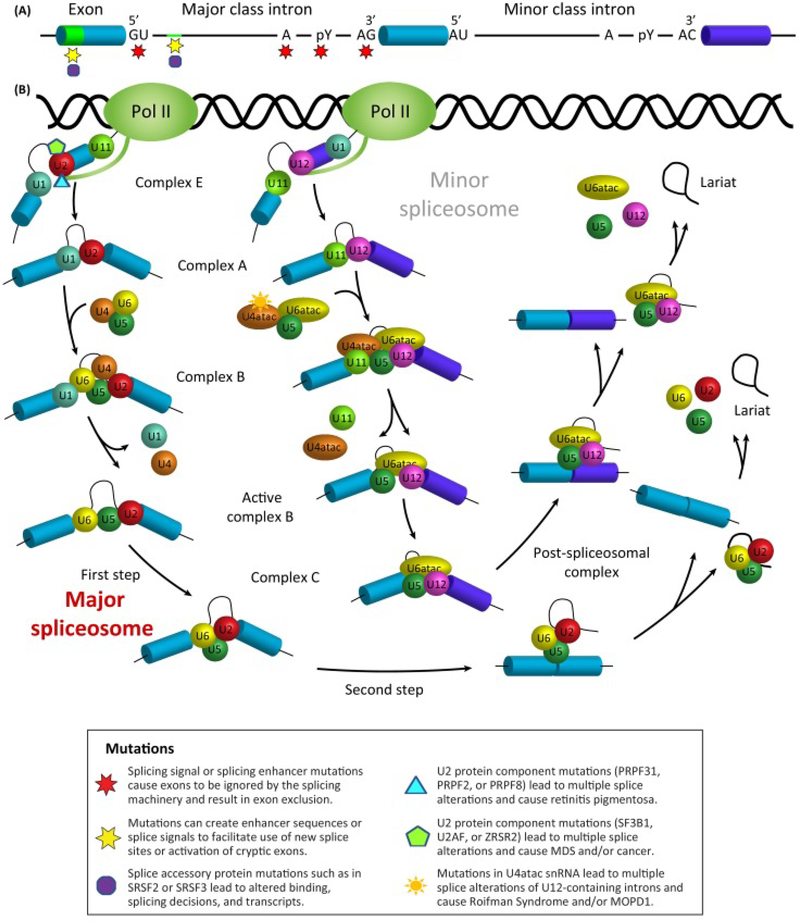
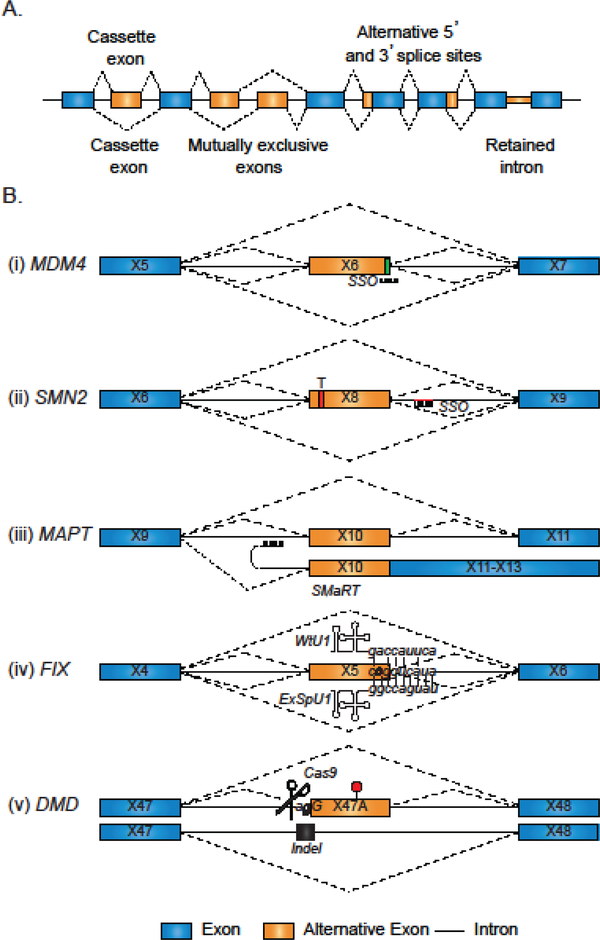
Alternative splicing of pre-mRNA increases genetic diversity, and recent studies estimate that most human multiexon genes are alternatively spliced. If this process is not highly regulated and accurate, it leads to mis-splicing events, which may result in proteins with altered function. A growing body of work has implicated mis-splicing events in a range of diseases, including cancer, neurodegenerative diseases, and muscular dystrophies. Understanding the mechanisms that cause aberrant splicing events and how this leads to disease is vital for designing effective therapeutic strategies. In this review, we focus on advances in therapies targeting splicing, and highlight the animal models developed to recapitulate disease phenotypes as a model for testing these therapies.
前体 mRNA 的选择性剪接增加了遗传多样性,最近的研究估计,大多数人类多外显子基因都进行了选择性剪接。如果这个过程没有得到高度的调控和精确的控制,就会导致错误剪接事件的发生,从而导致功能改变的蛋白质。越来越多的工作表明,错误剪接事件与一系列疾病有关,包括癌症、神经退行性疾病和肌肉萎缩症。了解导致异常剪接事件的机制以及这如何导致疾病对于设计有效的治疗策略至关重要。在这篇综述中,我们专注于靶向剪接的治疗方法的进展,并强调了为模拟这些治疗方法而开发的疾病表型重现动物模型。