Department of Tropical Medicine, Medical Microbiology & Pharmacology, John A. Burns School of Medicine, University of Hawai'i at Mānoa, Honolulu, HI, United States.
Bioqual Inc., Rockville, MD, United States.
Front Immunol. 2018 Nov 8;9:2464. doi: 10.3389/fimmu.2018.02464. eCollection 2018.
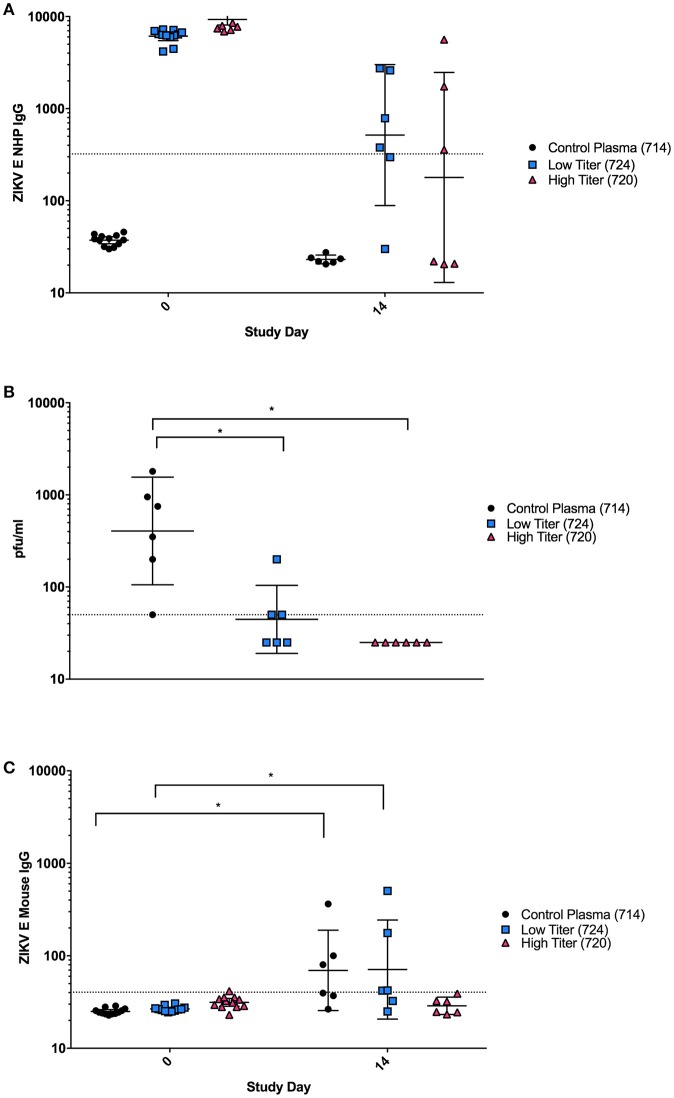
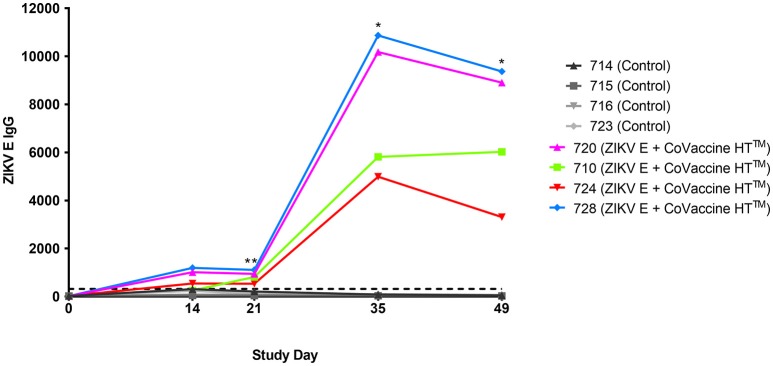
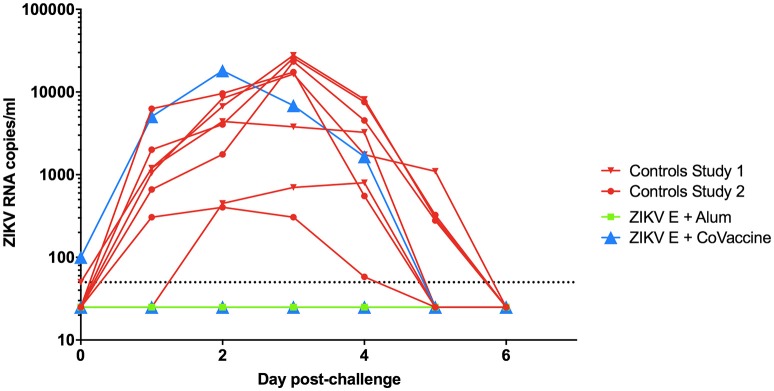
Zika Virus (ZIKV), a virus with no severe clinical symptoms or sequelae previously associated with human infection, became a public health threat following an epidemic in French Polynesia 2013-2014 that resulted in neurological complications associated with infection. Although no treatment currently exists, several vaccines using different platforms are in clinical development. These include nucleic acid vaccines based on the prM-E protein from the virus and purified formalin-inactivated ZIKV vaccines (ZPIV) which are in Phase 1/2 clinical trials. Using a recombinant subunit platform consisting of antigens produced in S2 cells, we have previously shown seroconversion and protection against viremia in an immunocompetent mouse model. Here we demonstrate the efficacy of our recombinant subunits in a non-human primate (NHP) viremia model. High neutralizing antibody titers were seen in all protected macaques and passive transfer demonstrated that plasma from these NHPs was sufficient to protect against viremia in mice subsequently infected with ZIKV. Taken together our data demonstrate the immunogenicity and protective efficacy of the recombinant subunit vaccine candidate in NHPs as well as highlight the importance of neutralizing antibodies in protection against ZIKV infection and their potential implication as a correlate of protection.
Zika 病毒(ZIKV)以前与人类感染相关联的临床症状或后遗症并不严重,但在 2013-2014 年法属波利尼西亚的一次流行后,它成为了公共卫生威胁,导致感染相关的神经并发症。尽管目前尚无治疗方法,但有几种使用不同平台的疫苗正在临床开发中。这些疫苗包括基于病毒的 prM-E 蛋白的核酸疫苗和处于 1/2 期临床试验的纯化甲醛灭活 ZIKV 疫苗(ZPIV)。使用由 S2 细胞产生的抗原组成的重组亚单位平台,我们之前在免疫功能正常的小鼠模型中显示出血清转化和对病毒血症的保护作用。在这里,我们在非人类灵长类动物(NHP)病毒血症模型中证明了我们的重组亚单位的功效。所有受保护的猕猴均产生了高中和抗体滴度,被动转移表明这些 NHP 的血浆足以保护随后感染 ZIKV 的小鼠免受病毒血症的侵害。总之,我们的数据表明重组亚单位疫苗候选物在 NHP 中的免疫原性和保护功效,以及中和抗体在预防 ZIKV 感染中的重要性及其作为保护相关性的潜在意义。