Department of Mechanical Engineering, Korea Advanced Institute of Science and Technology, Daejeon 34141, Korea.
Sensors (Basel). 2018 Nov 21;18(11):4076. doi: 10.3390/s18114076.
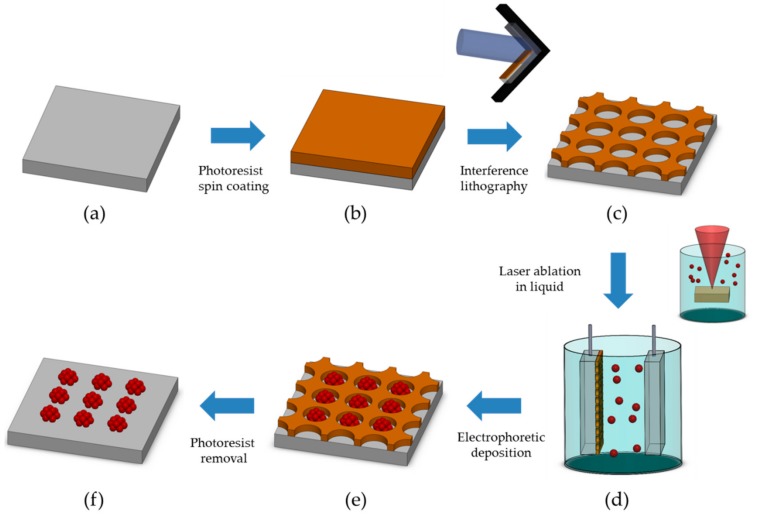
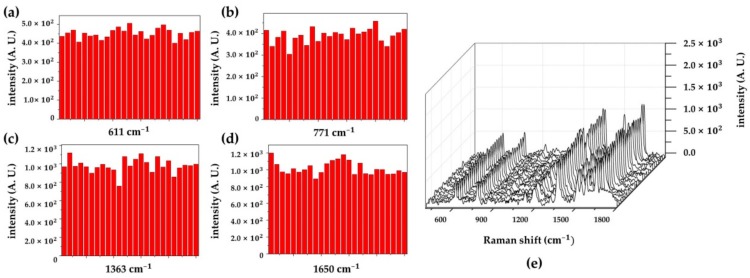
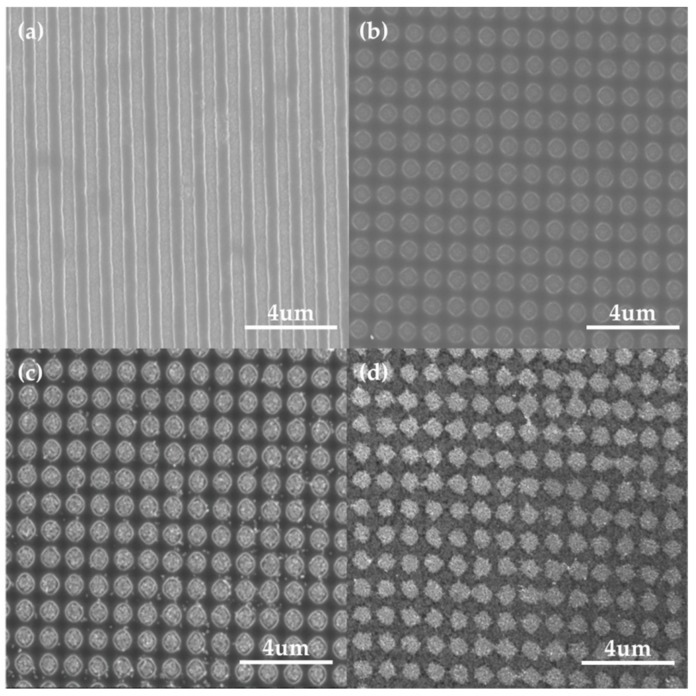
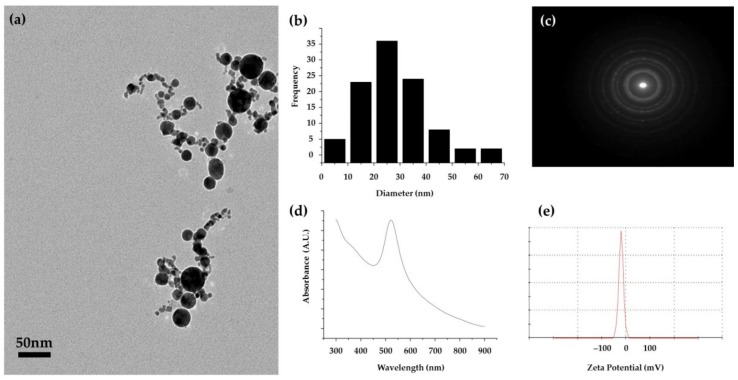
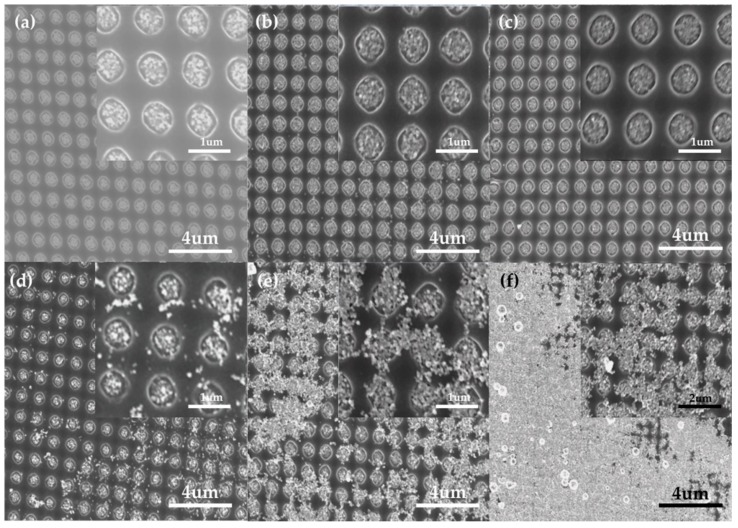
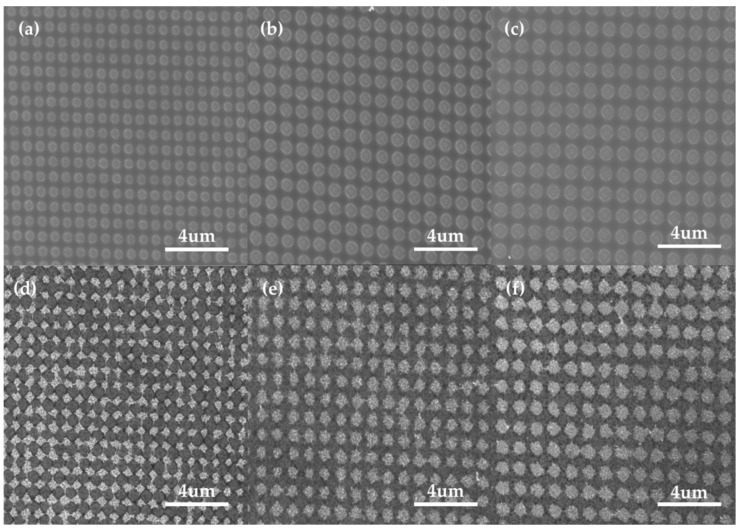
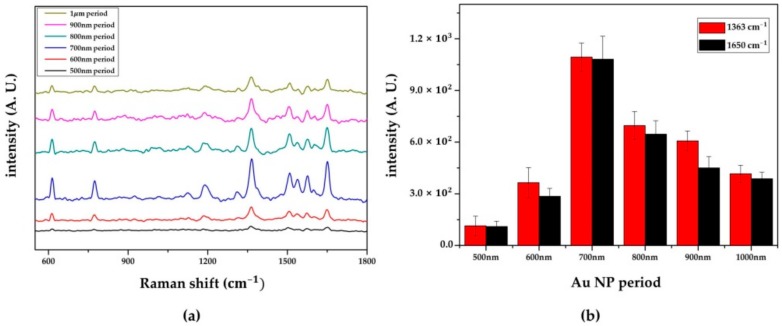
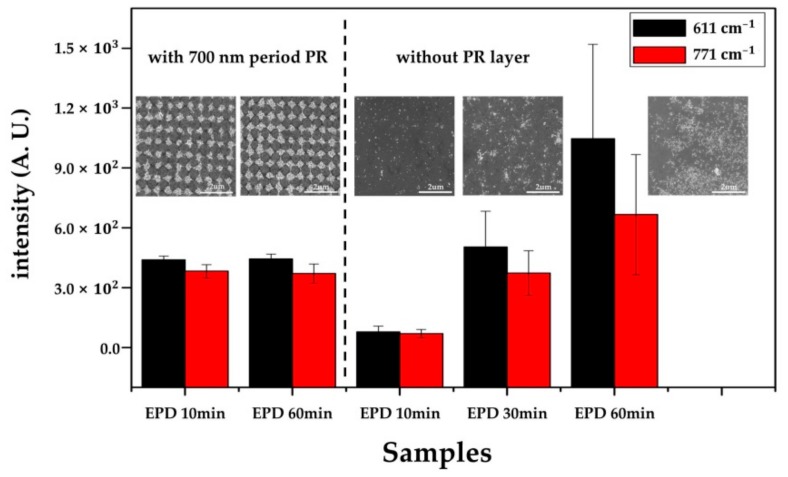
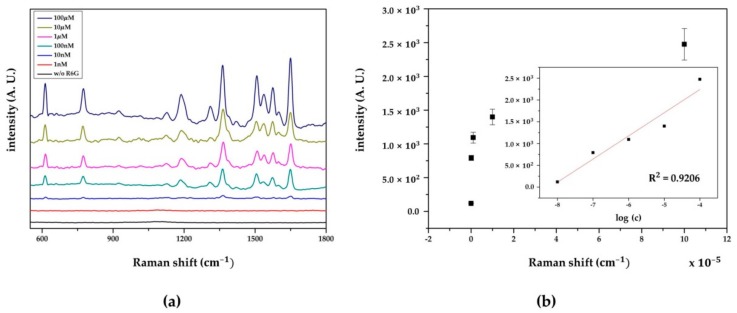
Surface-enhanced Raman spectroscopy (SERS) is a promising analytical tool due to its label-free detection ability and superior sensitivity, which enable the detection of single molecules. Since its sensitivity is highly dependent on localized surface plasmon resonance, various methods have been applied for electric field-enhanced metal nanostructures. Despite the intensive research on practical applications of SERS, fabricating a sensitive and reproducible SERS sensor using a simple and low-cost process remains a challenge. Here, we report a simple strategy to produce a large-scale gold nanoparticle array based on laser interference lithography and the electrophoretic deposition of gold nanoparticles, generated through a pulsed laser ablation in liquid process. The fabricated gold nanoparticle array produced a sensitive, reproducible SERS signal, which allowed Rhodamine 6G to be detected at a concentration as low as 10 M, with an enhancement factor of 1.25 × 10⁵. This advantageous fabrication strategy is expected to enable practical SERS applications.
表面增强拉曼光谱(SERS)是一种很有前途的分析工具,因为它具有无标记检测能力和卓越的灵敏度,能够检测单分子。由于其灵敏度高度依赖于局域表面等离激元共振,因此已经应用了各种方法来增强金属纳米结构的电场。尽管对 SERS 的实际应用进行了广泛的研究,但使用简单且低成本的工艺制造灵敏且可重现的 SERS 传感器仍然是一个挑战。在这里,我们报告了一种简单的策略,通过激光干涉光刻和通过液体中的脉冲激光烧蚀产生的金纳米粒子的电泳沉积来制造基于金纳米粒子的大面积阵列。所制造的金纳米粒子阵列产生了灵敏、可重现的 SERS 信号,使得可以检测到浓度低至 10 M 的 Rhodamine 6G,增强因子为 1.25×10⁵。这种有利的制造策略有望实现实际的 SERS 应用。