Yonemitsu Kenzo, Minami Shohei, Noguchi Keita, Kuwata Ryusei, Shimoda Hiroshi, Maeda Ken
Laboratory of Veterinary Microbiology, Joint Faculty of Veterinary Medicine, Yamaguchi University, 1677-1 Yoshida, Yamaguchi 753-8515, Japan.
J Vet Med Sci. 2019 Jan 25;81(1):155-159. doi: 10.1292/jvms.18-0576. Epub 2018 Nov 23.
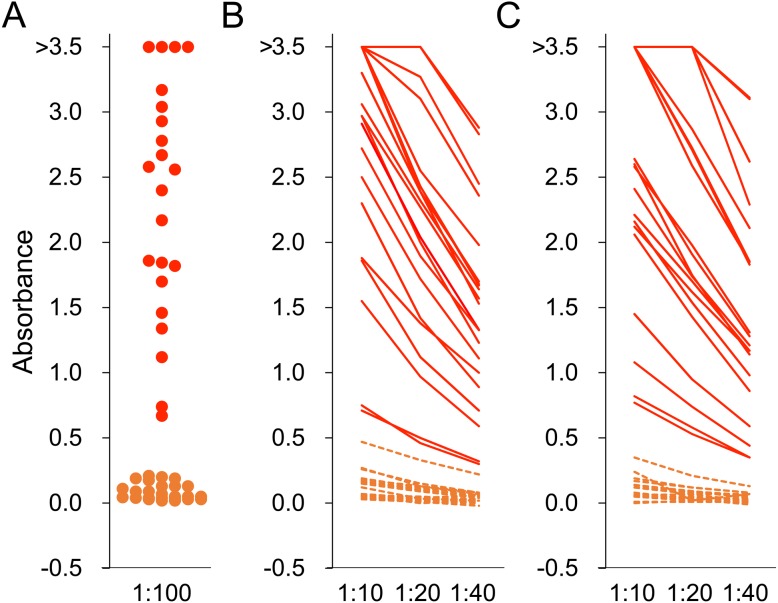
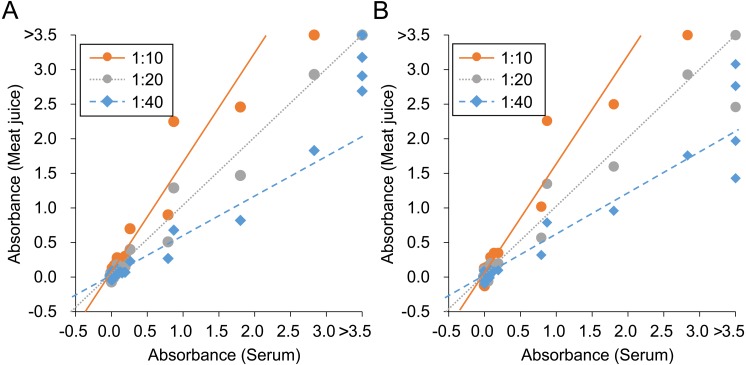
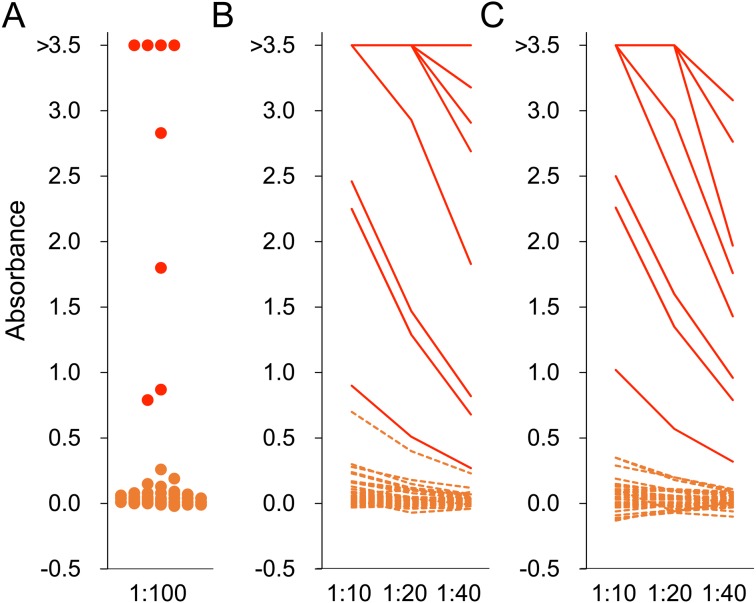
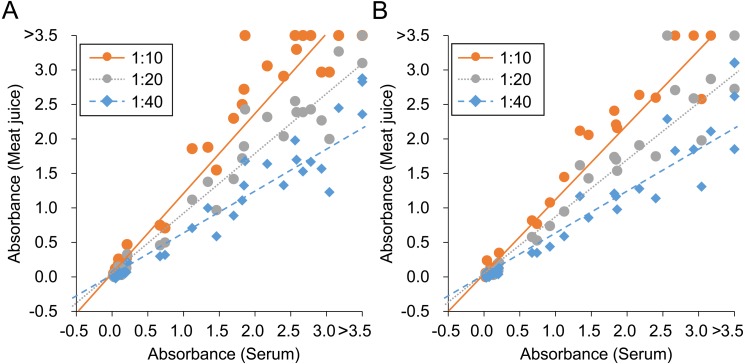
Wild boars are a reservoir for many zoonotic pathogens and a good sentinel for surveillance of zoonotic viral infections, but collection of serum samples from wild boars in the field is sometimes difficult and requires special equipment and techniques. In this study, ELISA using meat juices extracted from the heart and diaphragm of wild boars, instead of serum samples, was performed to detect antibodies against zoonotic pathogens, Japanese encephalitis virus and hepatitis E virus. The results of ELISA using meat juice samples were significantly correlated with those using serum samples and meat juice contained one-fifth the antibodies of serum samples. As meat juice is easily collected from wild animals in the field without special equipment and techniques, ELISA using meat juice is a simple and superior method for serological survey of zoonosis among wild animals.
野猪是许多人畜共患病原体的宿主,也是监测人畜共患病毒感染的良好哨兵,但在野外从野猪身上采集血清样本有时很困难,需要特殊设备和技术。在本研究中,使用从野猪心脏和横膈膜中提取的肉汁而非血清样本进行酶联免疫吸附测定(ELISA),以检测针对人畜共患病原体、日本脑炎病毒和戊型肝炎病毒的抗体。使用肉汁样本的ELISA结果与使用血清样本的结果显著相关,且肉汁中的抗体含量为血清样本的五分之一。由于无需特殊设备和技术就能在野外轻松从野生动物身上采集肉汁,因此使用肉汁进行ELISA是一种用于野生动物人畜共患病血清学调查的简单且优越的方法。