Department of Microbiology, Faculty of Biology, University of Gdansk, Wita Stwosza 59, 80-308, Gdansk, Poland.
Microb Cell Fact. 2018 Nov 24;17(1):184. doi: 10.1186/s12934-018-1034-4.
The viral or host systems for a gene expression assume repeatability of the process and high quality of the protein product. Since level and fidelity of transcription primarily determines the overall efficiency, all factors contributing to their decrease should be identified and optimized. Among many observed processes, non-programmed insertion/deletion (indel) of nucleotide during transcription (slippage) occurring at homopolymeric A/T sequences within a gene can considerably impact its expression. To date, no comparative study of the most utilized Escherichia coli and T7 bacteriophage RNA polymerases (RNAP) propensity for this type of erroneous mRNA synthesis has been reported. To address this issue we evaluated the influence of shift-prone A/T sequences by assessing indel-dependent phenotypic changes. RNAP-specific expression profile was examined using two of the most potent promoters, P of E. coli and φ10 of phage T7.
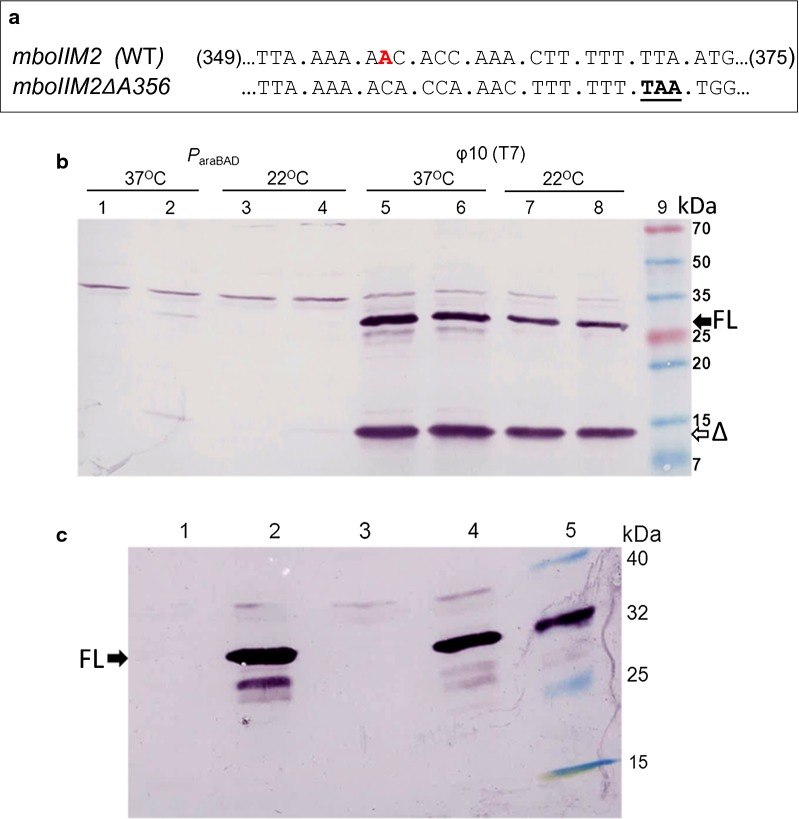
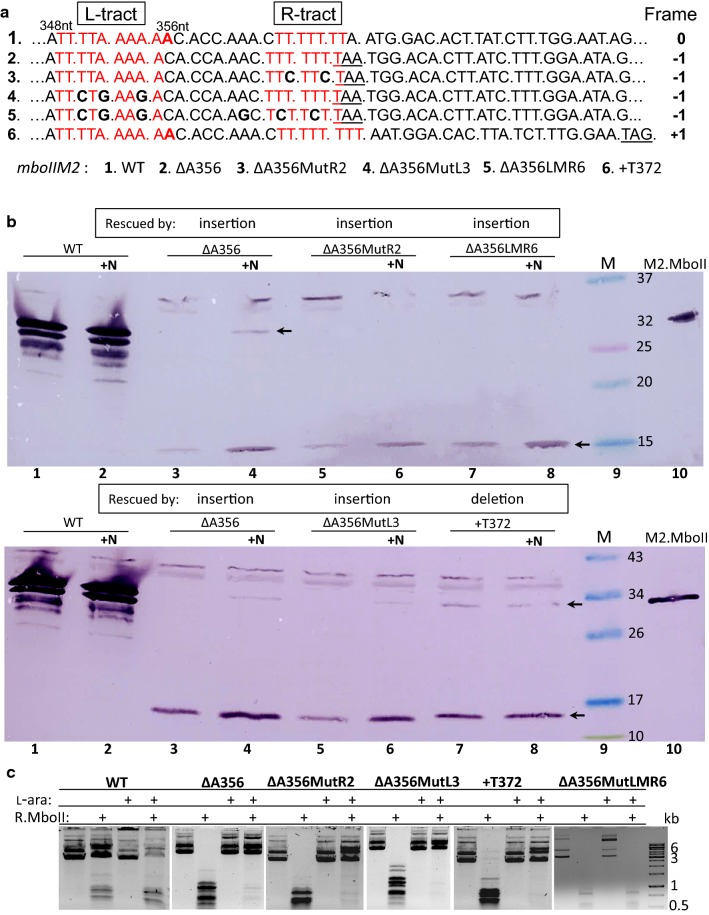
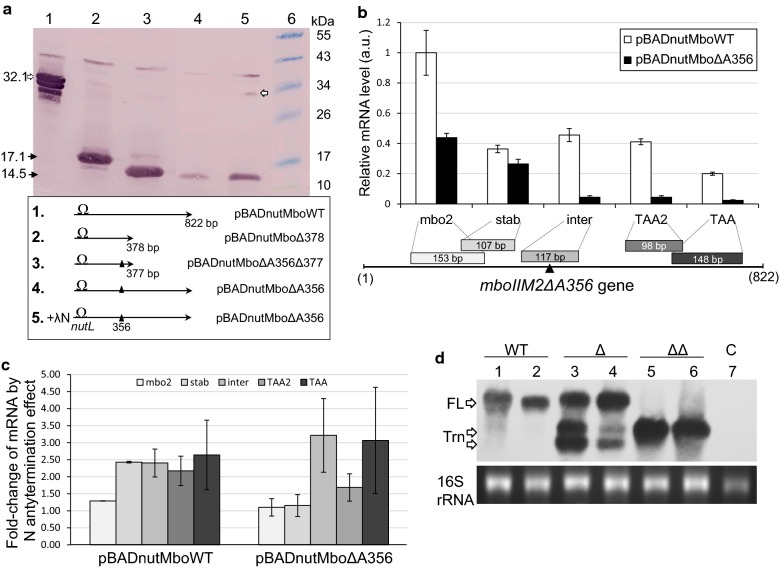
Here we report on the first systematic study on requirements for efficient transcriptional slippage by T7 phage and cellular RNAPs considering three parameters: homopolymer length, template type, and frameshift directionality preferences. Using a series of out-of-frame gfp reporter genes fused to a variety of A/T homopolymeric sequences we show that T7 RNAP has an exceptional potential for generating frameshifts and is capable of slipping on as few as three adenine or four thymidine residues in a row, in a flanking sequence-dependent manner. In contrast, bacterial RNAP exhibits a relatively low ability to baypass indel mutations and requires a run of at least 7 tymidine and even more adenine residues. This difference comes from involvement of various intrinsic proofreading properties. Our studies demonstrate distinct preference towards a specific homopolymer in slippage induction. Whereas insertion slippage performed by T7 RNAP (but not deletion) occurs tendentiously on poly(A) rather than on poly(T) runs, strong bias towards poly(T) for the host RNAP is observed.
Intrinsic RNAP slippage properties involve trade-offs between accuracy, speed and processivity of transcription. Viral T7 RNAP manifests far greater inclinations to the transcriptional slippage than E. coli RNAP. This possibly plays an important role in driving bacteriophage adaptation and therefore could be considered as beneficial. However, from biotechnological and experimental viewpoint, this might create some problems, and strongly argues for employing bacterial expression systems, stocked with proofreading mechanisms.
基因表达的病毒或宿主系统假设过程具有可重复性和蛋白质产物的高质量。由于转录的水平和保真度主要决定了整体效率,因此应识别并优化所有有助于降低其效率的因素。在许多观察到的过程中,在基因内的同源聚 A/T 序列中发生的转录时的核苷酸非程序性插入/缺失(indel)(滑动)可以极大地影响其表达。迄今为止,尚未报道过最常用的大肠杆菌和 T7 噬菌体 RNA 聚合酶(RNAP)对此类错误 mRNA 合成的倾向的比较研究。为了解决这个问题,我们通过评估对插入缺失依赖性表型变化的影响来评估易位倾向的 A/T 序列的影响。使用两种最有效的启动子 P of E. coli 和噬菌体 T7 的φ10,检查了 RNAP 特异性表达谱。
在这里,我们报告了第一个系统研究 T7 噬菌体和细胞 RNAP 对高效转录滑动的要求,考虑了三个参数:同聚物长度,模板类型和移框方向偏好。使用一系列与各种 A/T 同聚物序列融合的失帧 GFP 报告基因,我们表明 T7 RNAP 具有产生移框的异常潜力,并且能够在侧翼序列依赖性的方式中在多达三个腺嘌呤或四个胸腺嘧啶残基上滑动。相比之下,细菌 RNAP 表现出相对较低的旁路插入缺失突变的能力,并且需要至少 7 个胸腺嘧啶甚至更多的腺嘌呤残基的连续序列。这种差异来自于各种内在的校对特性的参与。我们的研究表明,在诱导滑动时,对特定同聚物存在明显的偏好。尽管 T7 RNAP 进行的插入滑动(但不是缺失)倾向于在多(A)而不是多(T)上发生,但宿主 RNAP 对多(T)具有强烈的偏见。
内在的 RNAP 滑动特性涉及转录准确性,速度和进程之间的权衡。病毒 T7 RNAP 比大肠杆菌 RNAP 表现出更大的转录滑动倾向。这可能在驱动噬菌体适应方面发挥了重要作用,因此可以被认为是有益的。但是,从生物技术和实验的角度来看,这可能会带来一些问题,并强烈主张使用具有校对机制的细菌表达系统。