Center for Human Movement Science, University of Groningen, University Medical Center Groningen, Hanzeplein 1, HPC CB41, Postbus 30.001, 9700 RB, Groningen, The Netherlands.
Department of Rehabilitation Medicine, University of Groningen, University Medical Center Groningen, Groningen, The Netherlands.
Eur J Appl Physiol. 2019 Feb;119(2):419-428. doi: 10.1007/s00421-018-4035-4. Epub 2018 Nov 24.
We examined the possibility that old adults use flexibility in joint coordination as a compensatory mechanism for the age-related decline in muscle strength when performing the sit-to-stand (STS) task repeatedly under high force and balance demands.
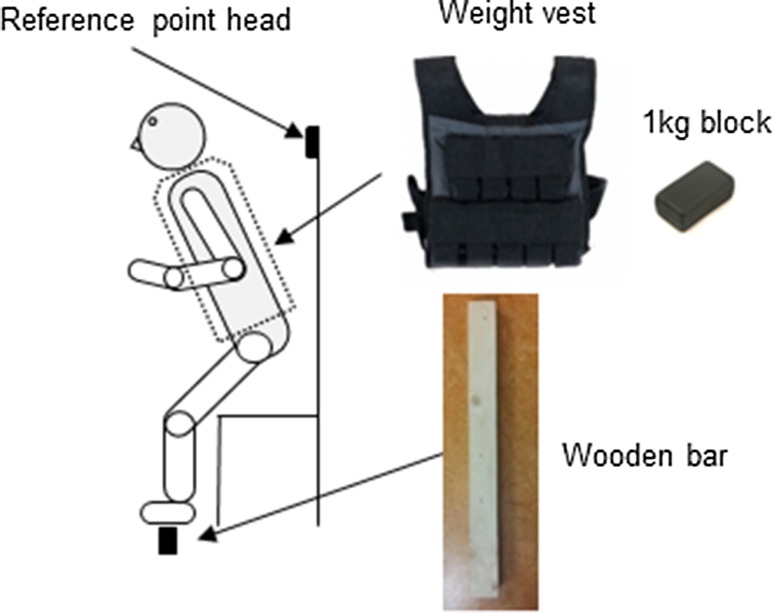
Young (n = 14, 22.4 ± 2.1) and old (n = 12, 70 ± 3.2) healthy adults performed repeated STSs under high and low force and balance demands. The balance demand was manipulated by reducing the base of support and the force demand by increasing body weight with a weight vest. Uncontrolled manifold analysis was used to quantify age differences in motor flexibility.
While there were age-typical differences in kinematic STS strategies, flexibility in joint coordination was independent of age and task difficulty during repeated STSs.
That simple manipulations of force and balance demands did not affect flexibility in joint coordination in old and young adults suggests that motor flexibility acts as a compensatory mechanism only at the limits of available muscle strength and balance abilities during STS movements. Intervention studies should identify how changes in specific neuromuscular functions affect flexibility in joint coordination during activities of daily living such as STS.
我们研究了老年人在重复进行高力量和高平衡需求的坐站(STS)任务时,是否可以通过关节协调的灵活性作为一种补偿机制,来弥补与年龄相关的肌肉力量下降。
年轻组(n=14,22.4±2.1 岁)和老年组(n=12,70±3.2 岁)健康成年人在高力和低力以及高平衡和低平衡需求下进行重复 STS。通过减小支撑基础和使用重物背心增加体重来改变力需求,以此来操纵平衡需求。使用非控制流形分析来量化运动灵活性在年龄上的差异。
虽然在 STS 的运动学策略上存在与年龄相关的典型差异,但在重复 STS 期间,关节协调的灵活性与年龄和任务难度无关。
简单地改变力量和平衡需求并没有影响老年和年轻成年人的关节协调灵活性,这表明在 STS 运动中,只有在肌肉力量和平衡能力的可用极限下,运动灵活性才作为一种补偿机制。干预研究应该确定特定的神经肌肉功能变化如何影响日常生活活动(如 STS)中的关节协调灵活性。