Department of Veterinary Integrative Biosciences, College of Veterinary Medicine and Biomedical Sciences, Texas A&M University, College Station, TX 77843-4458.
Genome Biol Evol. 2019 Jan 1;11(1):136-165. doi: 10.1093/gbe/evy252.
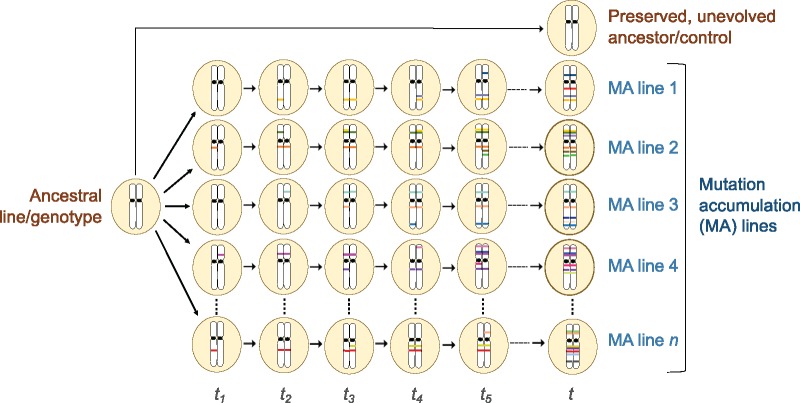
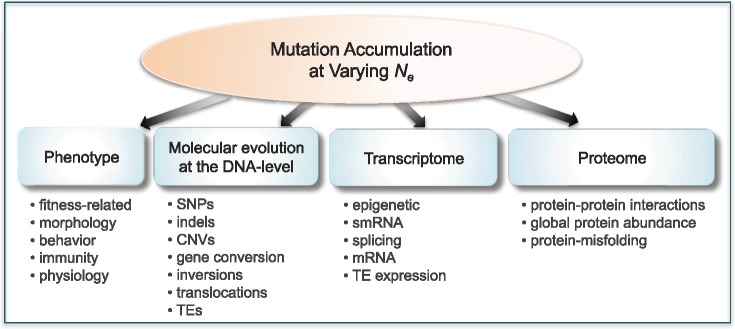
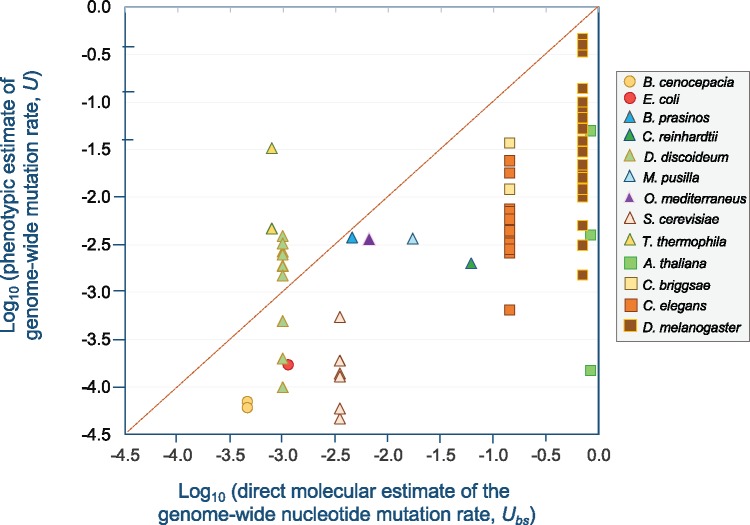
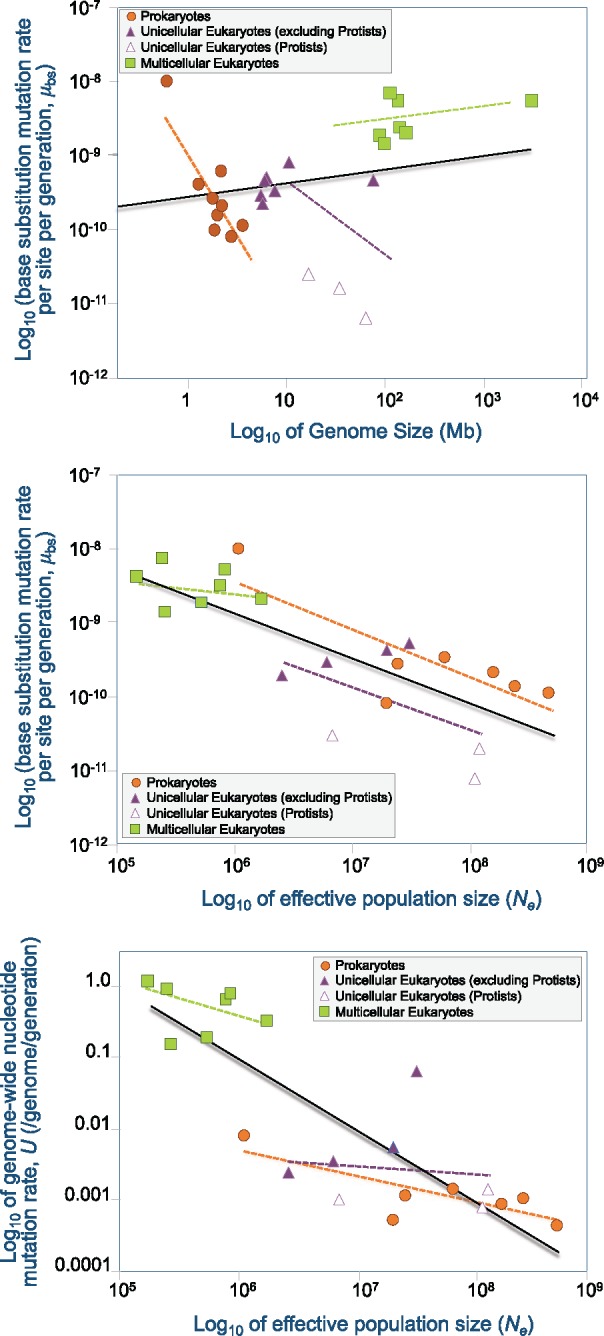
Mutations spawn genetic variation which, in turn, fuels evolution. Hence, experimental investigations into the rate and fitness effects of spontaneous mutations are central to the study of evolution. Mutation accumulation (MA) experiments have served as a cornerstone for furthering our understanding of spontaneous mutations for four decades. In the pregenomic era, phenotypic measurements of fitness-related traits in MA lines were used to indirectly estimate key mutational parameters, such as the genomic mutation rate, new mutational variance per generation, and the average fitness effect of mutations. Rapidly emerging next-generating sequencing technology has supplanted this phenotype-dependent approach, enabling direct empirical estimates of the mutation rate and a more nuanced understanding of the relative contributions of different classes of mutations to the standing genetic variation. Whole-genome sequencing of MA lines bears immense potential to provide a unified account of the evolutionary process at multiple levels-the genetic basis of variation, and the evolutionary dynamics of mutations under the forces of selection and drift. In this review, we have attempted to synthesize key insights into the spontaneous mutation process that are rapidly emerging from the partnering of classical MA experiments with high-throughput sequencing, with particular emphasis on the spontaneous rates and molecular properties of different mutational classes in nuclear and mitochondrial genomes of diverse taxa, the contribution of mutations to the evolution of gene expression, and the rate and stability of transgenerational epigenetic modifications. Future advances in sequencing technologies will enable greater species representation to further refine our understanding of mutational parameters and their functional consequences.
突变产生遗传变异,进而推动进化。因此,对自发突变的速率和适合度效应的实验研究是进化研究的核心。突变积累(MA)实验作为推进我们对自发突变理解的基石已有四十年了。在基因组学时代之前,MA 系中与适合度相关的表型特征的测量被用于间接估计关键突变参数,例如基因组突变率、每代新的突变方差和突变的平均适合度效应。新兴的下一代测序技术已经取代了这种依赖表型的方法,能够直接估计突变率,并更细致地了解不同类型的突变对遗传变异的相对贡献。MA 系的全基因组测序具有提供在多个层面上对进化过程进行统一描述的巨大潜力,包括变异的遗传基础以及选择和漂变作用下突变的进化动态。在这篇综述中,我们试图综合从经典 MA 实验与高通量测序相结合中迅速涌现出的关于自发突变过程的关键见解,特别强调不同突变类型在不同分类群的核和线粒体基因组中的自发速率和分子特性、突变对基因表达进化的贡献,以及跨代表观遗传修饰的速率和稳定性。测序技术的未来进步将使更多的物种得到代表,从而进一步完善我们对突变参数及其功能后果的理解。