1Sagol School of Neuroscience, Tel Aviv University, Tel Aviv, Israel.
2Edmond and Lily Safra Center for Brain Sciences, Hebrew University, Jerusalem, Israel.
Mol Autism. 2018 Nov 21;9:57. doi: 10.1186/s13229-018-0240-6. eCollection 2018.
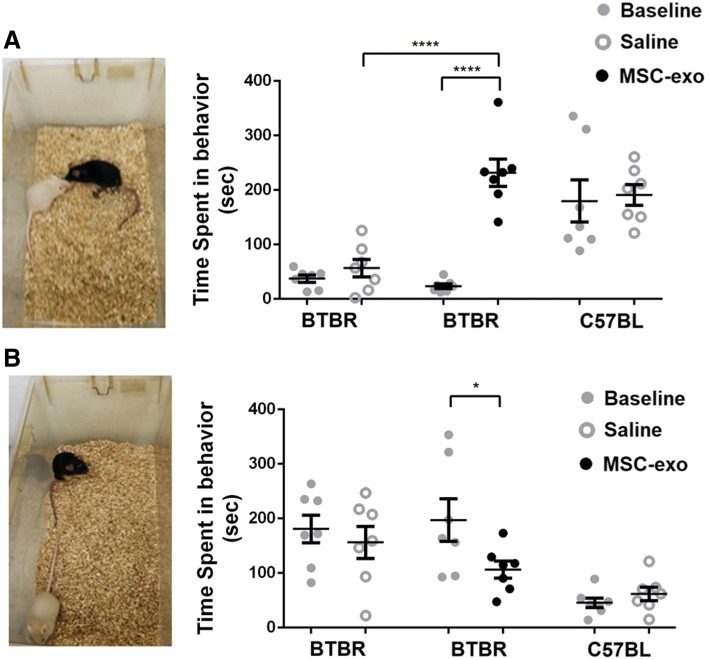
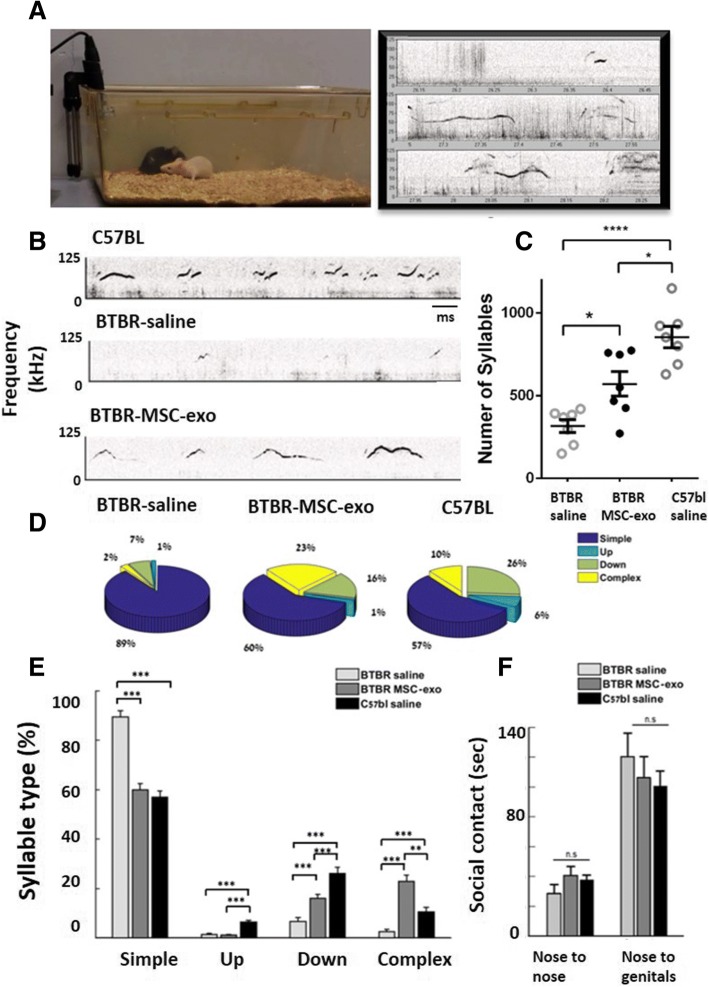
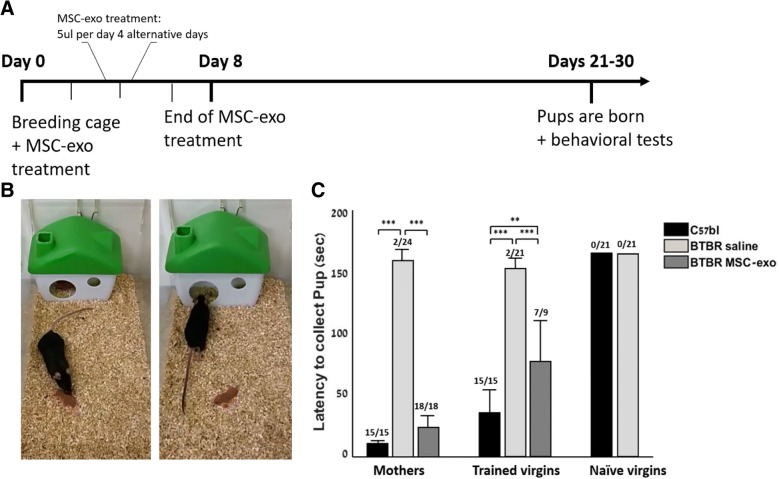
Autism spectrum disorders (ASD) are neurodevelopmental disorders characterized by three core symptoms that include social interaction deficits, cognitive inflexibility, and communication disorders. They have been steadily increasing in children over the past several years, with no effective treatment. BTBR T+tf/J (BTBR) mice are an accepted model of evaluating autistic-like behaviors as they present all core symptoms of ASD. We have previously shown that transplantation of human bone marrow mesenchymal stem cells (MSC) to the lateral ventricles of BTBR mice results in long lasting improvement in their autistic behavioral phenotypes. Recent studies point exosomes as the main mediators of the therapeutic effect of MSC. Here, we tested whether treatment with the exosomes secreted from MSC (MSC-exo) will show similar beneficial effects. We found that intranasal administration of MSC-exo increased male to male social interaction and reduced repetitive behaviors. Moreover, the treatment led to increases of male to female ultrasonic vocalizations and significant improvement in maternal behaviors of pup retrieval. No negative symptoms were detected following MSC-exo intranasal treatments in BTBR or healthy C57BL mice. The marked beneficial effects of the exosomes in BTBR mice may translate to a novel, non-invasive, and therapeutic strategy to reduce the symptoms of ASD.
自闭症谱系障碍(ASD)是一种神经发育障碍,其特征是存在社交互动缺陷、认知灵活性差和沟通障碍这三种核心症状。在过去的几年中,自闭症在儿童中的发病率一直在稳步上升,但目前尚无有效的治疗方法。BTBR T+tf/J(BTBR)小鼠是评估自闭症样行为的公认模型,因为它们具有 ASD 的所有核心症状。我们之前已经表明,将人骨髓间充质干细胞(MSC)移植到 BTBR 小鼠的侧脑室中,可使它们的自闭症行为表型得到持久改善。最近的研究指出,外泌体是 MSC 治疗效果的主要介导物。在这里,我们测试了 MSC 分泌的外泌体(MSC-exo)治疗是否会显示出类似的有益效果。我们发现,鼻内给予 MSC-exo 可增加雄性与雄性之间的社交互动,并减少重复行为。此外,该治疗方法可导致雄性与雌性之间的超声波发声增加,并显著改善幼鼠的母性行为。在 BTBR 或健康 C57BL 小鼠中,鼻内给予 MSC-exo 不会产生任何负面症状。外泌体在 BTBR 小鼠中的显著有益作用可能转化为一种新颖的、非侵入性的治疗策略,以减轻 ASD 的症状。