Yin Wenjing, Ma Hongyin, Qu Yang, Ren Jiaxin, Sun Yingying, Guo Zhen-Ni, Yang Yi
Stroke Center, Department of Neurology, First Hospital of Jilin University, Changchun, Jilin Province, China.
Neuroscience Research Center, Department of Neurology, First Hospital of Jilin University, Changchun, Jilin Province, China.
Neural Regen Res. 2025 May 1;20(5):1221-1235. doi: 10.4103/NRR.NRR-D-23-02051. Epub 2024 May 13.
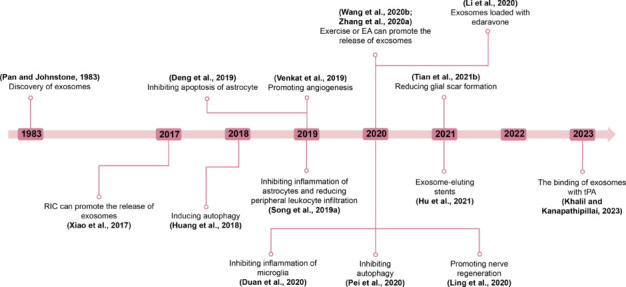
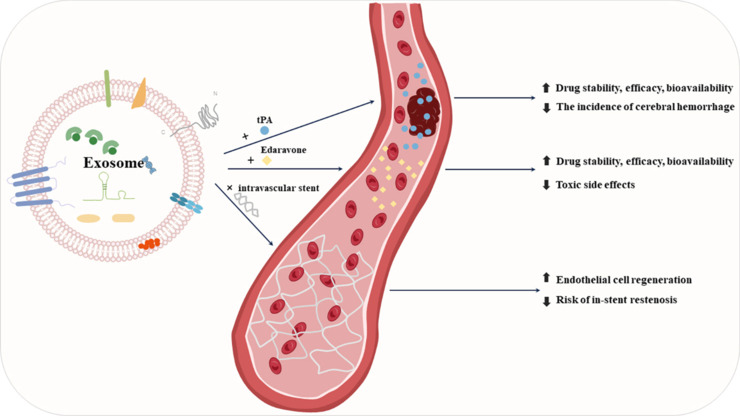
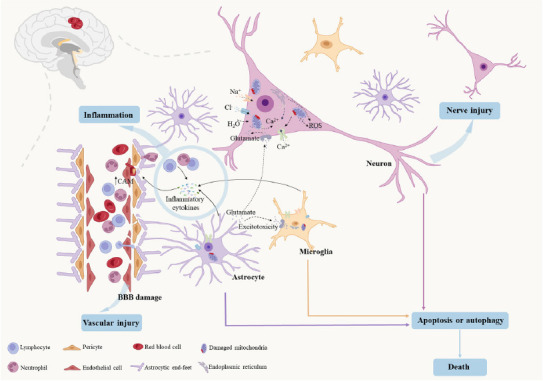
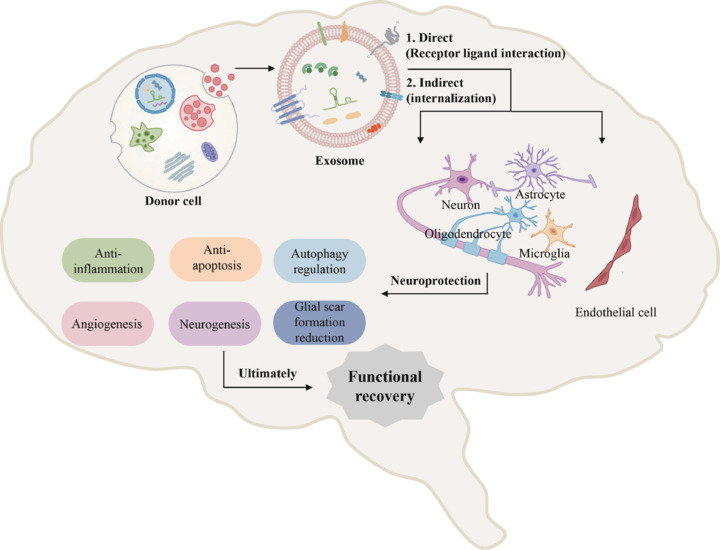
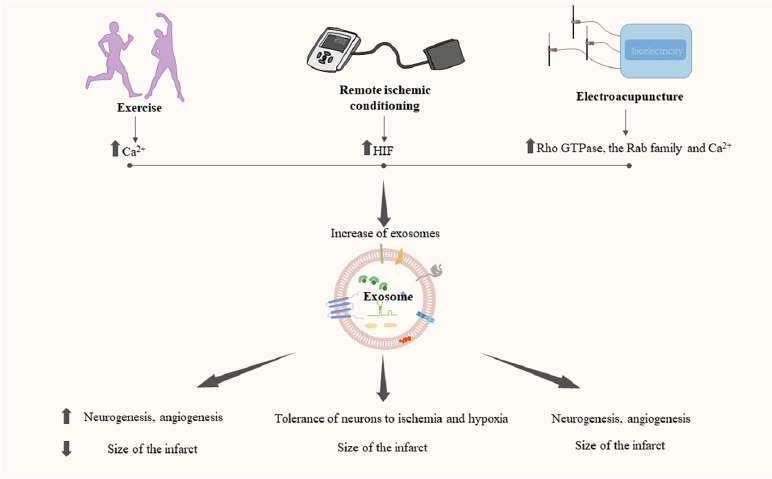
Current therapeutic strategies for ischemic stroke fall short of the desired objective of neurological functional recovery. Therefore, there is an urgent need to develop new methods for the treatment of this condition. Exosomes are natural cell-derived vesicles that mediate signal transduction between cells under physiological and pathological conditions. They have low immunogenicity, good stability, high delivery efficiency, and the ability to cross the blood-brain barrier. These physiological properties of exosomes have the potential to lead to new breakthroughs in the treatment of ischemic stroke. The rapid development of nanotechnology has advanced the application of engineered exosomes, which can effectively improve targeting ability, enhance therapeutic efficacy, and minimize the dosages needed. Advances in technology have also driven clinical translational research on exosomes. In this review, we describe the therapeutic effects of exosomes and their positive roles in current treatment strategies for ischemic stroke, including their anti-inflammation, anti-apoptosis, autophagy-regulation, angiogenesis, neurogenesis, and glial scar formation reduction effects. However, it is worth noting that, despite their significant therapeutic potential, there remains a dearth of standardized characterization methods and efficient isolation techniques capable of producing highly purified exosomes. Future optimization strategies should prioritize the exploration of suitable isolation techniques and the establishment of unified workflows to effectively harness exosomes for diagnostic or therapeutic applications in ischemic stroke. Ultimately, our review aims to summarize our understanding of exosome-based treatment prospects in ischemic stroke and foster innovative ideas for the development of exosome-based therapies.
目前缺血性中风的治疗策略未能达到神经功能恢复的预期目标。因此,迫切需要开发治疗这种疾病的新方法。外泌体是天然的细胞衍生囊泡,在生理和病理条件下介导细胞间的信号转导。它们具有低免疫原性、良好的稳定性、高递送效率以及穿越血脑屏障的能力。外泌体的这些生理特性有可能在缺血性中风的治疗中带来新的突破。纳米技术的快速发展推动了工程化外泌体的应用,其可以有效提高靶向能力、增强治疗效果并减少所需剂量。技术进步也推动了外泌体的临床转化研究。在这篇综述中,我们描述了外泌体的治疗作用及其在当前缺血性中风治疗策略中的积极作用,包括它们的抗炎、抗凋亡、自噬调节、血管生成、神经发生以及减少胶质瘢痕形成的作用。然而,值得注意的是,尽管外泌体具有显著的治疗潜力,但仍然缺乏能够产生高度纯化外泌体的标准化表征方法和高效分离技术。未来的优化策略应优先探索合适的分离技术并建立统一的工作流程,以有效地将外泌体用于缺血性中风的诊断或治疗应用。最终,我们的综述旨在总结我们对基于外泌体的缺血性中风治疗前景的理解,并促进基于外泌体疗法开发的创新思路。