1 College of Medicine, Gachon University, Incheon, Korea.
2 Gachon Institute of Genome Medicine and Science, Gachon University Gil Medical Center, Incheon, Korea.
OMICS. 2018 Dec;22(12):770-778. doi: 10.1089/omi.2018.0146. Epub 2018 Nov 27.
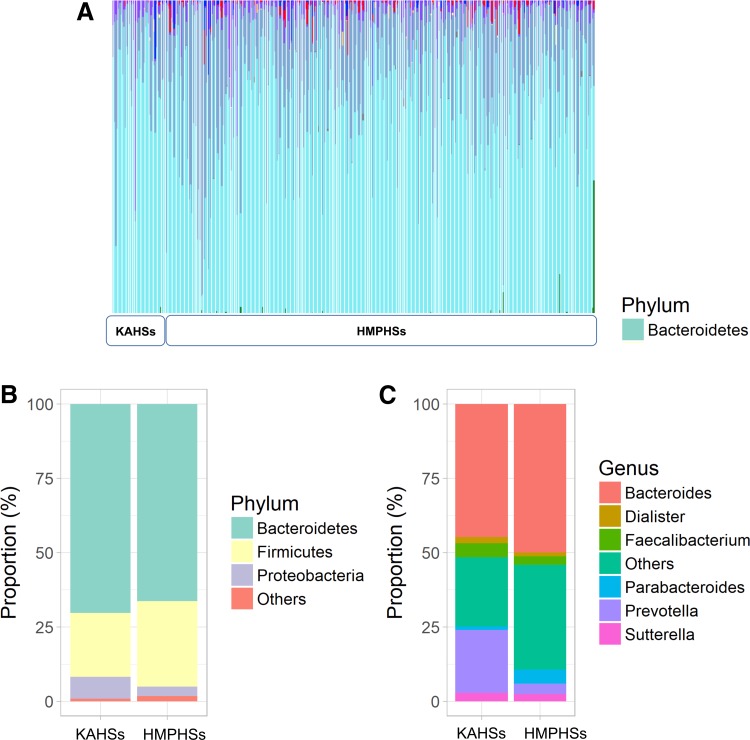
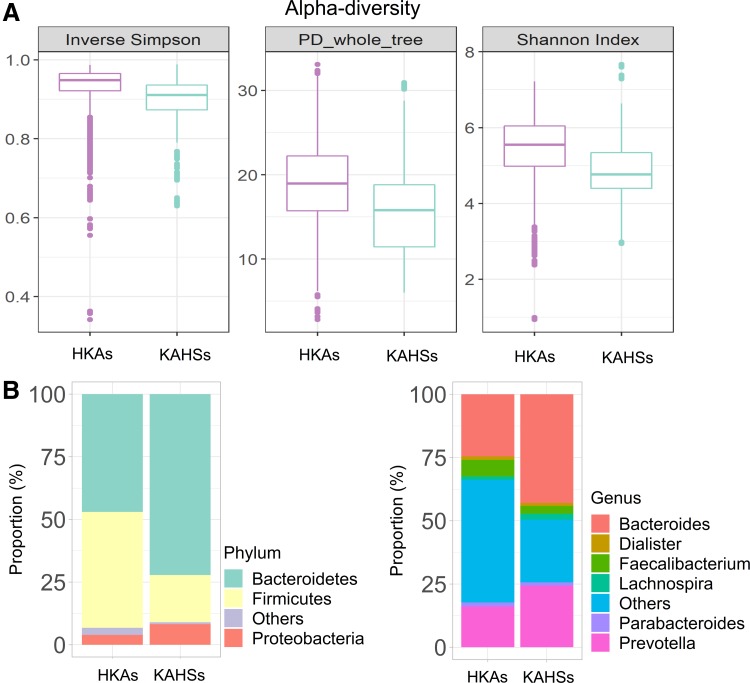
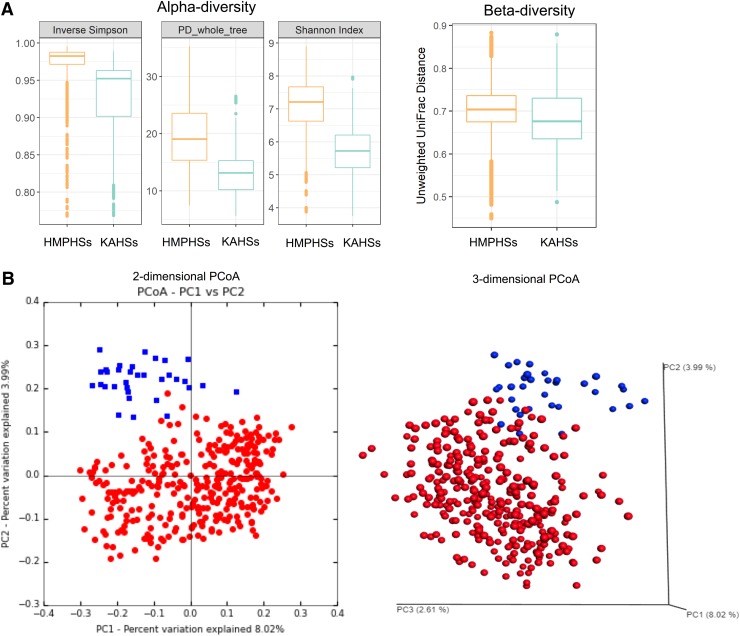
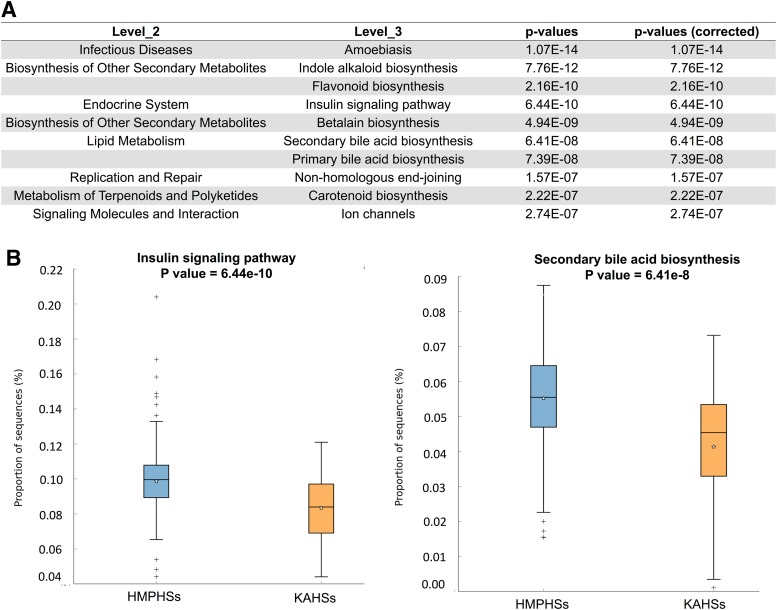
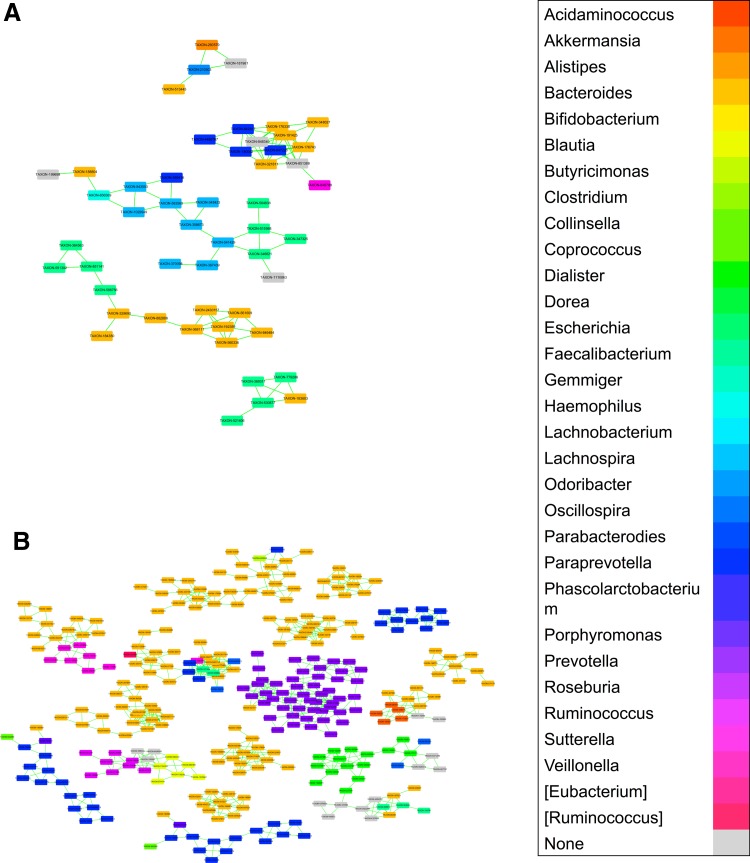
Comparative studies of microbiome variation in world populations and different developmental stages of organisms are essential to decipher the linkages among microbiome, health, and disease. Notably, the gut microbiota are believed to mature in early life. In this context, we compared the gut microbiota diversity in Korean adolescent healthy samples (KAHSs) to healthy Korean adults (HKAs) as well as the Human Microbiome Project healthy samples (HMPHSs), the latter being one of the largest adult cohorts, based on organismal composition, alpha- and beta-diversities, function/pathway prediction analysis, and co-occurrence networks. We found that the gut microbiota compositions, including the ratios of firmicutes to bacteroidetes, between KAHSs and HMPHSs were different, and the diversities of KAHSs were less than those of HMPHSs. The predicted functions, for example, secondary bile acid synthesis and insulin signaling of KAHSs and HMPHSs, were also significantly different. Genus-level networks showed that co-occurrences among different taxa more frequently happened in HMPHSs than in KAHSs. Even though both KAHSs and HMPHSs represent healthy microbiomes, comparisons showed substantial differences, likely implicating different diets, environments, and demographics. Interestingly, we observed lower microbial diversities and less frequent co-occurrences among different taxa in KAHSs than adult HMPHSs and HKAs. These new findings collectively suggest that the adolescent gut microbiota in the present Korean sample did not reach the extent of maturity of adult microbiota diversity. In all, further population studies of microbiome variation across geographies and developmental stages are warranted, and should usefully inform future diagnostics and therapeutics innovation targeting the microbiome.
比较世界不同人群和生物不同发育阶段的微生物组变异的研究对于解析微生物组、健康和疾病之间的联系至关重要。值得注意的是,人们认为肠道微生物组在生命早期成熟。在这方面,我们比较了韩国青少年健康样本(KAHSs)与健康韩国成年人(HKAs)以及人类微生物组计划健康样本(HMPHSs)的肠道微生物组多样性,后者是最大的成人队列之一,基于生物体组成、α-和β-多样性、功能/途径预测分析和共同发生网络。我们发现,KAHSs 和 HMPHSs 之间的肠道微生物组组成(包括厚壁菌门与拟杆菌门的比例)存在差异,并且 KAHSs 的多样性低于 HMPHSs。预测的功能,例如 KAHSs 和 HMPHSs 的次级胆汁酸合成和胰岛素信号,也有显著差异。属级网络显示,不同分类群之间的共同发生在 HMPHSs 中比在 KAHSs 中更为频繁。尽管 KAHSs 和 HMPHSs 都代表健康的微生物组,但比较显示出显著的差异,这可能暗示了不同的饮食、环境和人口统计学特征。有趣的是,我们观察到 KAHSs 中的微生物多样性较低,不同分类群之间的共同发生频率也较低,与成年 HMPHSs 和 HKAs 相比。这些新发现共同表明,目前韩国样本中的青少年肠道微生物组尚未达到成年微生物组多样性成熟的程度。总之,需要对不同地理位置和发育阶段的微生物组变异进行进一步的人群研究,这将有助于为针对微生物组的未来诊断和治疗创新提供信息。