School of Environmental Science and Engineering, Tianjin University, Tianjin 300350, PR China; Tianjin Key Lab of Indoor Air Environmental Quality Control, Tianjin 300350, PR China.
School of Environmental Science and Engineering, Tianjin University, Tianjin 300350, PR China; Tianjin Key Lab of Indoor Air Environmental Quality Control, Tianjin 300350, PR China.
Sci Total Environ. 2019 Mar 10;655:787-795. doi: 10.1016/j.scitotenv.2018.11.266. Epub 2018 Nov 20.
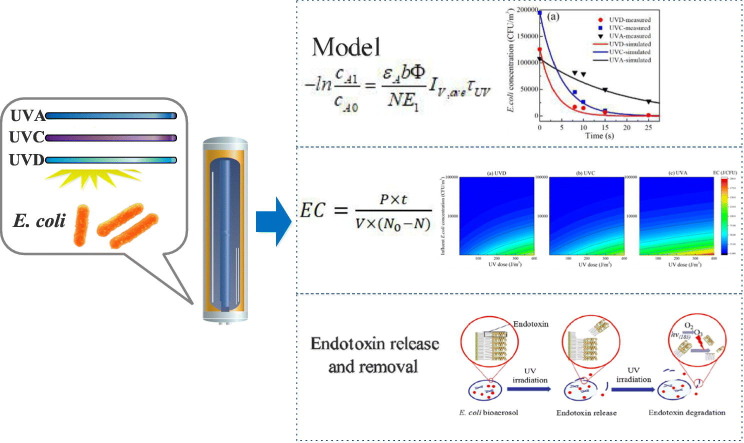
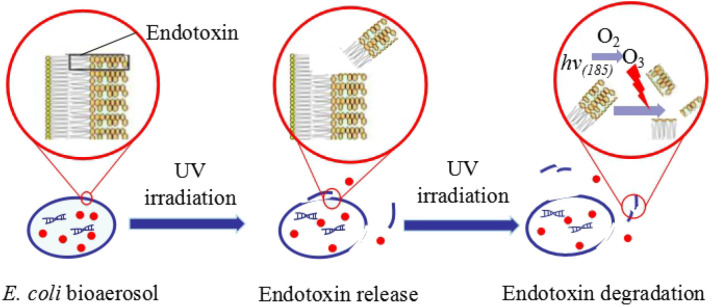
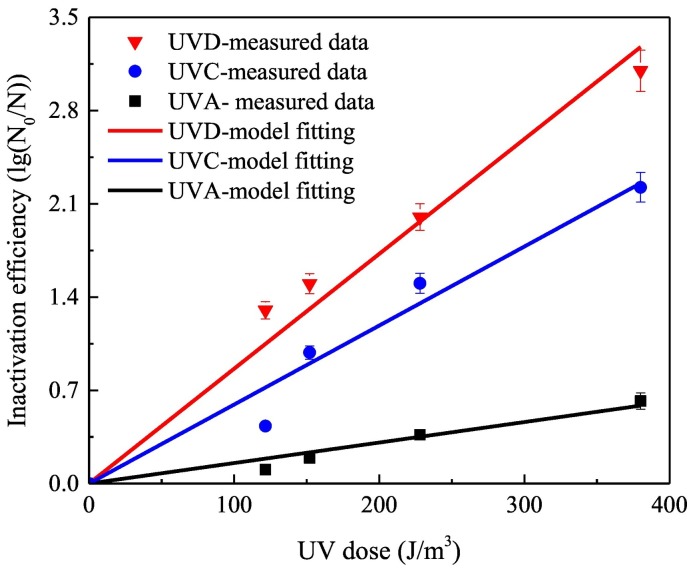
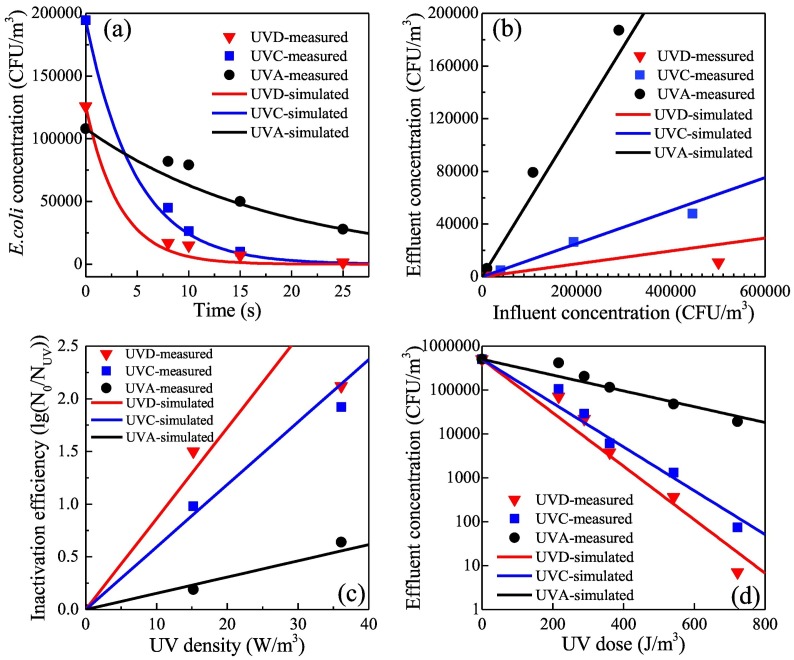
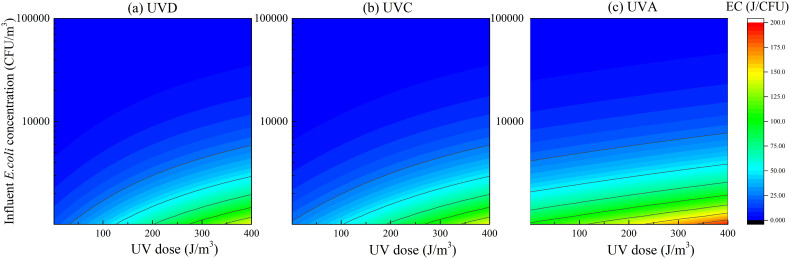
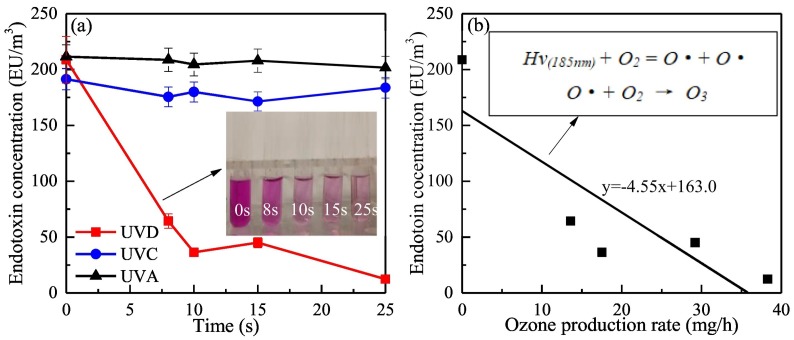
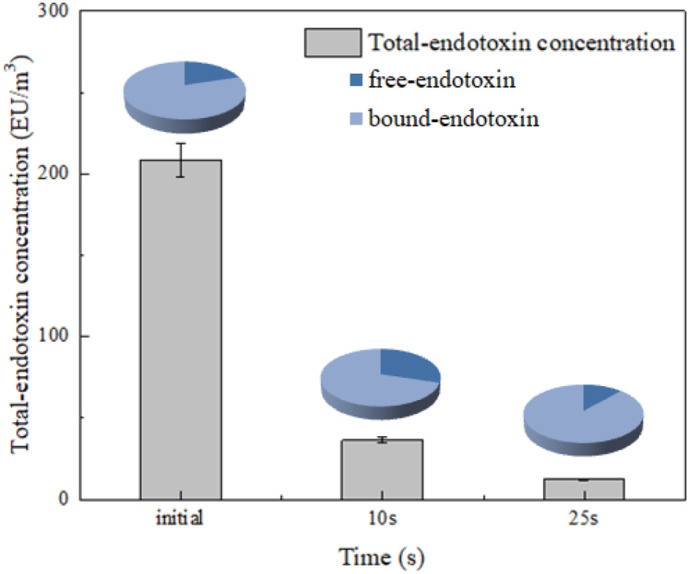
Airborne bacteria-containing bioaerosols have attracted increased research attention on account of their adverse effects on human health. Ultraviolet germicidal irradiation (UVGI) is an effective method to inactivate airborne microorganisms. The present study models and compares the inactivation performance of three UV sources in the UVGI for aerosolized Escherichia coli. Inactivation efficiency of 0.5, 2.2 and 3.1 logarithmic order was obtained at an exposure UV dose of 370 J/m under UVA (365 nm), UVC (254 nm) and UVD (185 nm) sources, respectively. A Beer-Lambert law-based model was developed and validated to compare the inactivation performances of the UV sources, and modeling enabled prediction of inactivation efficiency and analysis of the sensitivity of several parameters. Low influent E. coli concentrations and high UV doses resulted in high energy consumption (EC). The change in airborne endotoxin concentration during UV inactivation was analyzed, and UVC and UVA irradiation showed no marked effect on endotoxin degradation. By contrast, both free and bound endotoxins could be removed by UVD treatment, which is attributed to the ozone generated by the UVD source. The results of this study can provide a better understanding of the air disinfection and airborne endotoxin removal processes.
空气中含细菌的生物气溶胶因其对人类健康的不良影响而引起了越来越多的研究关注。紫外线杀菌(UVGI)是一种有效杀灭空气中微生物的方法。本研究模拟并比较了三种紫外线源在空气中大肠杆菌的 UVGI 中的灭活性能。在 UVA(365nm)、UVC(254nm)和 UVD(185nm)三种紫外线源下,暴露于 370J/m 的紫外线剂量下,分别获得了 0.5、2.2 和 3.1 个对数的灭活效率。建立并验证了一个基于 Beer-Lambert 定律的模型来比较紫外线源的灭活性能,通过建模可以预测灭活效率并分析几个参数的敏感性。低入口大肠杆菌浓度和高紫外线剂量导致高能耗(EC)。分析了紫外线灭活过程中空气中内毒素浓度的变化,结果表明 UVC 和 UVA 照射对内毒素降解没有明显影响。相比之下,UVD 处理可以去除游离和结合的内毒素,这归因于 UVD 源产生的臭氧。本研究的结果可以更好地理解空气消毒和空气中内毒素去除过程。