Zhang Qi, Damit Brian, Welch James, Park Hyoungjun, Wu Chang-Yu, Sigmund Wolfgang
Department of Environmental Engineering Sciences, University of Florida, Gainesville, FL 32611, USA.
Department of Linguistics, University of Florida, Gainesville, FL 32611, USA.
J Aerosol Sci. 2010 Sep;41(9):880-888. doi: 10.1016/j.jaerosci.2010.06.001. Epub 2010 Jun 10.
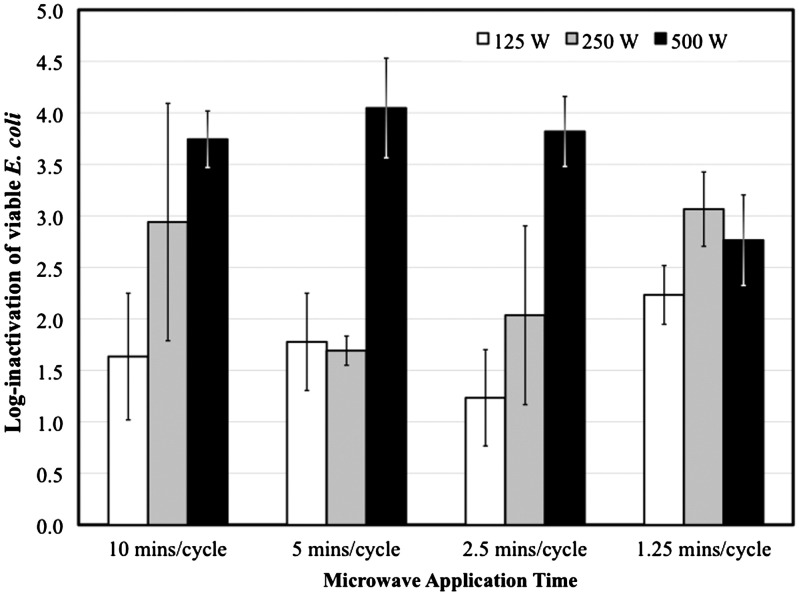
Airborne biological agents, albeit intentionally released or naturally occurring, pose one of the biggest threats to public health and security. In this study, a microwave assisted nanofibrous air filtration system was developed to disinfect air containing airborne pathogens. Aerosolized vegetative cells and endospores, as benign surrogates of pathogens, were collected on nanofibrous filters and treated by microwave irradiation. Both static on-filter and dynamic in-flight tests were carried out. Results showed that cells were efficiently disinfected in both static and in-flight tests, whereas endospores were more resistant to this treatment. Microwave power level was found to be the major factor determining the effectiveness of disinfection. Both thermal and non-thermal effects of microwave irradiation contributed to the disinfection. Reducing flow velocity to decrease heat loss yielded higher disinfection efficiency.
空气传播生物制剂,无论是故意释放还是自然产生,都对公众健康和安全构成最大威胁之一。在本研究中,开发了一种微波辅助纳米纤维空气过滤系统,用于对含有空气传播病原体的空气进行消毒。雾化的营养细胞和芽孢作为病原体的良性替代物,被收集在纳米纤维过滤器上,并通过微波辐射进行处理。进行了静态滤器上和动态飞行中测试。结果表明,在静态和飞行中测试中细胞都能被有效消毒,而芽孢对这种处理更具抗性。发现微波功率水平是决定消毒效果的主要因素。微波辐射的热效应和非热效应都有助于消毒。降低流速以减少热损失可产生更高的消毒效率。