1 School of Pharmacy, Anhui Medical University, Hefei, China.
2 The First Affiliated Hospital of Anhui Medical University, Hefei, China.
Integr Cancer Ther. 2019 Jan-Dec;18:1534735418810799. doi: 10.1177/1534735418810799. Epub 2018 Nov 27.
Clinical research has paid increasing attention to quality of life (QoL) in recent years, but the assessment of QoL is difficult, hampered by the subjectivity, complexity, and adherence of patients and physicians. According to previous studies, QoL in cancer patients is related to performance status (PS) and influenced by chemotherapy-related toxicity. Aidi injection, a traditional Chinese medicine injection, is used as an adjuvant drug to enhance effectiveness of chemotherapy. The study aims to investigate whether Aidi injection could improve QoL by improving PS and reducing toxicity caused by chemotherapy.
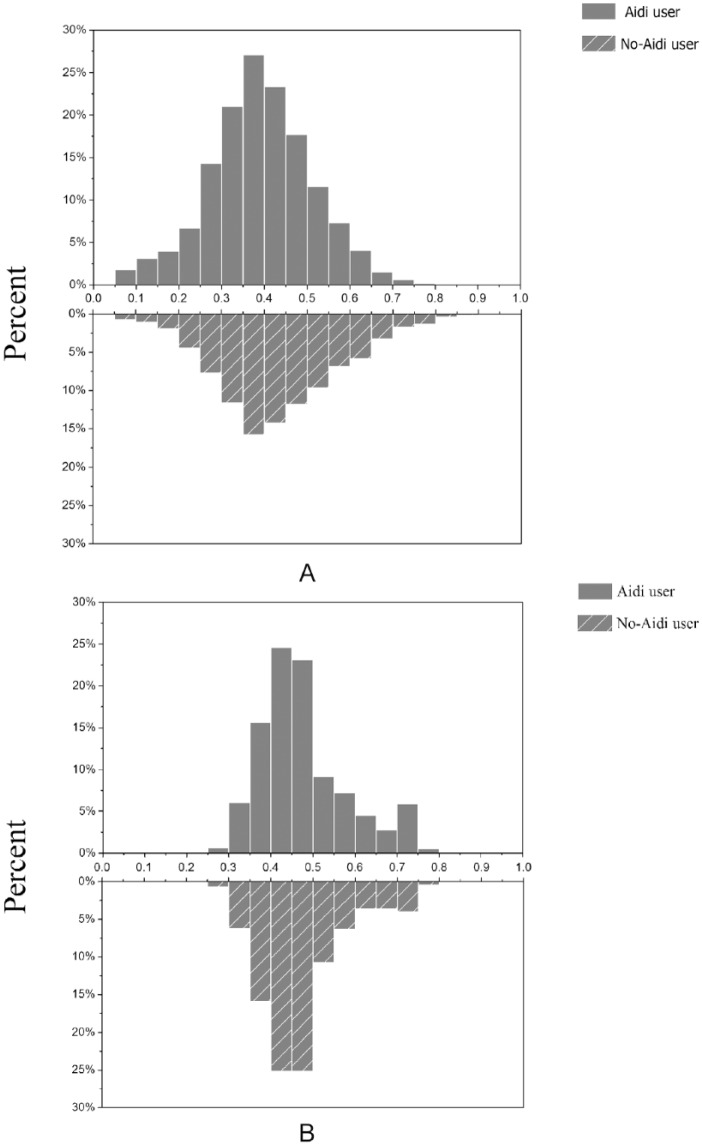
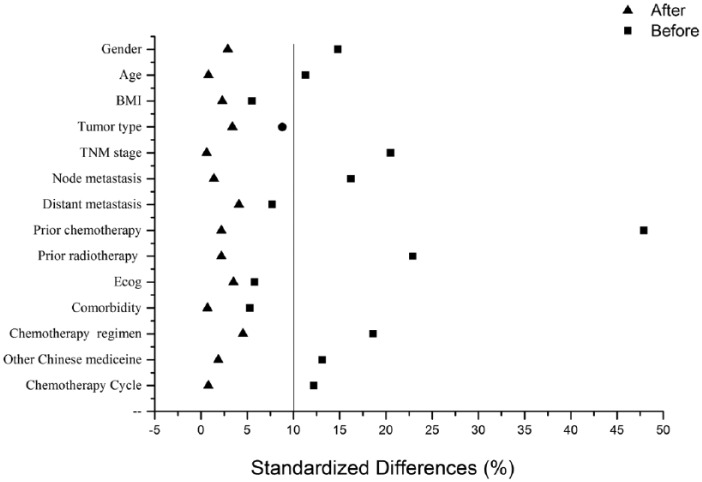
A retrospective cohort study was performed at the First Affiliated Hospital of Anhui Medicine University. Data of consecutive patients diagnosed with cancers between January 2014 and June 2017 were retrieved from the electronic medical record system. After a 1:1 propensity score match, patients were then divided into 2 groups based on the therapies used, that is, Aidi injection combined with chemotherapy and chemotherapy alone, and the PS, chemotherapy-related toxicity, and combined medication information were compared. The effect of different dosages of Aidi injection on patients was further explored.
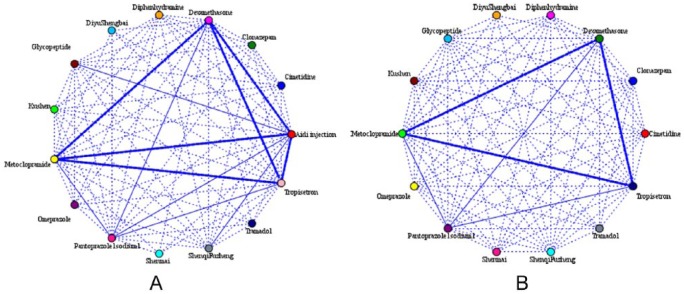
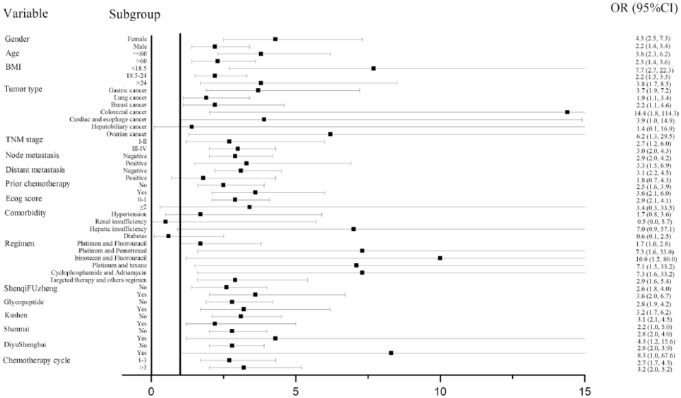
A total of 3200 patients were included in this study. Aidi injection combined with chemotherapy exhibited significantly benefit in PS ( P < .001, odds ratio [OR] 3.4, 95% confidence interval [CI] 2.4-4.8) compared with chemotherapy alone after adjusting for the factors that affect PS. The improvement rate of PS in the Aidi group was significantly higher than in the control group across the stratification of gender, age, tumor type, TNM stage, body mass index, nodal metastasis, prior chemotherapy, chemotherapy regimens, other Chinese tradition medicines, and chemotherapy cycle. Meanwhile, Aidi injection used synchronously with chemotherapeutic drugs could decrease the incident rate of damage to liver and kidney function, myelosuppression, and gastrointestinal reactions caused by chemotherapy.
It was indicated that the integrative approach combining chemotherapy with Aidi injection, especially with the conventional dosage of Aidi injection, had significant benefit on QoL in cancer patients.
近年来,临床研究越来越关注生活质量(QoL),但 QoL 的评估具有主观性、复杂性和患者与医生的依从性,因此较为困难。既往研究表明,癌症患者的 QoL 与功能状态(PS)有关,并受到化疗相关毒性的影响。艾迪注射液是一种中药注射剂,作为化疗增效药物被广泛使用。本研究旨在探讨艾迪注射液是否可以通过改善 PS 和减轻化疗相关毒性来提高 QoL。
采用回顾性队列研究,收集 2014 年 1 月至 2017 年 6 月在安徽医科大学第一附属医院就诊的连续癌症患者的电子病历系统数据。通过 1:1 倾向评分匹配后,根据治疗方法将患者分为艾迪注射液联合化疗组和单纯化疗组,比较 PS、化疗相关毒性和联合用药信息。进一步探讨了不同剂量的艾迪注射液对患者的影响。
本研究共纳入 3200 例患者。调整影响 PS 的因素后,艾迪注射液联合化疗组 PS 改善情况明显优于单纯化疗组(P<0.001,优势比[OR]3.4,95%置信区间[CI]2.4~4.8)。在按性别、年龄、肿瘤类型、TNM 分期、体质指数、淋巴结转移、既往化疗、化疗方案、其他中药和化疗周期分层后,艾迪组 PS 改善率均明显高于对照组。同时,艾迪注射液与化疗药物同步使用可降低化疗引起的肝肾功能损害、骨髓抑制和胃肠道反应的发生率。
联合化疗和艾迪注射液治疗,特别是使用常规剂量的艾迪注射液,可显著提高癌症患者的 QoL。