State Key Laboratory of Functions and Applications of Medicinal Plants, Guizhou Provincial Key Laboratory of Pharmaceutics, Guizhou Medical University, Guiyang, China.
The Affiliated Hospital of Guizhou Medical University, Guiyang, China.
Pharm Biol. 2022 Dec;60(1):1616-1624. doi: 10.1080/13880209.2022.2110127.
Aidi injection (ADI), a traditional Chinese medicine antitumor injection, is usually combined with doxorubicin (DOX) for the treatment of malignant tumours. The cardiotoxicity of DOX is ameliorated by ADI in the clinic. However, the relevant mechanism is unknown.
To investigate the effects of ADI on DOX-induced cardiotoxicity and its mechanism.
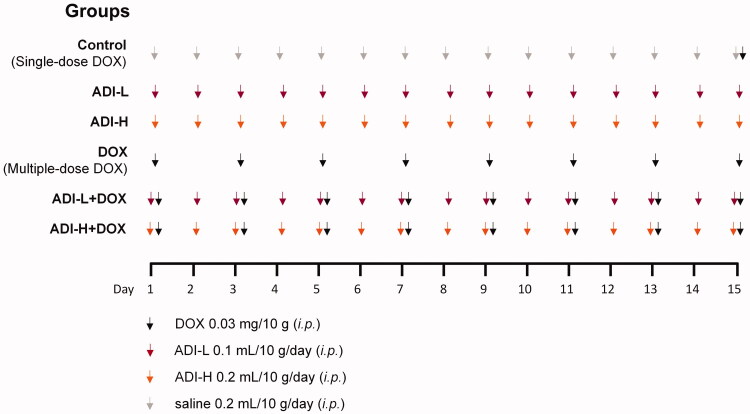
ICR mice were randomly divided into six groups: control, ADI-L, ADI-H, DOX, DOX + ADI-L and DOX + ADI-H. DOX (, 0.03 mg/10 g) was administered in the presence or absence of ADI ( 0.1 or 0.2 mL/10 g) for two weeks. Heart pathology and levels of AST, LDH, CK, CK-MB and BNP were assessed. H9c2 cells were treated with DOX in the presence or absence of ADI (1, 4, 10%). Cell viability, caspase-3 activity, nuclear morphology, and CBR1 expression were then evaluated. DOX and doxorubicinol (DOXol) concentrations in heart, liver, kidneys, serum, and cells were analysed by UPLC-MS/MS.
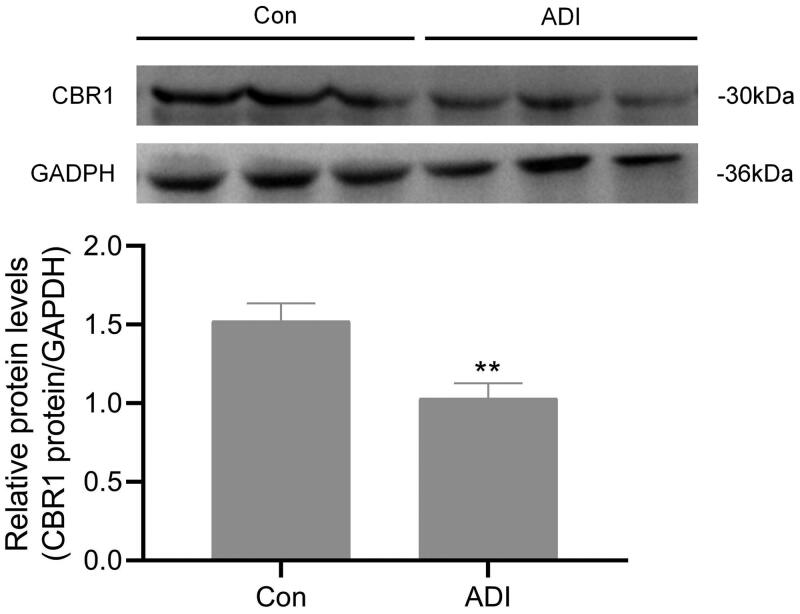
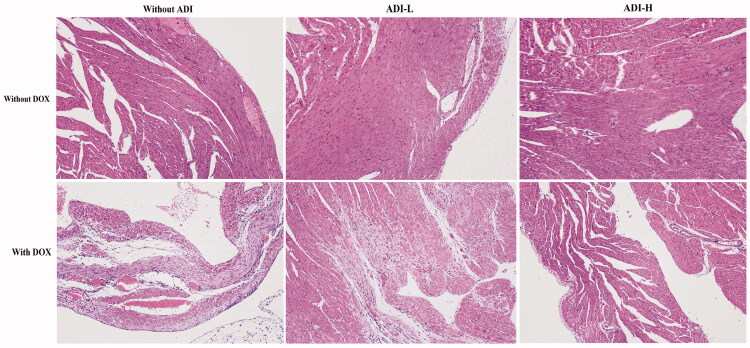
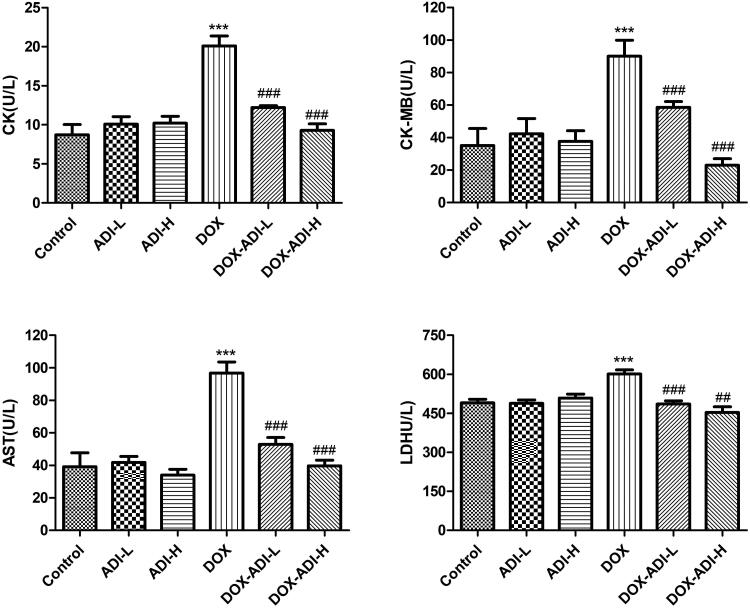
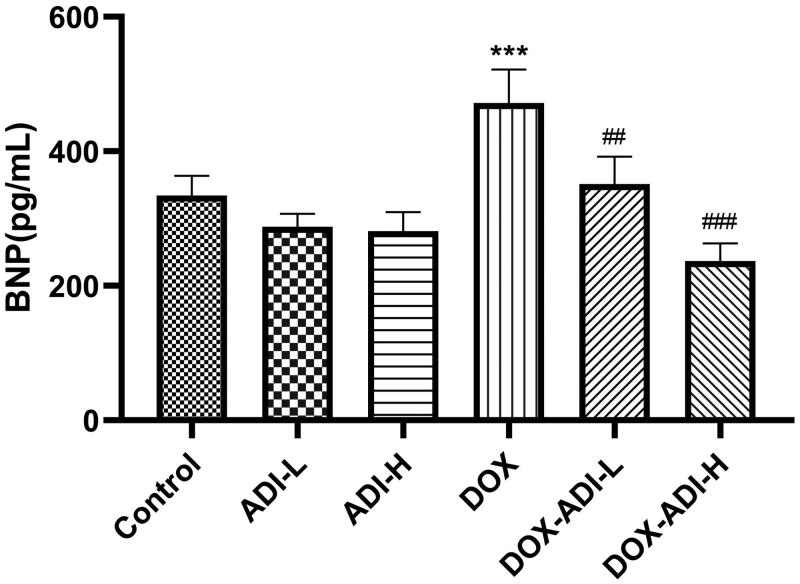
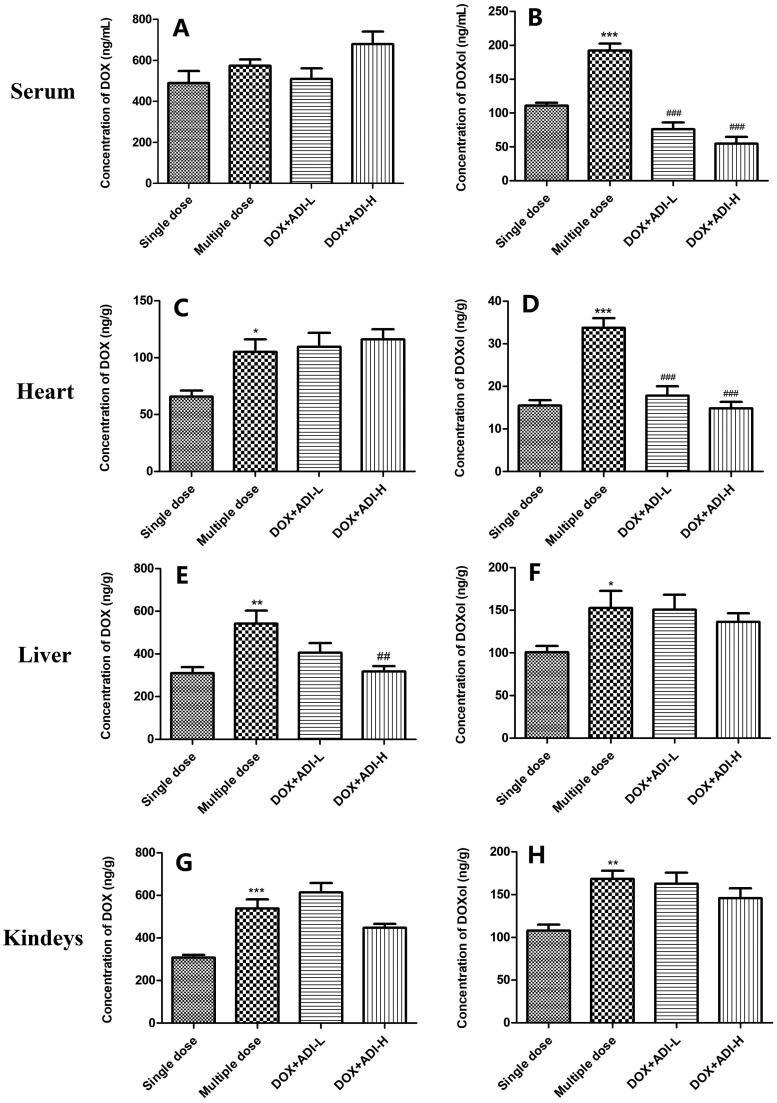
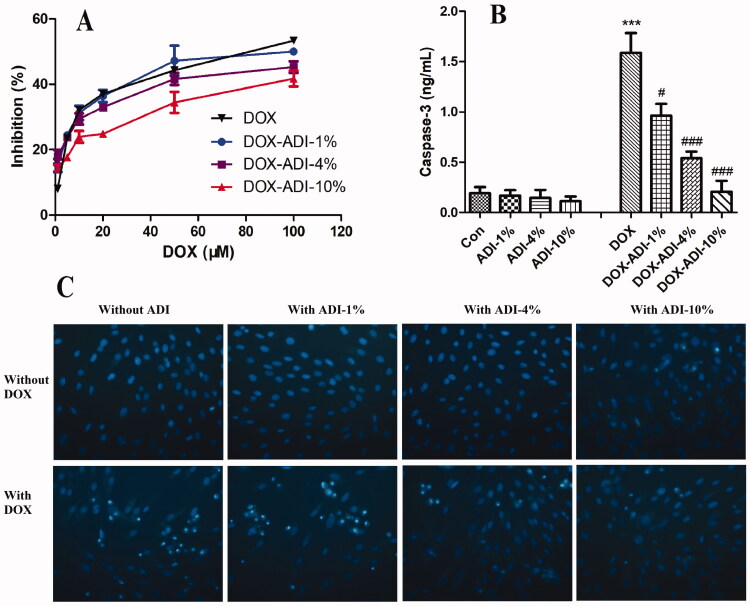
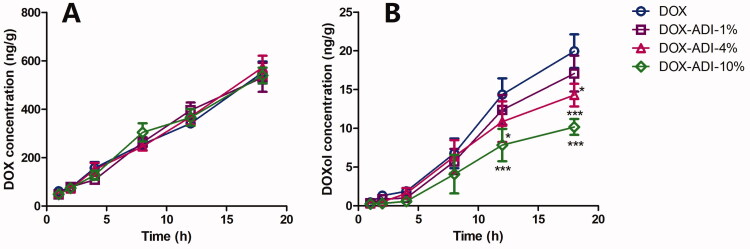
High-dose ADI significantly reduced DOX-induced pathological changes and the levels of AST, LDH, CK, CK-MB and BNP to normal. Combined treatment with ADI (1, 4, 10%) improved the cell viability, and IC50 increased from 68.51 μM (DOX alone) to 83.47, 176.9, and 310.8 μM, reduced caspase-3 activity by 39.17, 43.96, and 61.82%, respectively. High-dose ADI inhibited the expression of CBR1 protein by 32.3%, reduced DOXol levels in heart, serum and H9c2 cells by 59.8, 72.5 and 48.99%, respectively.
ADI reduces DOX-induced cardiotoxicity by inhibiting CBR1 expression, which provides a scientific basis for the rational use of ADI.
艾迪注射液(ADI)是一种中药抗肿瘤注射液,通常与多柔比星(DOX)联合用于治疗恶性肿瘤。临床中艾迪注射液可减轻多柔比星的心脏毒性。然而,其相关机制尚不清楚。
探讨艾迪注射液对多柔比星致心脏毒性的作用及机制。
ICR 小鼠随机分为 6 组:对照组、ADI-L 组、ADI-H 组、DOX 组、DOX+ADI-L 组和 DOX+ADI-H 组。DOX(0.03mg/10g)给药,同时给予或不给予 ADI(0.1 或 0.2mL/10g),共 2 周。评估心脏病理和 AST、LDH、CK、CK-MB 和 BNP 水平。然后用 DOX 处理 H9c2 细胞,同时给予或不给予 ADI(1、4、10%)。评估细胞活力、caspase-3 活性、核形态和 CBR1 表达。用 UPLC-MS/MS 分析心脏、肝脏、肾脏、血清和细胞中的 DOX 和多柔比星醇(DOXol)浓度。
高剂量 ADI 可显著减轻 DOX 引起的病理变化及 AST、LDH、CK、CK-MB 和 BNP 水平的升高。ADI(1、4、10%)联合治疗可提高细胞活力,IC50 分别从 68.51μM(DOX 单独)增加到 83.47、176.9 和 310.8μM,caspase-3 活性分别降低 39.17%、43.96%和 61.82%。高剂量 ADI 抑制 CBR1 蛋白表达 32.3%,降低心脏、血清和 H9c2 细胞中的 DOXol 水平 59.8%、72.5%和 48.99%。
ADI 通过抑制 CBR1 表达减轻 DOX 引起的心脏毒性,为 ADI 的合理应用提供了科学依据。