Daikoku Tatsuya
Department of Neuropsychology, Max Planck Institute for Human Cognitive and Brain Sciences, Leipzig, Germany.
Front Comput Neurosci. 2018 Nov 13;12:89. doi: 10.3389/fncom.2018.00089. eCollection 2018.
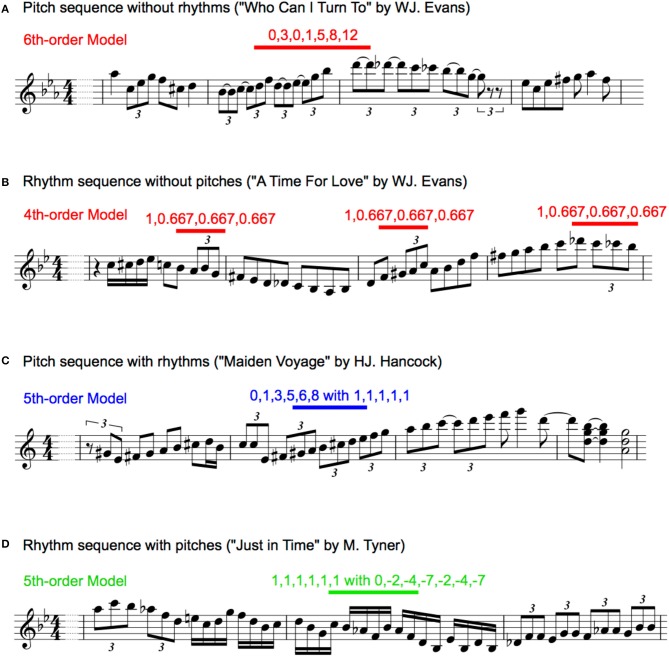
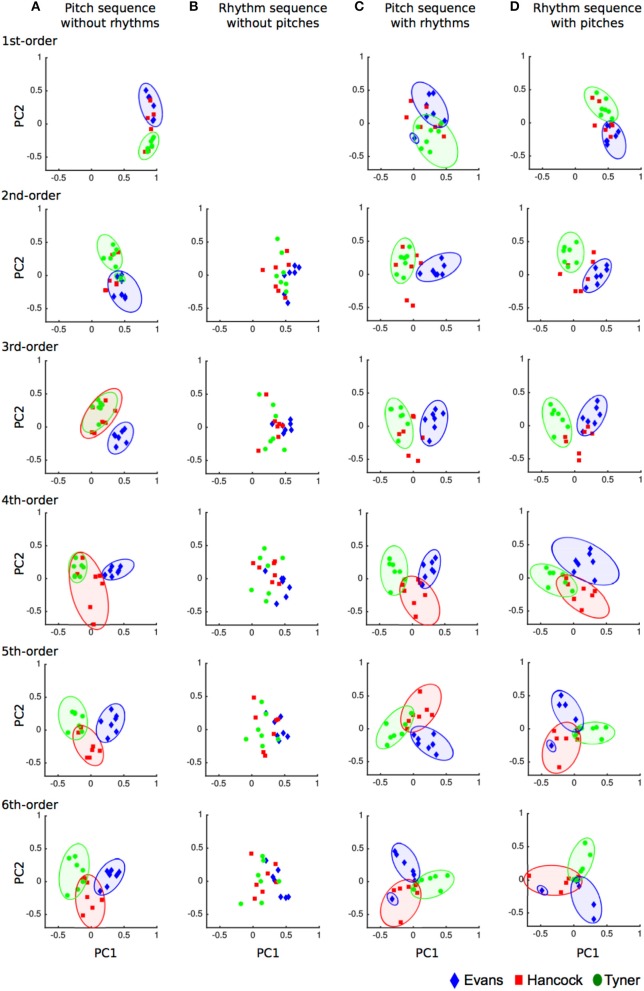
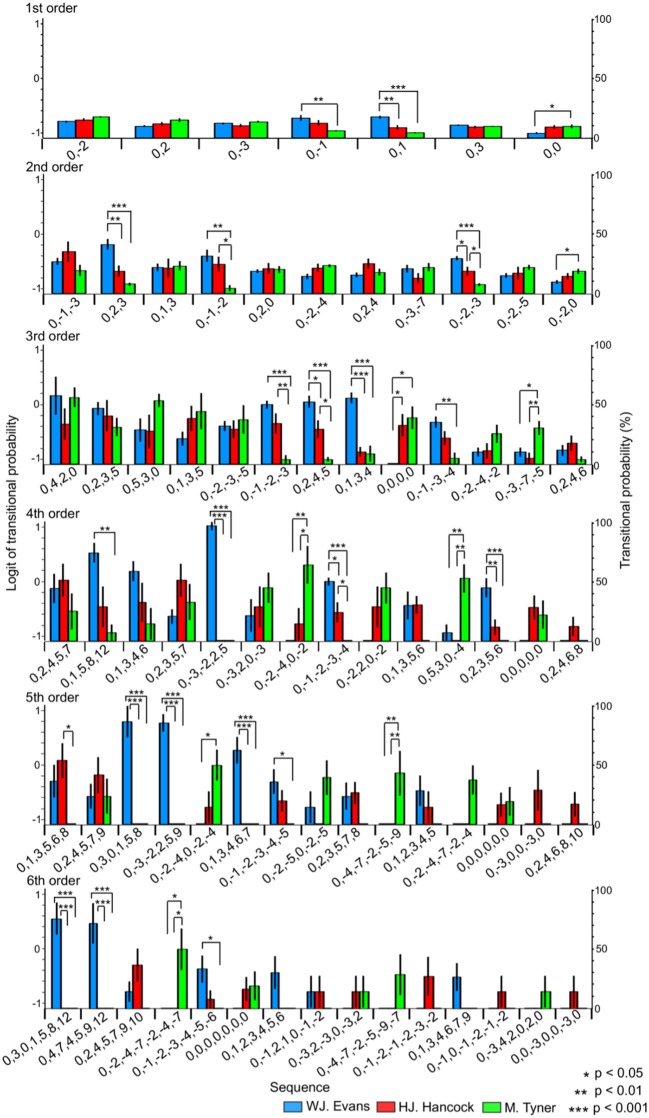
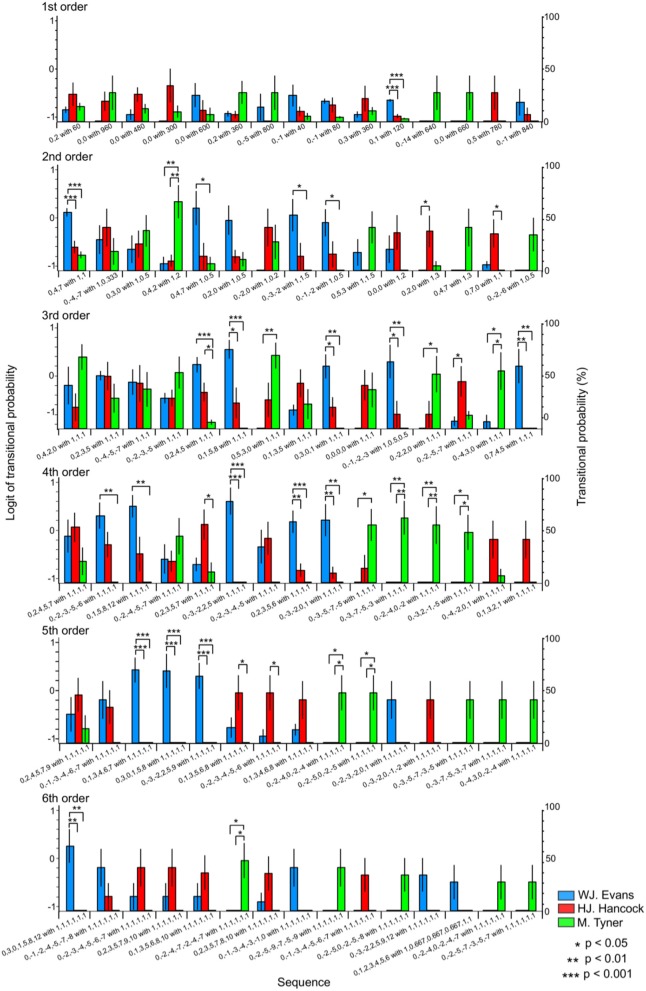
It has been suggested that musical creativity is mainly formed by implicit knowledge. However, the types of spectro-temporal features and depth of the implicit knowledge forming individualities of improvisation are unknown. This study, using various-order Markov models on implicit statistical learning, investigated spectro-temporal statistics among musicians. The results suggested that lower-order models on implicit knowledge represented general characteristics shared among musicians, whereas higher-order models detected specific characteristics unique to each musician. Second, individuality may essentially be formed by pitch but not rhythm, whereas the rhythms may allow the individuality of pitches to strengthen. Third, time-course variation of musical creativity formed by implicit knowledge and uncertainty (i.e., entropy) may occur in a musician's lifetime. Individuality of improvisational creativity may be formed by deeper but not superficial implicit knowledge of pitches, and that the rhythms may allow the individuality of pitches to strengthen. Individualities of the creativity may shift over a musician's lifetime via experience and training.
有人认为,音乐创造力主要由隐性知识构成。然而,构成即兴创作个性的频谱-时间特征类型和隐性知识深度尚不清楚。本研究使用关于隐性统计学习的各种阶马尔可夫模型,调查了音乐家之间的频谱-时间统计数据。结果表明,关于隐性知识的低阶模型代表了音乐家之间共有的一般特征,而高阶模型则检测到了每个音乐家独有的特定特征。其次,个性可能本质上是由音高而非节奏形成的,而节奏可能会使音高的个性得到强化。第三,由隐性知识和不确定性(即熵)形成的音乐创造力的时程变化可能会在音乐家的一生中发生。即兴创作创造力的个性可能由对音高更深层次而非表面的隐性知识形成,并且节奏可能会使音高的个性得到强化。创造力的个性可能会在音乐家的一生中通过经验和训练而发生变化。