Smart Assistive and Rehabilitative Technology (SMART) Research Group, Department of Electrical and Electronic Engineering, Universiti Teknologi PETRONAS, 32610 Bandar Seri Iskandar, Malaysia.
Assistive Robotics Laboratory, Department of Mechanical Engineering, Faculty of Science and Engineering, HOSEI University, Tokyo 184-8584, Japan.
Sensors (Basel). 2018 Nov 26;18(12):4132. doi: 10.3390/s18124132.
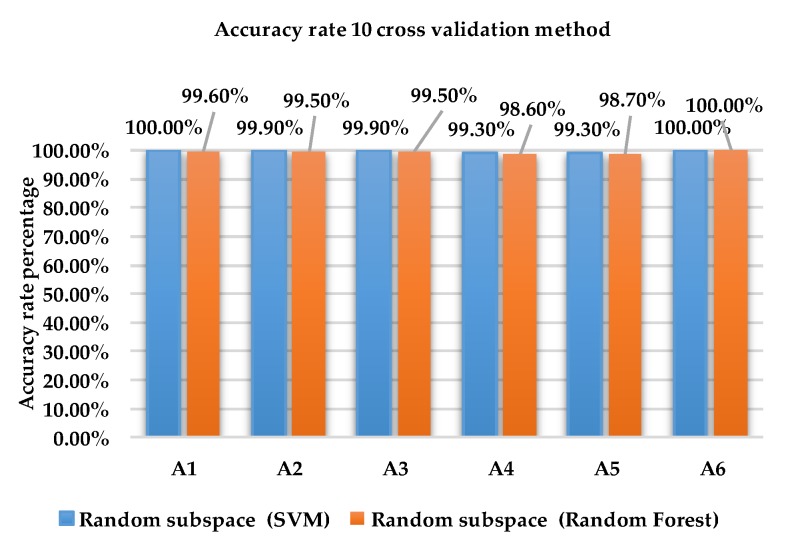
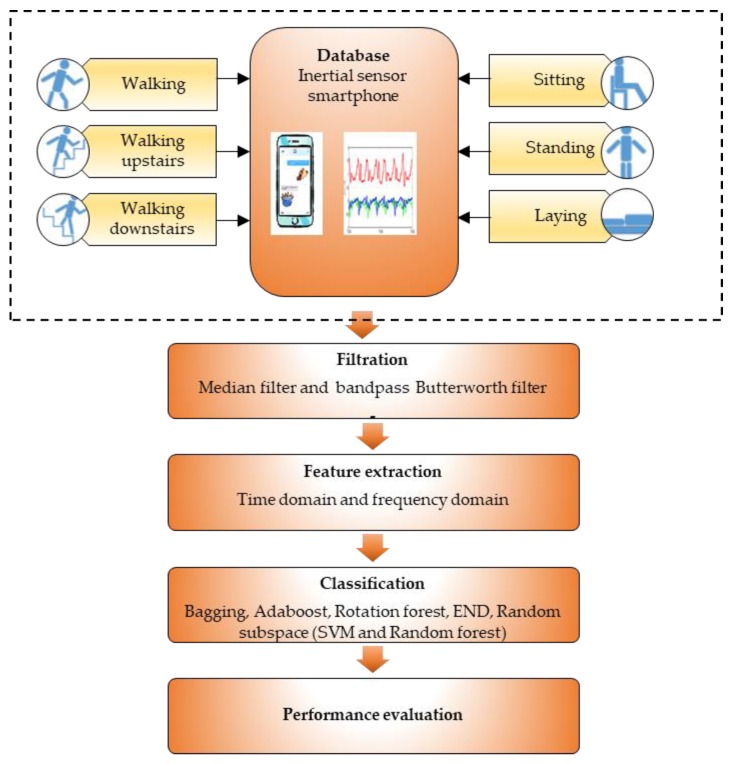
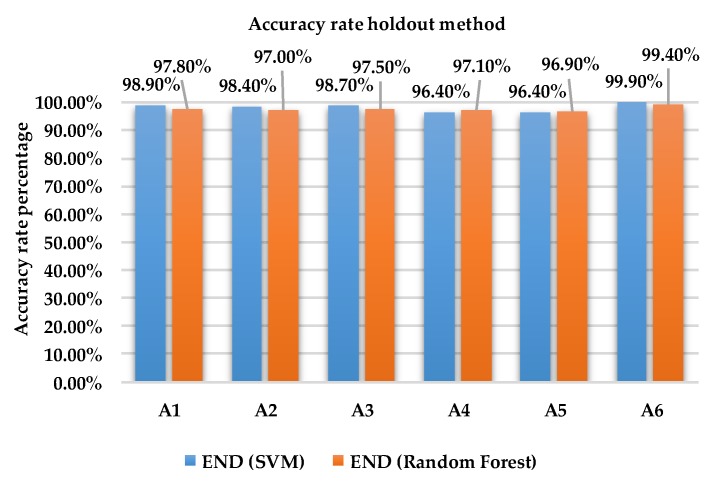
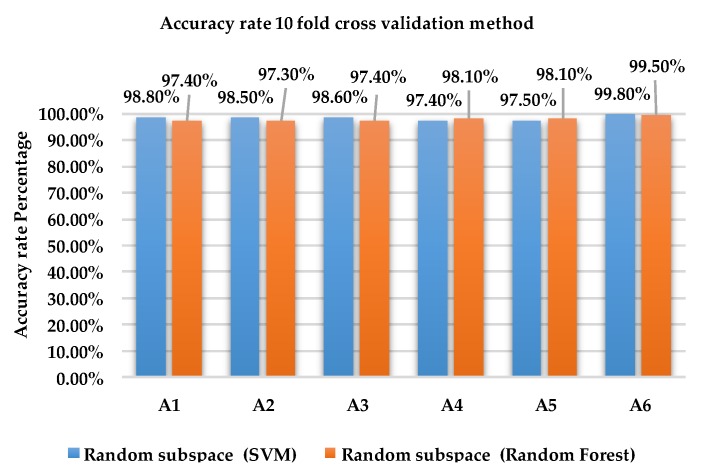
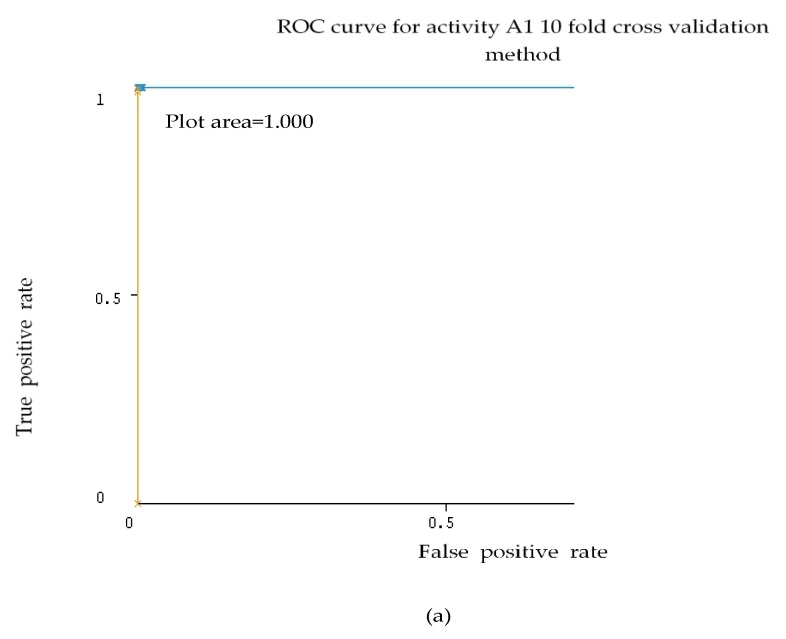
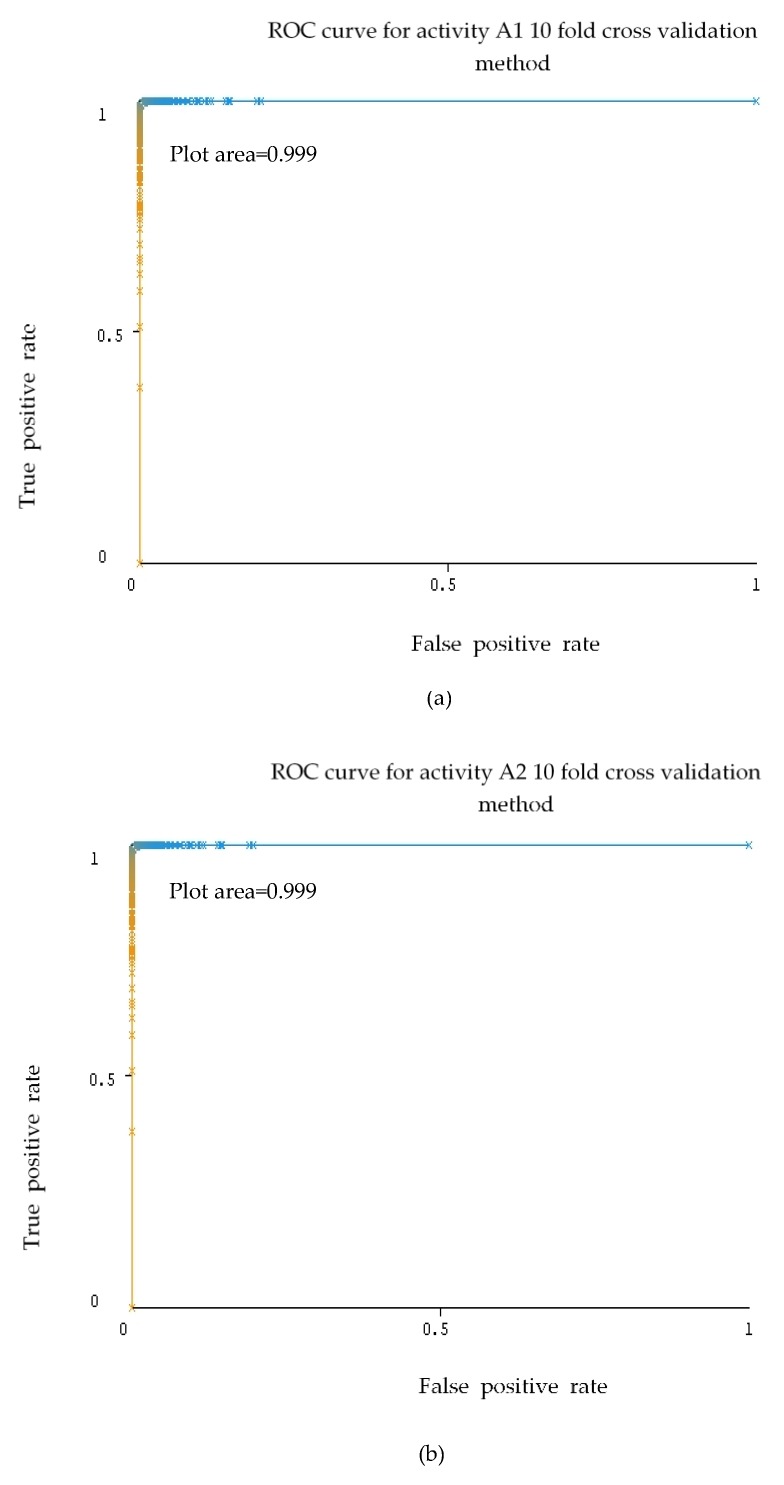
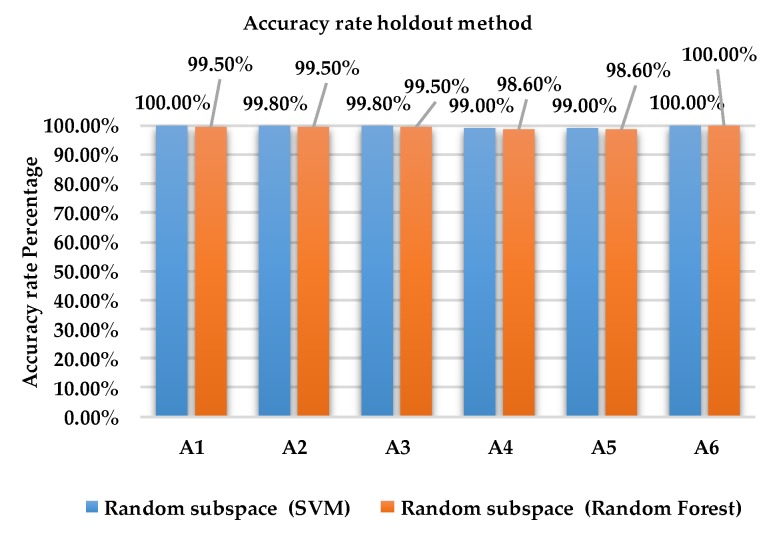
Increasing interest in analyzing human gait using various wearable sensors, which is known as Human Activity Recognition (HAR), can be found in recent research. Sensors such as accelerometers and gyroscopes are widely used in HAR. Recently, high interest has been shown in the use of wearable sensors in numerous applications such as rehabilitation, computer games, animation, filmmaking, and biomechanics. In this paper, classification of human daily activities using Ensemble Methods based on data acquired from smartphone inertial sensors involving about 30 subjects with six different activities is discussed. The six daily activities are walking, walking upstairs, walking downstairs, sitting, standing and lying. It involved three stages of activity recognition; namely, data signal processing (filtering and segmentation), feature extraction and classification. Five types of ensemble classifiers utilized are Bagging, Adaboost, Rotation forest, Ensembles of nested dichotomies (END) and Random subspace. These ensemble classifiers employed Support vector machine (SVM) and Random forest (RF) as the base learners of the ensemble classifiers. The data classification is evaluated with the holdout and 10-fold cross-validation evaluation methods. The performance of each human daily activity was measured in terms of precision, recall, F-measure, and receiver operating characteristic (ROC) curve. In addition, the performance is also measured based on the comparison of overall accuracy rate of classification between different ensemble classifiers and base learners. It was observed that overall, SVM produced better accuracy rate with 99.22% compared to RF with 97.91% based on a random subspace ensemble classifier.
最近的研究中越来越关注使用各种可穿戴传感器分析人体步态,这被称为人体活动识别(HAR)。传感器,如加速度计和陀螺仪,在 HAR 中被广泛使用。最近,人们对在许多应用中使用可穿戴传感器表现出了浓厚的兴趣,如康复、电脑游戏、动画、电影制作和生物力学。在本文中,讨论了使用基于智能手机惯性传感器获取的数据的基于集成方法对人类日常活动进行分类,涉及约 30 名参与者的六种不同活动。六种日常活动包括行走、上楼梯、下楼梯、坐、站和躺。它涉及活动识别的三个阶段,即数据信号处理(滤波和分割)、特征提取和分类。使用了五种集成分类器,包括 Bagging、Adaboost、Rotation forest、Ensembles of nested dichotomies (END) 和 Random subspace。这些集成分类器采用支持向量机(SVM)和随机森林(RF)作为集成分类器的基学习器。数据分类采用留一法和 10 折交叉验证评估方法进行评估。根据精度、召回率、F 度量和接收机操作特性(ROC)曲线来衡量每种人体日常活动的性能。此外,还根据不同集成分类器和基学习器之间的分类总体准确率的比较来衡量性能。观察到,总体而言,基于随机子空间集成分类器,SVM 的准确率为 99.22%,而 RF 的准确率为 97.91%。