Molecular Oncology, Max Delbrück Center for Molecular Medicine in the Helmholtz Association, Berlin, Germany.
Mouse Cancer Clinic, Netherlands Cancer Institute, Amsterdam, Netherlands.
J Exp Med. 2018 Dec 3;215(12):3115-3135. doi: 10.1084/jem.20180801. Epub 2018 Nov 28.
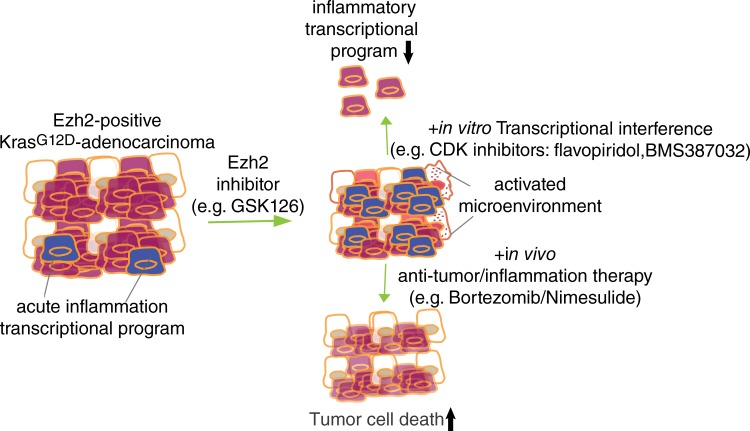
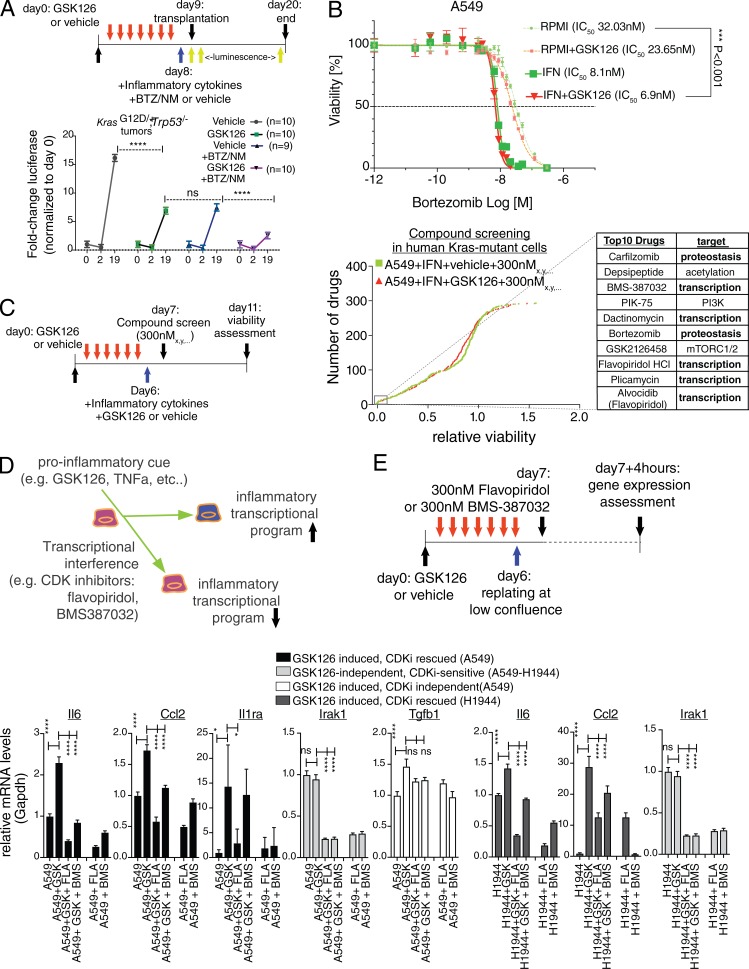
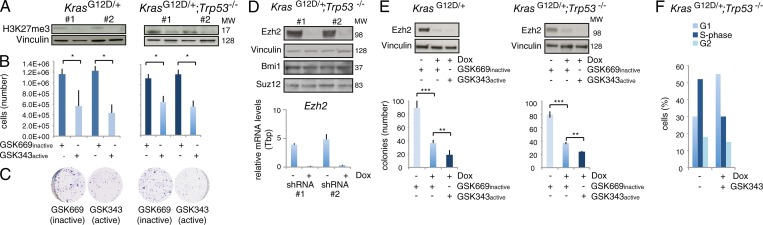
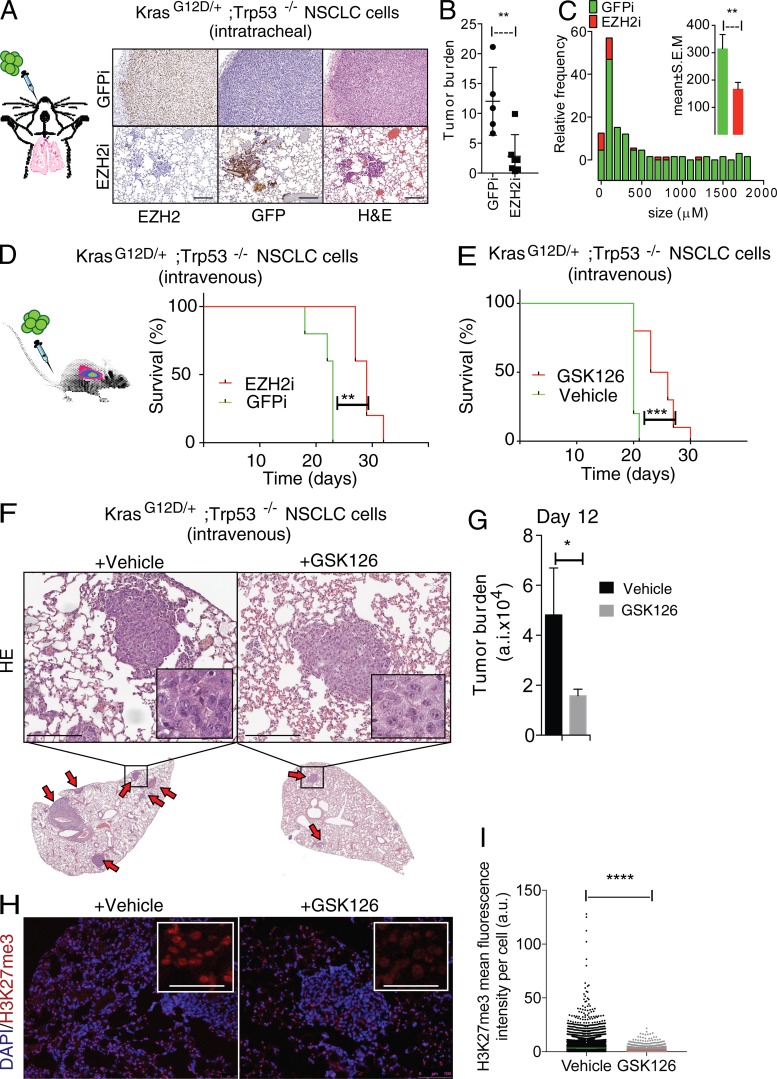
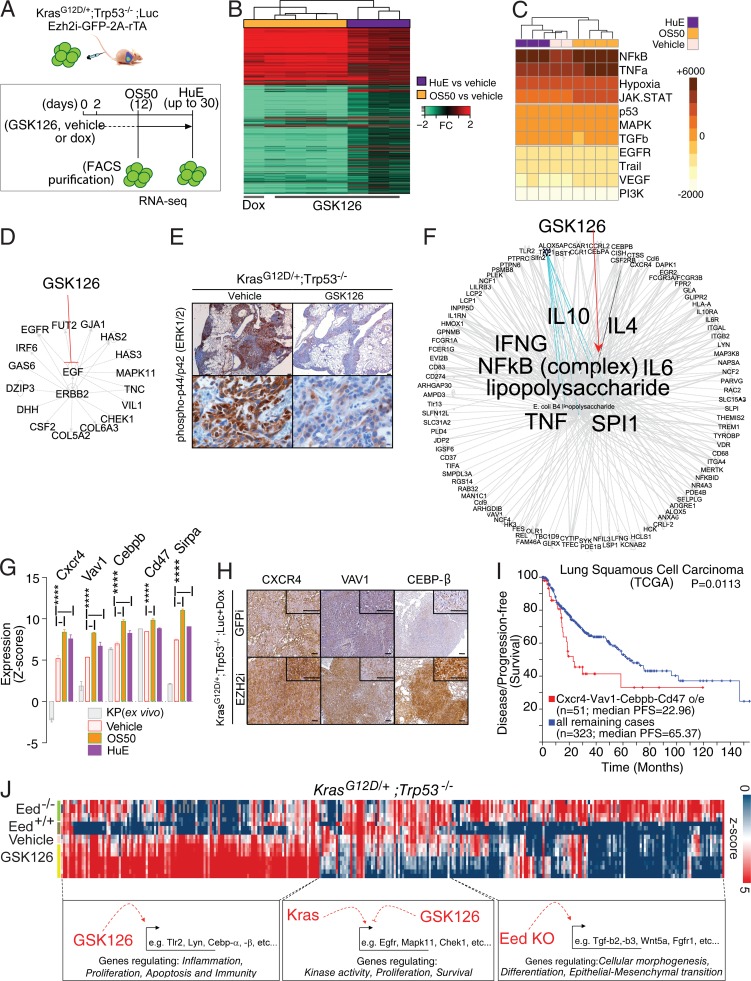
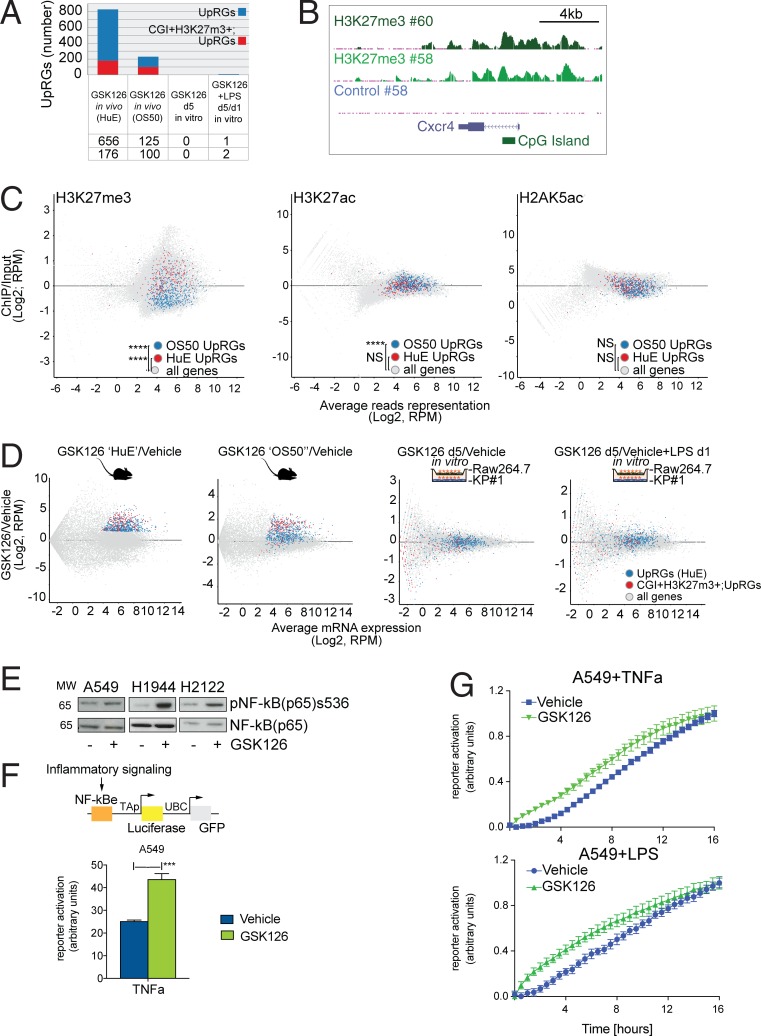
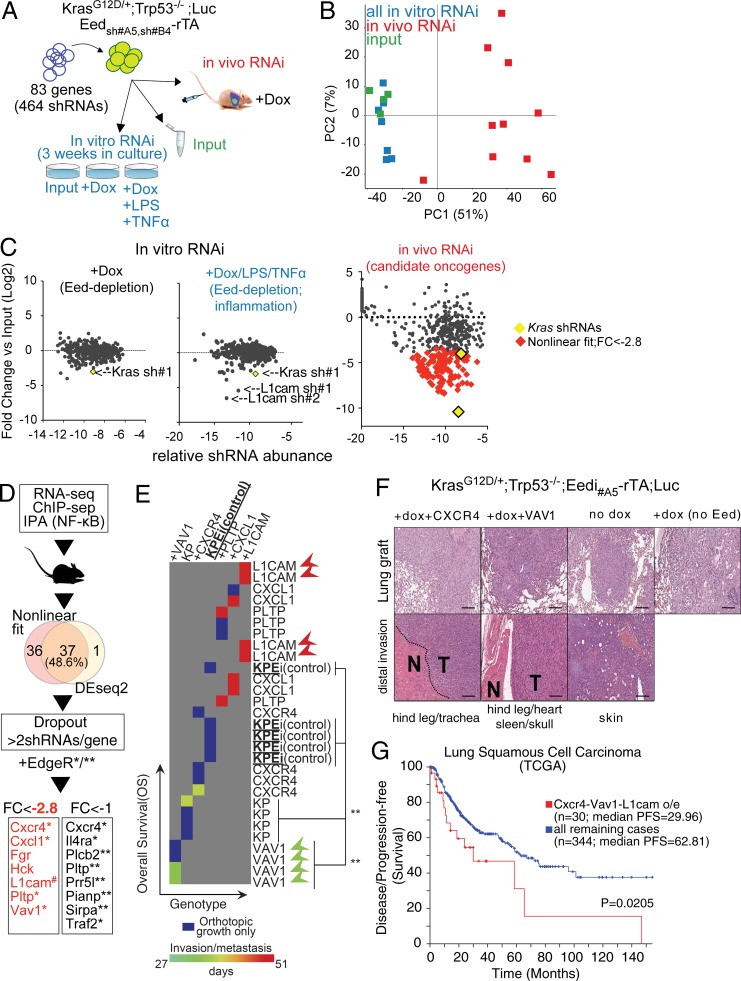
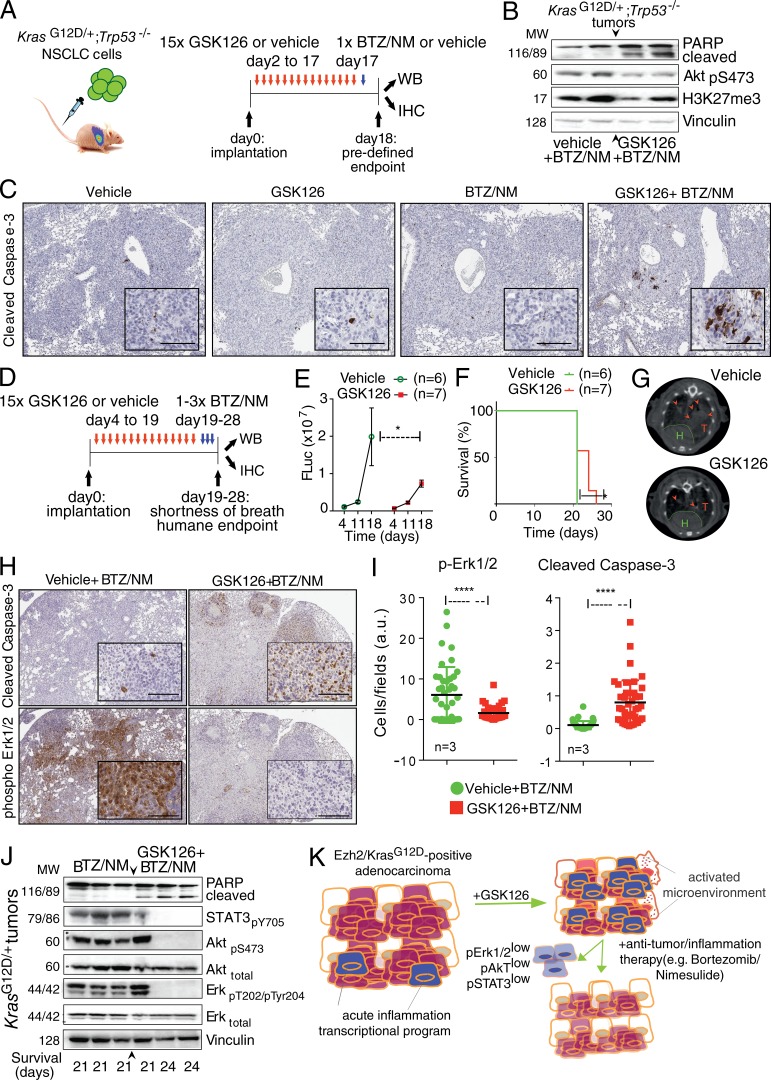
Kras-driven non-small-cell lung cancers (NSCLCs) are a leading cause of death with limited therapeutic options. Many NSCLCs exhibit high levels of Ezh2, the enzymatic subunit of polycomb repressive complex 2 (PRC2). We tested Ezh2 inhibitors as single agents or before chemotherapy in mice with orthotopic Kras-driven NSCLC grafts, which homogeneously express Ezh2. These tumors display sensitivity to EZH2 inhibition by GSK126 but also amplify an inflammatory program involving signaling through NF-κB and genes residing in PRC2-regulated chromatin. During this process, tumor cells overcome GSK126 antiproliferative effects. We identified oncogenes that may mediate progression through an in vivo RNAi screen aimed at targets of PRC2/NF-κB. An in vitro compound screening linked GSK126-driven inflammation and therapeutic vulnerability in human cells to regulation of RNA synthesis and proteostasis. Interestingly, GSK126-treated NSCLCs in vivo also showed an enhanced response to a combination of nimesulide and bortezomib. Thus, Ezh2 inhibition may restrict cell proliferation and promote defined adaptive responses. Targeting these responses potentially improves outcomes in Kras-driven NSCLCs.
Kras 驱动的非小细胞肺癌 (NSCLC) 是导致死亡的主要原因,治疗选择有限。许多 NSCLC 表现出高水平的 Ezh2,即多梳抑制复合物 2 (PRC2) 的酶亚基。我们在具有同源表达 Ezh2 的原位 Kras 驱动 NSCLC 移植物的小鼠中测试了 Ezh2 抑制剂作为单一药物或化疗前的药物,这些肿瘤对 GSK126 的 EZH2 抑制敏感,但也放大了涉及 NF-κB 信号转导和 PRC2 调节染色质中基因的炎症程序。在此过程中,肿瘤细胞克服了 GSK126 的抗增殖作用。我们通过旨在针对 PRC2/NF-κB 靶点的体内 RNAi 筛选鉴定了可能介导进展的致癌基因。体外化合物筛选将 GSK126 驱动的炎症和人类细胞的治疗脆弱性与 RNA 合成和蛋白质稳态的调节联系起来。有趣的是,体内用 GSK126 治疗的 NSCLC 也显示出对尼美舒利和硼替佐米联合治疗的增强反应。因此,Ezh2 抑制可能限制细胞增殖并促进明确的适应性反应。针对这些反应有可能改善 Kras 驱动的 NSCLC 的治疗效果。