Martínez-Loredo Víctor, Fernández-Hermida José Ramón, La Torre-Luque Alejandro de, Fernández-Artamendi Sergio
Clinical Unit of Addictive Behaviors, Department of Psychology, Universidad de Oviedo, Spain.
Department of Psychiatry, Universidad Autónoma de Madrid, Spain.
Int J Clin Health Psychol. 2018 Sep-Dec;18(3):235-244. doi: 10.1016/j.ijchp.2018.07.003. Epub 2018 Aug 22.
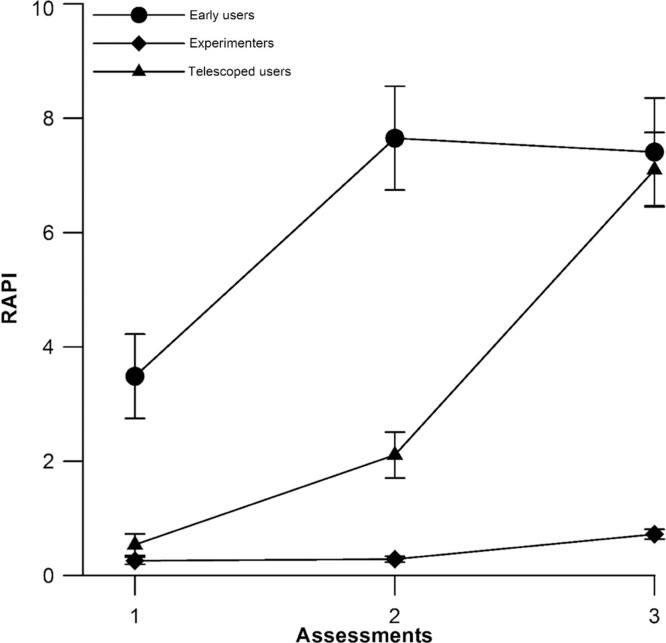
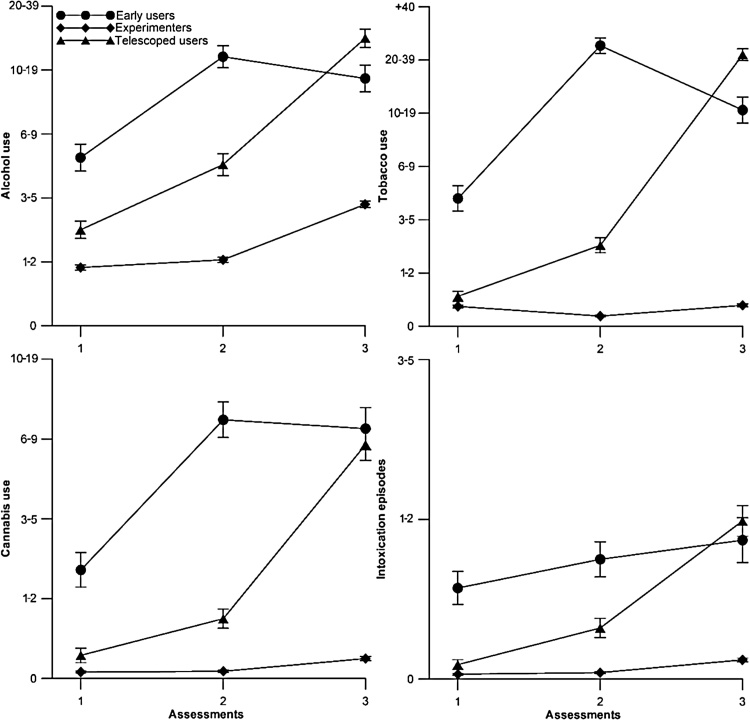
: Although alcohol, tobacco and cannabis are the most widely consumed drugs, sparse data exist regarding polydrug use in adolescents and its relationship with impulsivity. This study aims to identify trajectories of polydrug use and analyze differences in impulsivity between them. : A total of 1,565 adolescents (54.4% males; mean age = 13.02, = 0.57) were annually assessed over three years using the Barratt Impulsiveness Scale, the Zuckerman Impulsive Sensation Seeking Scale, a Stroop Test and a Delay Discounting Task. Frequency of alcohol, tobacco, and cannabis use, intoxication episodes and problem drinking were also assessed. Polydrug trajectories were identified using latent class mixed modelling. To examine differences in self-reported and behavioral impulsivity two mixed multivariate analyses of covariance were used. : Three trajectories of substance use were found. The 'Experimental use' and the 'Early use' trajectories presented the lowest and highest impulsivity, respectively. Substance use increases in the 'Telescoped used' trajectory were associated with parallel increases in impulsivity. : individuals with divergent patterns of substance use during adolescence differ in their impulsiveness, primarily in general impulsivity and sensation seeking. Present findings suggest the relevance of these facets as possible targets for interventions preventing the onset and escalation of substance use.
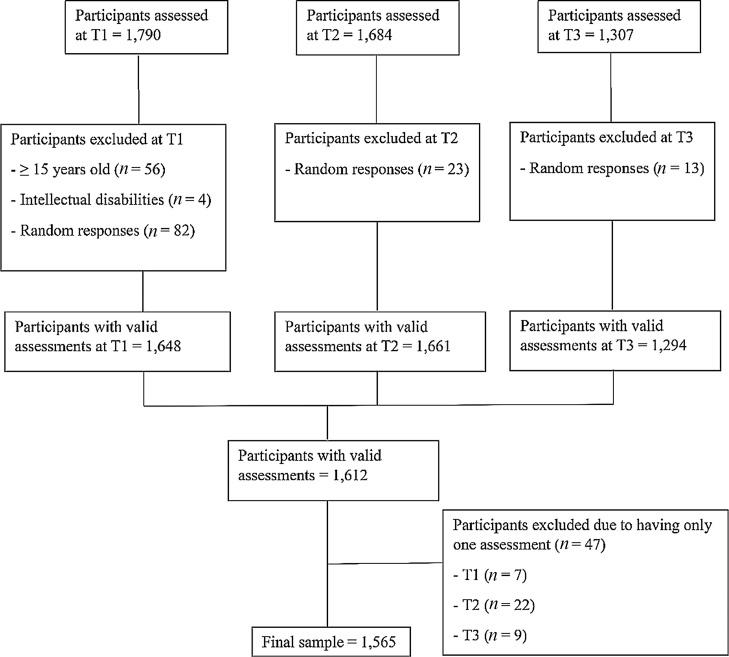
虽然酒精、烟草和大麻是消费最为广泛的毒品,但关于青少年多药滥用及其与冲动性之间关系的数据却很稀少。本研究旨在确定多药滥用的轨迹,并分析它们之间冲动性的差异。:在三年时间里,每年使用巴拉特冲动性量表、祖克曼冲动性感觉寻求量表、斯特鲁普测验和延迟折扣任务对总共1565名青少年(54.4%为男性;平均年龄=13.02,标准差=0.57)进行评估。还评估了酒精、烟草和大麻的使用频率、中毒发作情况和问题饮酒情况。使用潜在类别混合模型确定多药滥用轨迹。为了检验自我报告的冲动性和行为冲动性的差异,使用了两个混合多变量协方差分析。:发现了三种物质使用轨迹。“实验性使用”轨迹和“早期使用”轨迹的冲动性分别最低和最高。“快速使用”轨迹中物质使用的增加与冲动性的平行增加相关。:在青少年时期物质使用模式不同的个体在冲动性方面存在差异,主要体现在一般冲动性和感觉寻求方面。目前的研究结果表明,这些方面作为预防物质使用开始和升级的干预措施的可能目标具有相关性。