Bolus William Reid, Kennedy Arion J, Hasty Alyssa H
Department of Molecular Physiology and Biophysics, Vanderbilt University School of Medicine, Nashville, Tennessee.
VA Tennessee Valley Healthcare System, Nashville, Tennessee.
Physiol Rep. 2018 Nov;6(22):e13919. doi: 10.14814/phy2.13919.
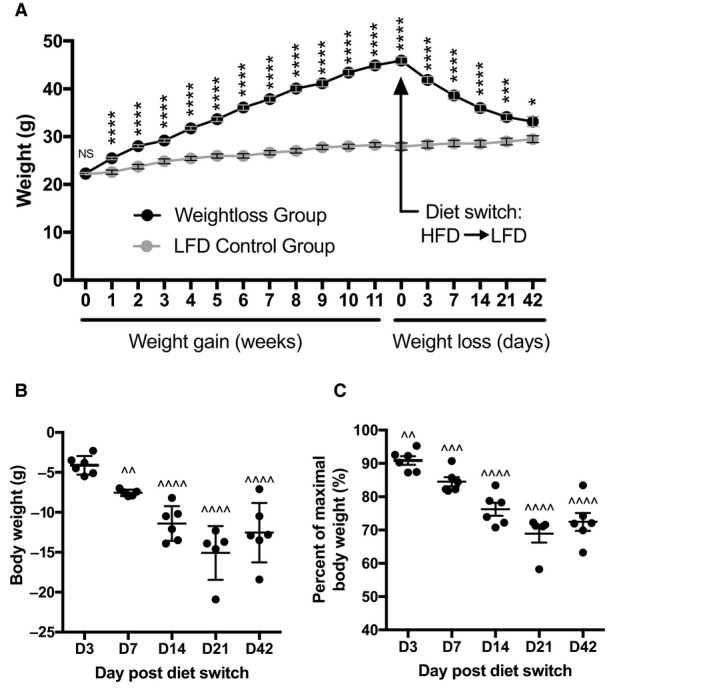
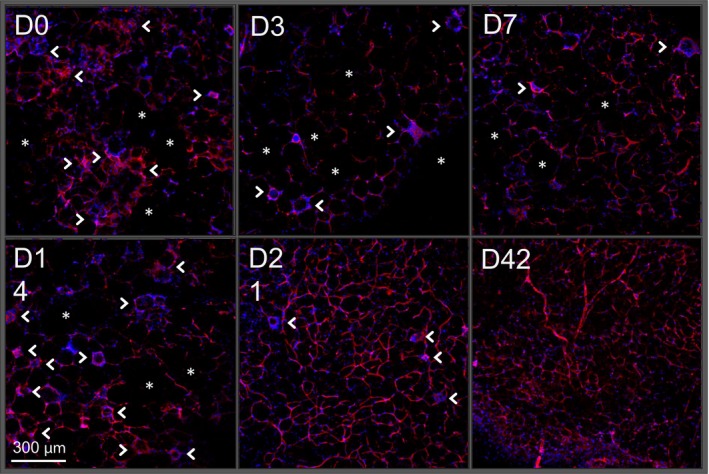
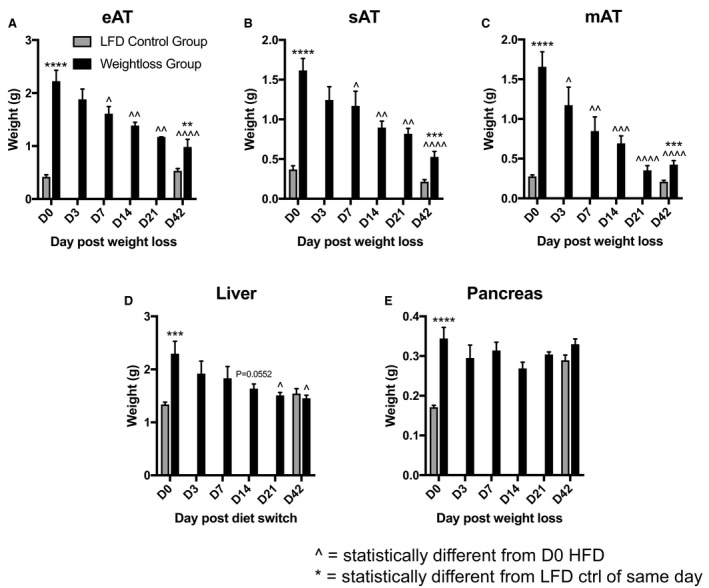
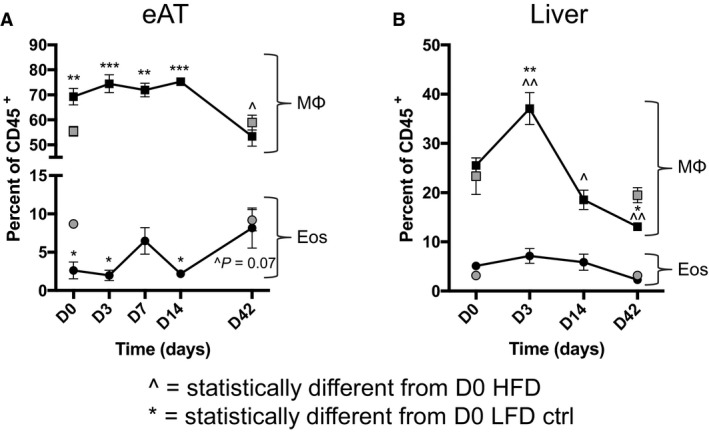
While many studies have characterized the inflammatory disposition of adipose tissue (AT) during obesity, far fewer have dissected how such inflammation resolves during the process of physiological weight loss. In addition, new immune cells, such as the eosinophil, have been discovered as part of the AT immune cell repertoire. We have therefore characterized how AT eosinophils, associated eosinophilic inflammation, and remodeling processes, fluctuate during a dietary intervention in obese mice. Similar to previous reports, we found that obesity induced by high-fat diet feeding reduced the AT eosinophil content. However, upon switching obese mice to a low fat diet, AT eosinophils were restored to lean levels as mice reached the body weight of controls. The rise in AT eosinophils during dietary weight loss was accompanied by reduced macrophage content and inflammatory expression, upregulated tissue remodeling factors, and a more uniformly distributed AT vascular network. Additionally, we show that eosinophils of another metabolically relevant tissue, the liver, did not oscillate with either dietary weight gain or weight loss. This study shows that eosinophil content is differentially regulated among tissues during the onset and resolution of obesity. Furthermore, AT eosinophils correlated with AT remodeling processes during weight loss and thus may play a role in reestablishing AT homeostasis.
虽然许多研究已经描述了肥胖期间脂肪组织(AT)的炎症倾向,但很少有研究剖析这种炎症在生理性体重减轻过程中是如何消退的。此外,新的免疫细胞,如嗜酸性粒细胞,已被发现是AT免疫细胞库的一部分。因此,我们已经描述了在肥胖小鼠的饮食干预过程中,AT嗜酸性粒细胞、相关的嗜酸性粒细胞炎症和重塑过程是如何波动的。与之前的报道相似,我们发现高脂饮食诱导的肥胖降低了AT嗜酸性粒细胞的含量。然而,当将肥胖小鼠改为低脂饮食时,随着小鼠体重达到对照组水平,AT嗜酸性粒细胞恢复到瘦小鼠的水平。饮食性体重减轻期间AT嗜酸性粒细胞的增加伴随着巨噬细胞含量和炎症表达的减少、组织重塑因子的上调以及AT血管网络分布更加均匀。此外,我们发现另一个与代谢相关的组织——肝脏中的嗜酸性粒细胞,在饮食性体重增加或体重减轻过程中均没有波动。这项研究表明,在肥胖的发生和消退过程中,不同组织中嗜酸性粒细胞的含量受到不同的调节。此外,AT嗜酸性粒细胞与体重减轻期间的AT重塑过程相关,因此可能在重建AT内环境稳态中发挥作用。