Department of Mechanical Engineering and Applied mechanics, University of Pennsylvania, Philadelphia, PA 19104, USA.
Department of Biomedical Sciences, School of Veterinary Medicine, University of Pennsylvania, Philadelphia, PA 19104, USA.
Nucleic Acids Res. 2019 Feb 28;47(4):2002-2010. doi: 10.1093/nar/gky1208.
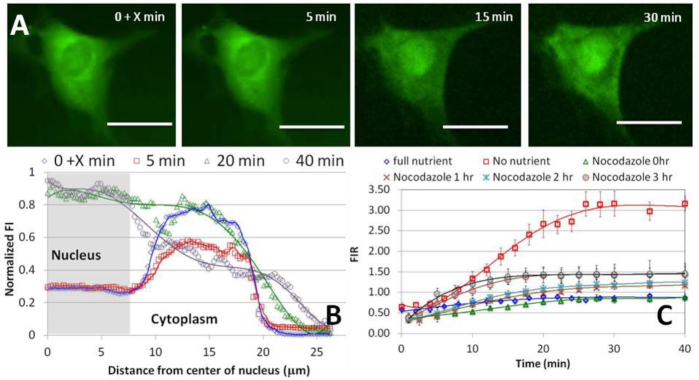
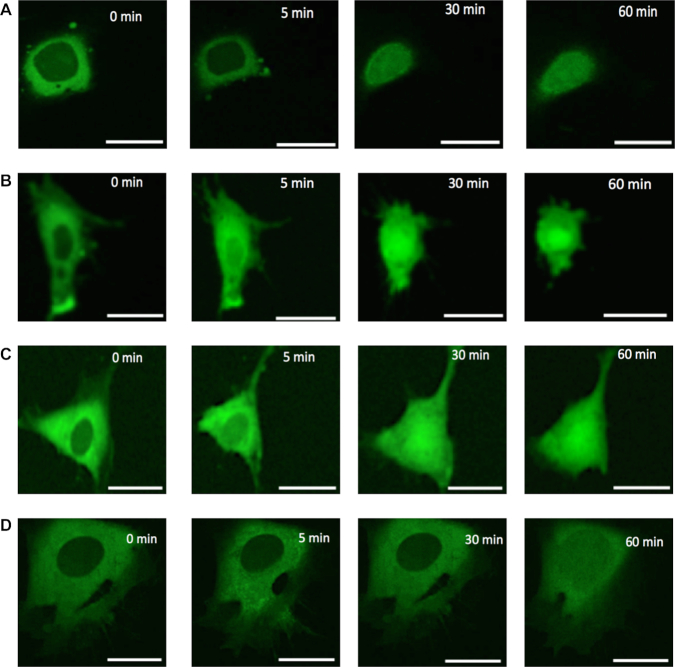
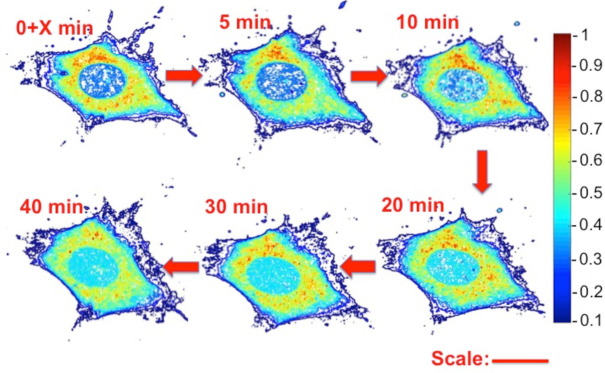
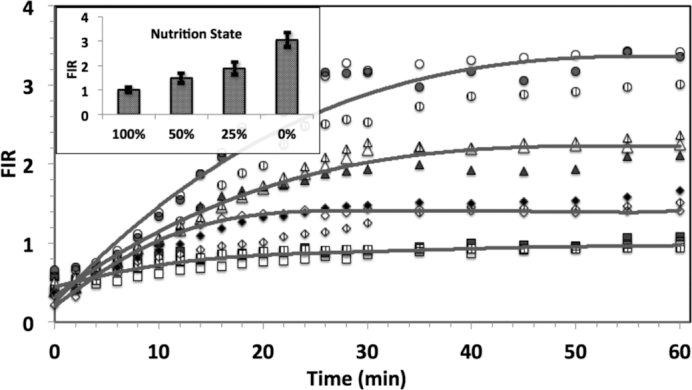
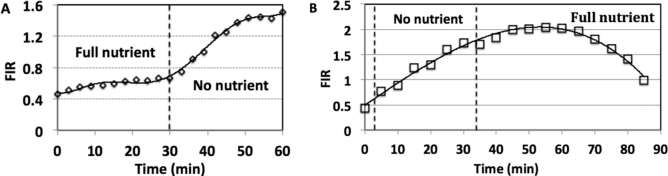
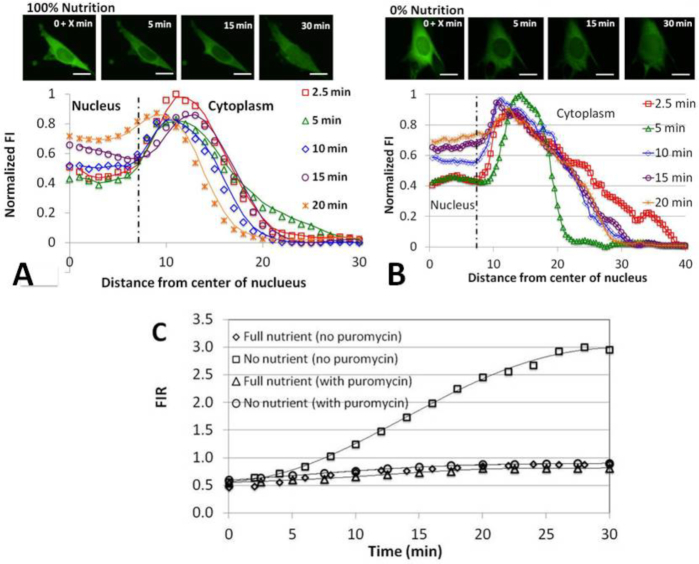
Stress is known to induce retrograde tRNA translocation from the cytoplasm to the nucleus but translocation kinetics and tRNA-spatial distribution have not been characterized previously. We microinject fluorescently-labeled tRNA into living cells and use confocal microscopy to image tRNA spatial distribution in single cells at various levels of starvation and to determine translocation rate constants. Retrograde tRNA translocation occurs reversibly, within minutes after nutrition depletion of the extracellular medium. Such nutritional starvation leads to down-regulation of tRNA nuclear import and nearly complete curtailment of its nuclear export. Nuclear tRNA accumulation is suppressed in cells treated with the translation inhibitor puromycin, but is enhanced in cells treated with the microtubule inhibitor nocodazole. tRNA in the cytoplasm exhibits distinct spatial distribution inconsistent with diffusion, implying that such distribution is actively maintained. We propose that tRNA biological complexes and/or cytoplasmic electric fields are the likely regulators of cytoplasmic tRNA spatial distribution.
压力已知会诱导 tRNA 从细胞质逆行易位到细胞核,但易位动力学和 tRNA 空间分布以前尚未得到表征。我们将荧光标记的 tRNA 微注射到活细胞中,并使用共焦显微镜在不同饥饿程度下对单个细胞中的 tRNA 空间分布进行成像,并确定易位速率常数。逆行 tRNA 易位是可逆的,在细胞外培养基营养耗尽几分钟内即可发生。这种营养饥饿会导致 tRNA 核输入下调,几乎完全阻断其核输出。用翻译抑制剂嘌呤霉素处理的细胞中 tRNA 积累受到抑制,但用微管抑制剂 nocodazole 处理的细胞中 tRNA 积累增强。细胞质中的 tRNA 表现出与扩散不一致的独特空间分布,这表明这种分布是主动维持的。我们提出 tRNA 生物复合物和/或细胞质电场可能是细胞质 tRNA 空间分布的调节因子。