Division for Diagnostics and Scientific Advice, National Veterinary Institute, Technical University of Denmark (DTU), Lyngby, Denmark.
Department of Applied Mathematics and Computer Science, Technical University of Denmark (DTU), Lyngby, Denmark.
Parasit Vectors. 2018 Nov 29;11(1):608. doi: 10.1186/s13071-018-3182-0.
Biting midges of the genus Culicoides (Diptera: Ceratopogonidae) are small hematophagous insects responsible for the transmission of bluetongue virus, Schmallenberg virus and African horse sickness virus to wild and domestic ruminants and equids. Outbreaks of these viruses have caused economic damage within the European Union. The spatio-temporal distribution of biting midges is a key factor in identifying areas with the potential for disease spread. The aim of this study was to identify and map areas of neglectable adult activity for each month in an average year. Average monthly risk maps can be used as a tool when allocating resources for surveillance and control programs within Europe.
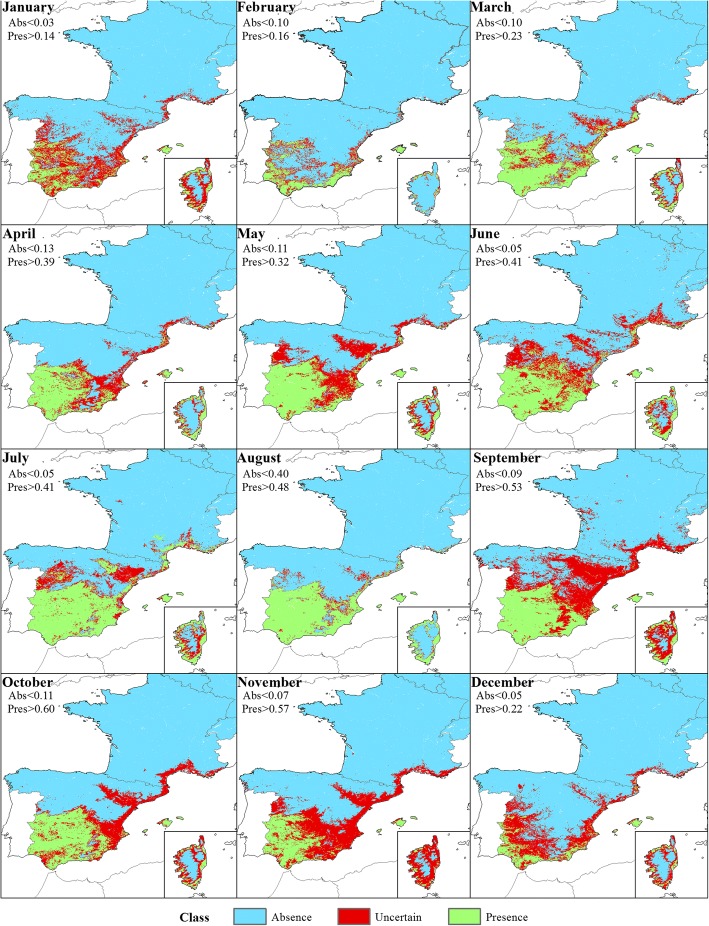
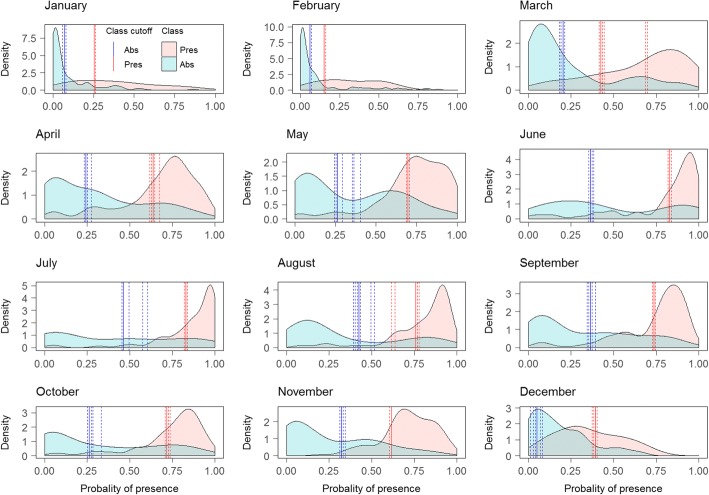
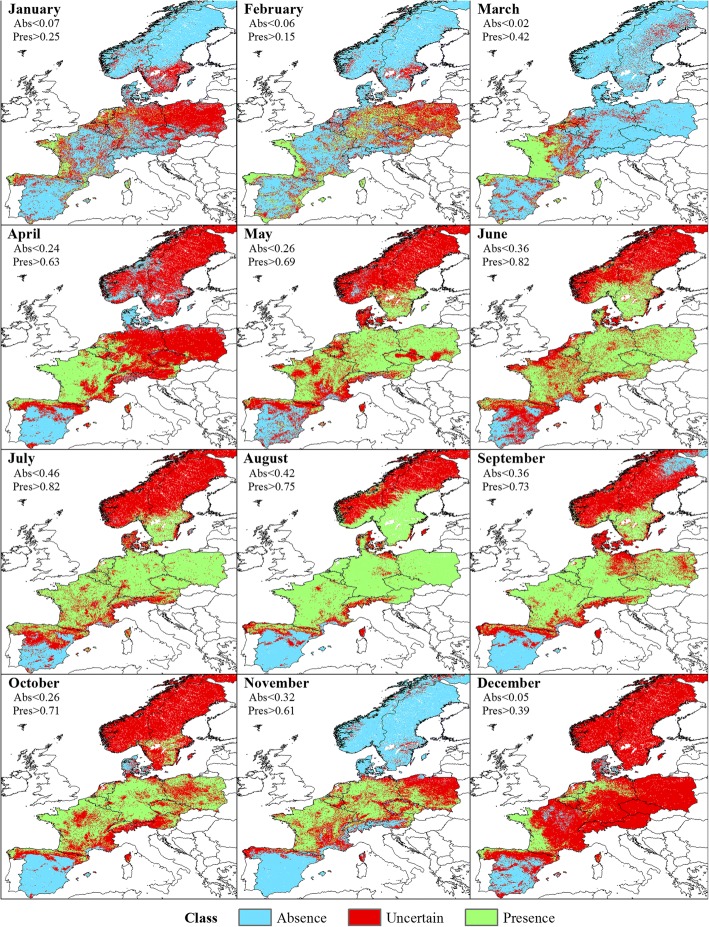
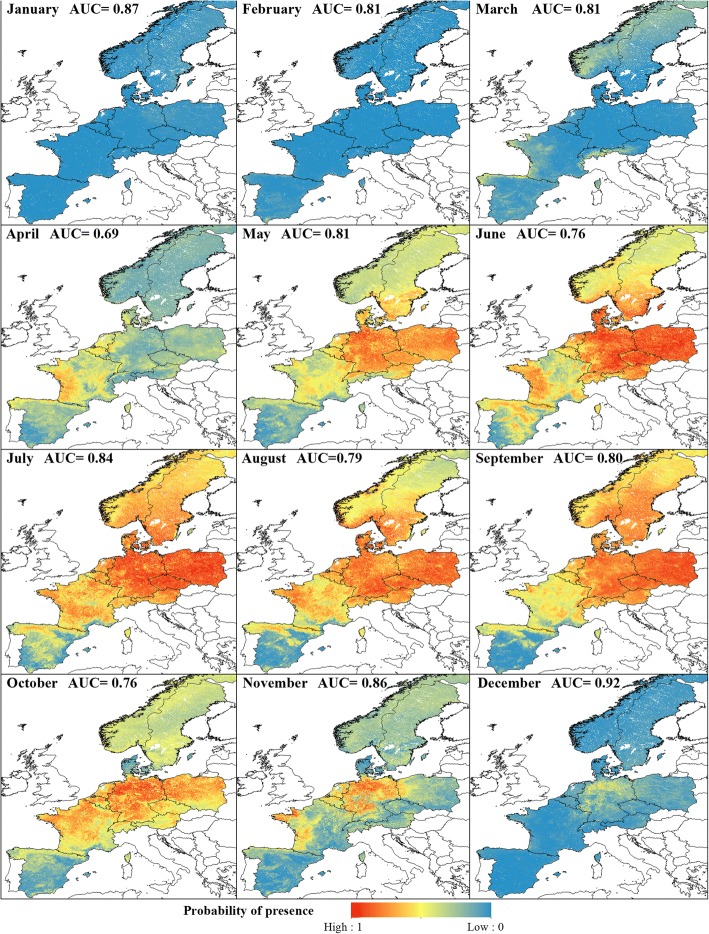
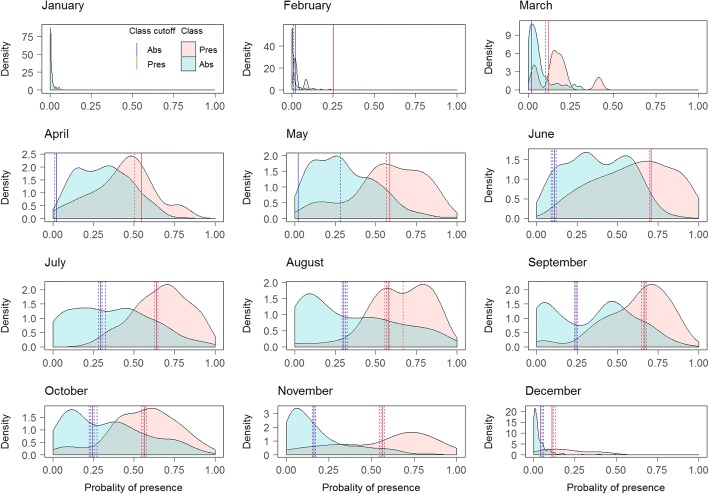
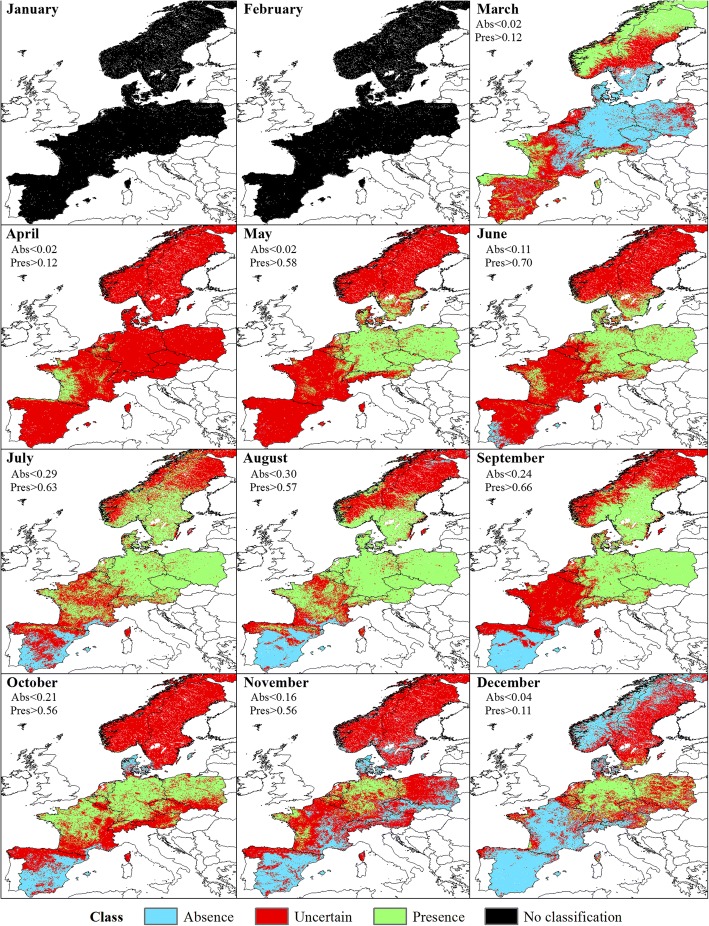
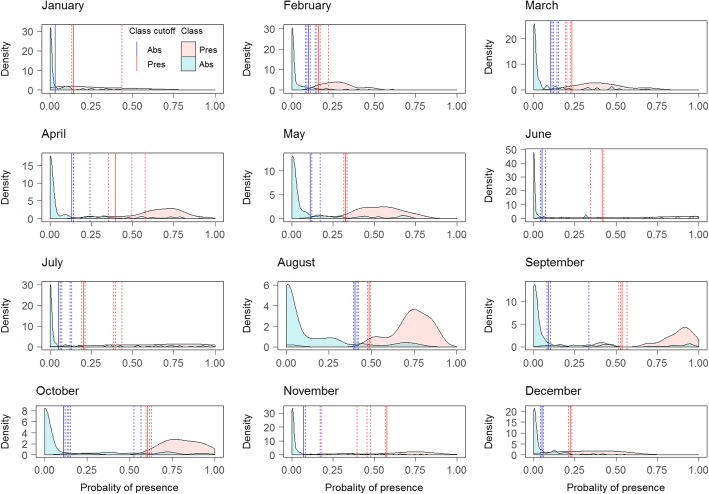
We modelled the occurrence of C. imicola and the Obsoletus and Pulicaris ensembles using existing entomological surveillance data from Spain, France, Germany, Switzerland, Austria, Denmark, Sweden, Norway and Poland. The monthly probability of each vector species and ensembles being present in Europe based on climatic and environmental input variables was estimated with the machine learning technique Random Forest. Subsequently, the monthly probability was classified into three classes: Absence, Presence and Uncertain status. These three classes are useful for mapping areas of no risk, areas of high-risk targeted for animal movement restrictions, and areas with an uncertain status that need active entomological surveillance to determine whether or not vectors are present.
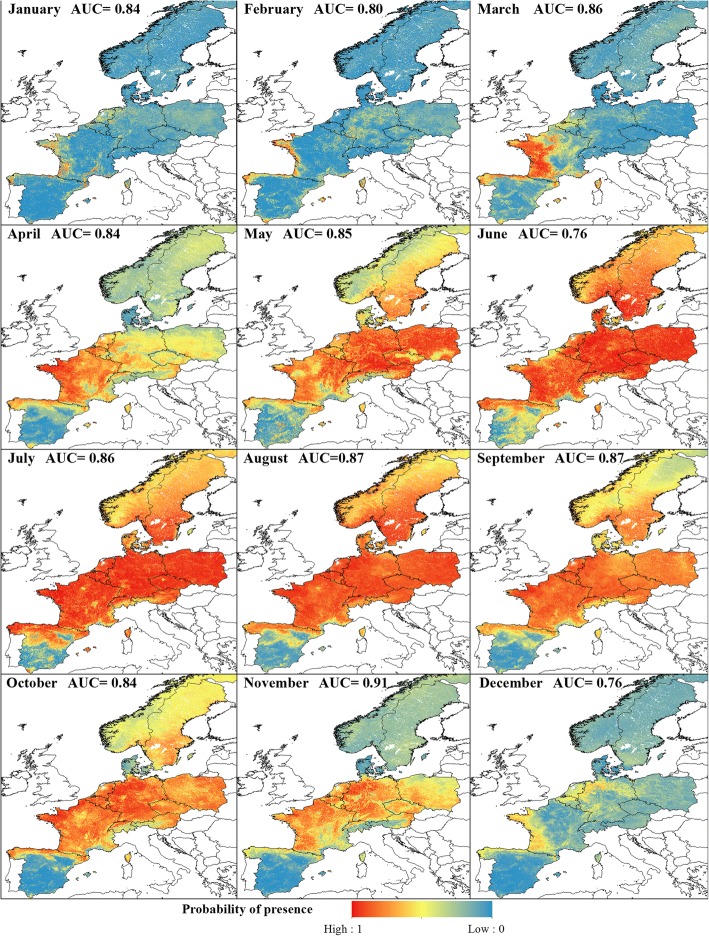
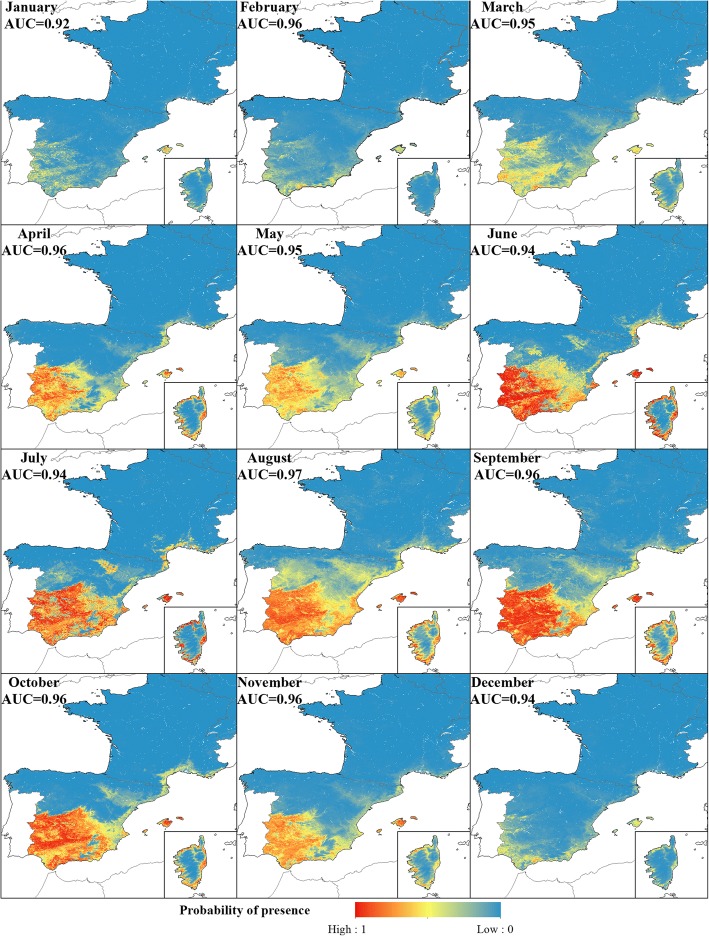
The distribution of Culicoides species ensembles were in agreement with their previously reported distribution in Europe. The Random Forest models were very accurate in predicting the probability of presence for C. imicola (mean AUC = 0.95), less accurate for the Obsoletus ensemble (mean AUC = 0.84), while the lowest accuracy was found for the Pulicaris ensemble (mean AUC = 0.71). The most important environmental variables in the models were related to temperature and precipitation for all three groups.
The duration periods with low or null adult activity can be derived from the associated monthly distribution maps, and it was also possible to identify and map areas with uncertain predictions. In the absence of ongoing vector surveillance, these maps can be used by veterinary authorities to classify areas as likely vector-free or as likely risk areas from southern Spain to northern Sweden with acceptable precision. The maps can also focus costly entomological surveillance to seasons and areas where the predictions and vector-free status remain uncertain.
蠓科(双翅目:蠓科)中的致倦库蠓属是一种小型吸血昆虫,负责向野生和家养反刍动物和马属动物传播蓝舌病病毒、沙氏门病毒和非洲马瘟病毒。这些病毒的爆发在欧盟范围内造成了经济损失。吸血蠓的时空分布是确定疾病传播潜在区域的关键因素。本研究的目的是确定并绘制每个月平均年份中忽略成虫活动的区域。平均每月风险图可作为在欧洲分配资源进行监测和控制计划的工具。
我们使用西班牙、法国、德国、瑞士、奥地利、丹麦、瑞典、挪威和波兰现有的昆虫学监测数据,对伊米卡库蠓和普氏库蠓属集合以及普勒库蠓属集合的发生情况进行建模。根据气候和环境输入变量,利用机器学习技术随机森林估计每种媒介物种和集合在欧洲存在的每月概率。随后,将每月的概率分为三类:无风险、高风险和不确定状态。这三个类别可用于绘制无风险区域、需要对动物移动进行限制的高风险区域以及需要进行积极的昆虫学监测以确定是否存在媒介的不确定状态区域。
库蠓属昆虫集合的分布与它们在欧洲的先前报道分布一致。随机森林模型在预测伊米卡库蠓存在的概率方面非常准确(平均 AUC = 0.95),对普氏库蠓集合的预测准确性较低(平均 AUC = 0.84),而对普勒库蠓集合的预测准确性最低(平均 AUC = 0.71)。所有三组模型中最重要的环境变量都与温度和降水有关。
可以从相关的每月分布图中得出低或零成虫活动的持续时间周期,并且还可以识别和绘制不确定预测的区域。在没有持续进行媒介监测的情况下,兽医当局可以使用这些地图将地区分类为可能无媒介的地区,或从西班牙南部到瑞典北部的可能风险地区,具有可接受的精度。这些地图还可以将昂贵的昆虫学监测集中在预测和无媒介状态仍然不确定的季节和地区。