Service de radiologie pédiatrique, Hôpital Necker Enfants Malades, INSERM U1000, AP-HP, Université René Descartes, Pres Sorbonne Paris Cité, Institut Imagine, UMR 1163, France.
Service de radiologie pédiatrique, Hôpital Necker Enfants Malades, INSERM U1000, AP-HP, Université René Descartes, Pres Sorbonne Paris Cité, Institut Imagine, UMR 1163, France.
Neuroimage Clin. 2019;21:101610. doi: 10.1016/j.nicl.2018.11.020. Epub 2018 Nov 19.
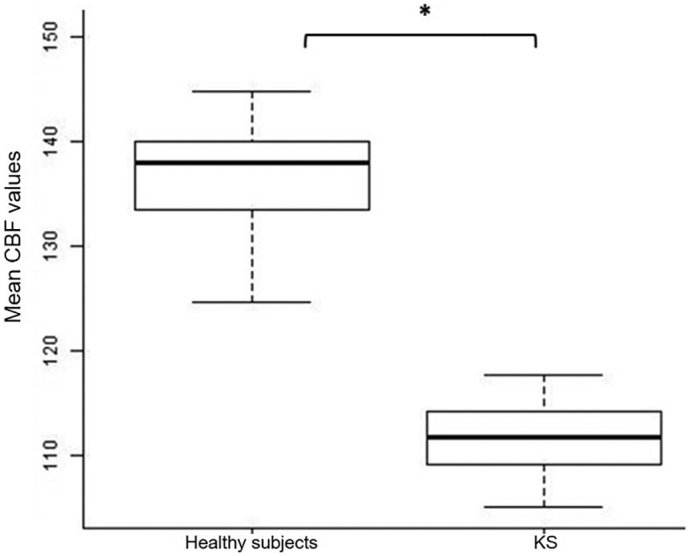
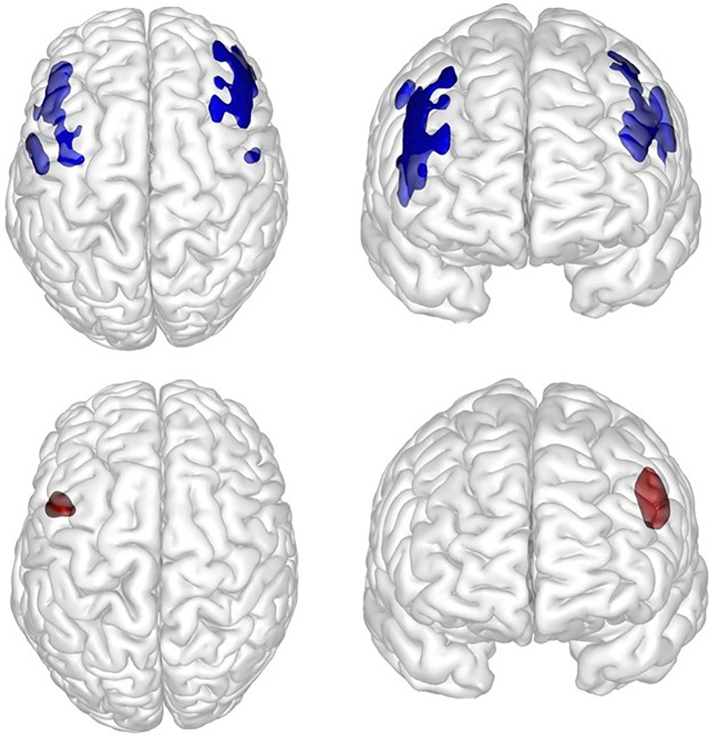
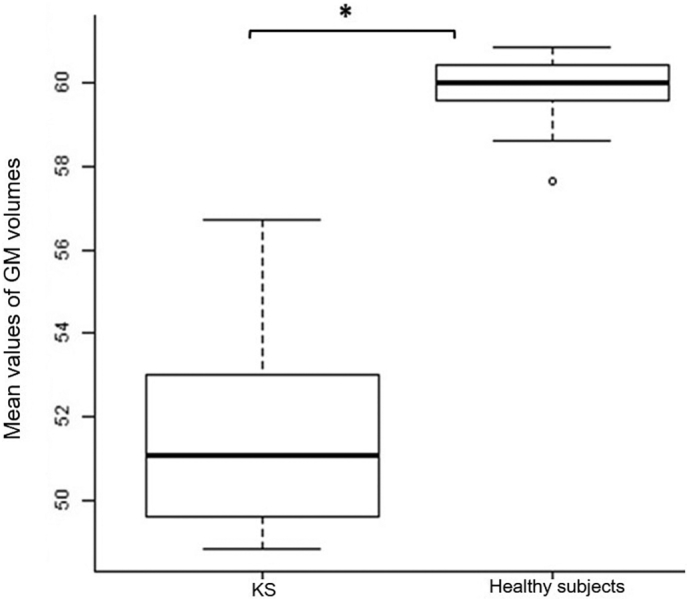
Kabuki syndrome (KS) is a rare congenital disorder (1/32000 births) characterized by distinctive facial features, intellectual disability, short stature, and dermatoglyphic and skeletal abnormalities. In the last decade, mutations in KMT2D and KDM6A were identified as a major cause of kabuki syndrome. Although genetic abnormalities have been highlighted in KS, brain abnormalities have been little explored. Here, we have investigated brain abnormalities in 6 patients with KS (4 males; M = 10.96 years, SD = 2.97 years) with KMT2D mutation in comparison with 26 healthy controls (17 males; M = 10.31 years, SD = 2.96 years). We have used MRI to explore anatomical and functional brain abnormalities in patients with KS. Anatomical abnormalities in grey matter volume were assessed by cortical and subcortical analyses. Functional abnormalities were assessed by comparing rest cerebral blood flow measured with arterial spin labeling-MRI. When compared to healthy controls, KS patients had anatomical alterations characterized by grey matter decrease localized in the bilateral precentral gyrus and middle frontal gyrus. In addition, KS patients also presented functional alterations characterized by cerebral blood flow decrease in the left precentral gyrus and middle frontal gyrus. Moreover, subcortical analyses revealed significantly decreased grey matter volume in the bilateral hippocampus and dentate gyrus in patients with KS. Our results strongly indicate anatomical and functional brain abnormalities in KS. They suggest a possible neural basis of the cognitive symptoms observed in KS, such as fine motor impairment, and indicate the need to further explore the consequences of such brain abnormalities in this disorder. Finally, our results encourage further imaging-genetics studies investigating the link between genetics, anatomical and functional brain alterations in KS.
歌舞伎综合征(KS)是一种罕见的先天性疾病(每 32000 例出生一例),其特征为独特的面部特征、智力障碍、身材矮小以及皮纹和骨骼异常。在过去的十年中,KMT2D 和 KDM6A 的突变被确定为歌舞伎综合征的主要病因。尽管 KS 中的遗传异常已被强调,但对大脑异常的研究还很少。在这里,我们研究了 6 名患有 KMT2D 突变的 KS 患者(4 名男性;M=10.96 岁,SD=2.97 岁)和 26 名健康对照者(17 名男性;M=10.31 岁,SD=2.96 岁)的大脑异常。我们使用 MRI 来探讨 KS 患者的大脑解剖和功能异常。通过皮质和皮质下分析评估灰质体积的解剖异常。通过比较动脉自旋标记-MRI 测量的静息脑血流来评估功能异常。与健康对照组相比,KS 患者存在以双侧中央前回和额中回灰质减少为特征的解剖改变。此外,KS 患者还存在以左侧中央前回和额中回脑血流减少为特征的功能改变。此外,皮质下分析显示 KS 患者双侧海马和齿状回的灰质体积明显减少。我们的研究结果强烈表明 KS 存在大脑解剖和功能异常。它们提示了 KS 中观察到的认知症状(如精细运动障碍)的可能神经基础,并表明需要进一步探讨这种疾病中大脑异常的后果。最后,我们的研究结果鼓励进一步进行影像学-遗传学研究,以探讨 KS 中遗传学、大脑解剖和功能改变之间的联系。