*Department of Genetic Toxicology and Nanotoxicology, Institute of Experimental Medicine of the Czech Academy of Sciences, Prague 14220, Czech Republic.
Department of Chemistry and Toxicology, Veterinary Research Institute, Brno 62100, Czech Republic.
Toxicol Sci. 2019 Mar 1;168(1):190-200. doi: 10.1093/toxsci/kfy288.
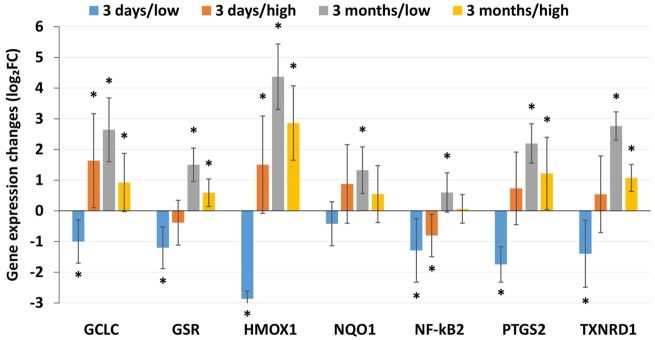
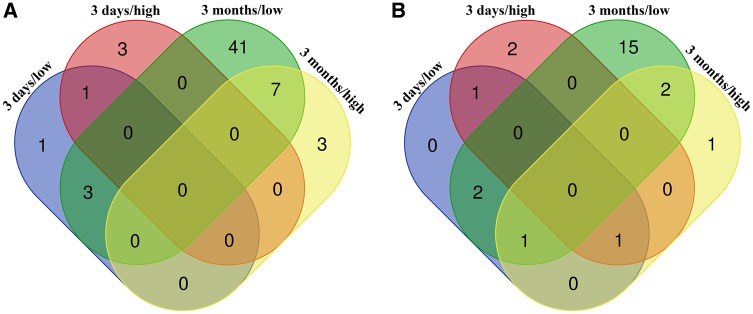
Despite the wide application of nanomaterials, toxicity studies of nanoparticles (NP) are often limited to in vitro cell models, and the biological impact of NP exposure in mammals has not been thoroughly investigated. Zinc oxide (ZnO) NPs are commonly used in various consumer products. To evaluate the effects of the inhalation of ZnO NP in mice, we studied splice junction expression in the lungs as a proxy to gene expression changes analysis. Female ICR mice were treated with 6.46 × 10⁴ and 1.93 × 10⁶ NP/cm3 for 3 days and 3 months, respectively. An analysis of differential expression and alternative splicing events in 298 targets (splice junctions) of 68 genes involved in the processes relevant to the biological effects of ZnO NP was conducted using next-generation sequencing. Three days of exposure resulted in the upregulation of IL-6 and downregulation of BID, GSR, NF-kB2, PTGS2, SLC11A2, and TXNRD1 splice junction expression; 3 months of exposure increased the expression of splice junctions in ALDH3A1, APAF1, BID, CASP3, DHCR7, GCLC, GCLM, GSR, GSS, EHHADH, FAS, HMOX-1, IFNγ, NF-kB1, NQO-1, PTGS1, PTGS2, RAD51, RIPK2, SRXN1, TRAF6, and TXNRD1. Alternative splicing of TRAF6 and TXNRD1 was induced after 3 days of exposure to 1.93 × 10⁶ NP/cm3. In summary, we observed changes of splice junction expression in genes involved in oxidative stress, apoptosis, immune response, inflammation, and DNA repair, as well as the induction of alternative splicing in genes associated with oxidative stress and inflammation. Our data indicate the potential negative biological effects of ZnO NP inhalation.
尽管纳米材料得到了广泛的应用,但纳米颗粒(NP)的毒性研究通常仅限于体外细胞模型,而哺乳动物暴露于 NP 后的生物影响尚未得到彻底研究。氧化锌(ZnO)NP 广泛用于各种消费产品。为了评估吸入 ZnO NP 对小鼠的影响,我们研究了肺部剪接连接的表达,作为基因表达变化分析的替代指标。雌性 ICR 小鼠分别用 6.46×10⁴ 和 1.93×10⁶ NP/cm3 处理 3 天和 3 个月。使用下一代测序对涉及 ZnO NP 生物学效应的过程中 68 个基因的 298 个靶标(剪接连接)的差异表达和可变剪接事件进行了分析。3 天的暴露导致 IL-6 的上调和 BID、GSR、NF-kB2、PTGS2、SLC11A2 和 TXNRD1 剪接连接表达的下调;3 个月的暴露增加了 ALDH3A1、APAF1、BID、CASP3、DHCR7、GCLC、GCLM、GSR、GSS、EHHADH、FAS、HMOX-1、IFNγ、NF-kB1、NQO-1、PTGS1、PTGS2、RAD51、RIPK2、SRXN1、TRAF6 和 TXNRD1 剪接连接的表达。在暴露于 1.93×10⁶ NP/cm3 3 天后,TRAF6 和 TXNRD1 的可变剪接被诱导。总之,我们观察到参与氧化应激、细胞凋亡、免疫反应、炎症和 DNA 修复的基因的剪接连接表达变化,以及与氧化应激和炎症相关的基因的可变剪接诱导。我们的数据表明 ZnO NP 吸入具有潜在的负面生物学效应。