Department of Surgery, University of Pittsburgh Medical Center, Pittsburgh, PA 15213;
Department of Surgery, University of Pittsburgh Medical Center, Pittsburgh, PA 15213.
J Immunol. 2019 Jan 1;202(1):268-277. doi: 10.4049/jimmunol.1800454. Epub 2018 Nov 30.
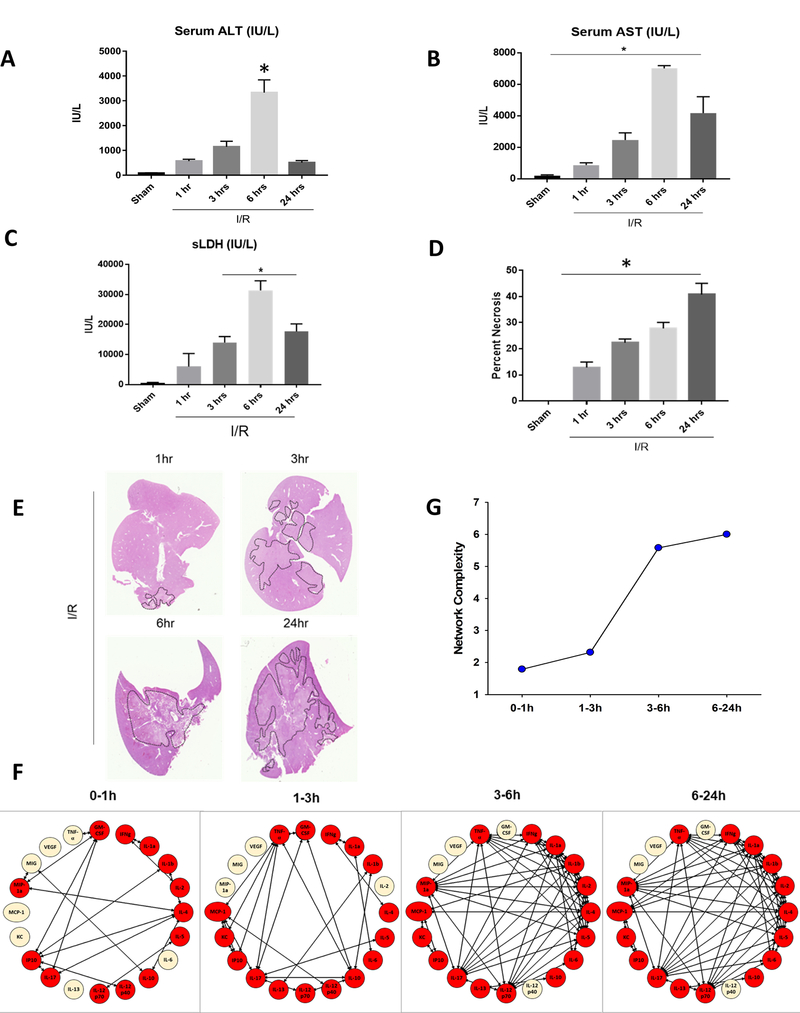
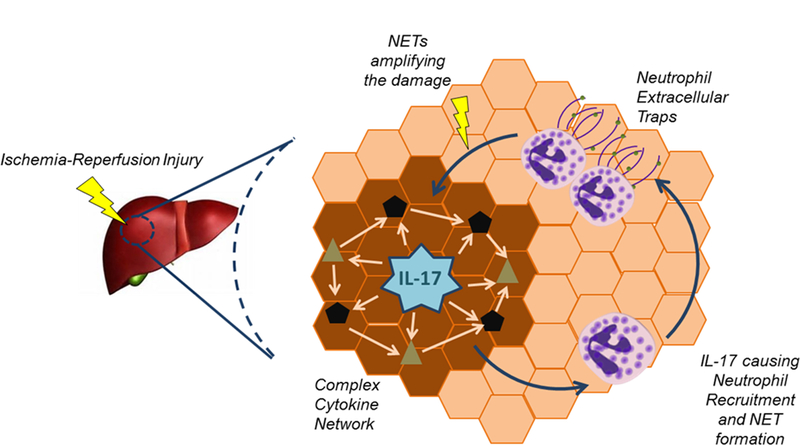
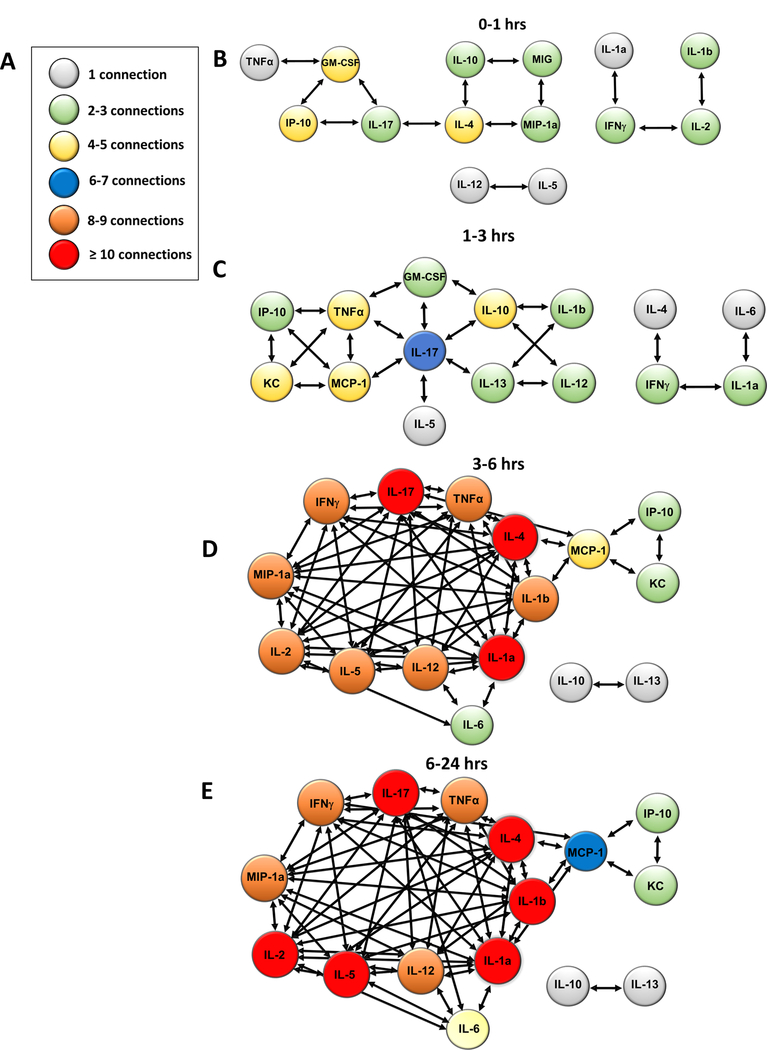
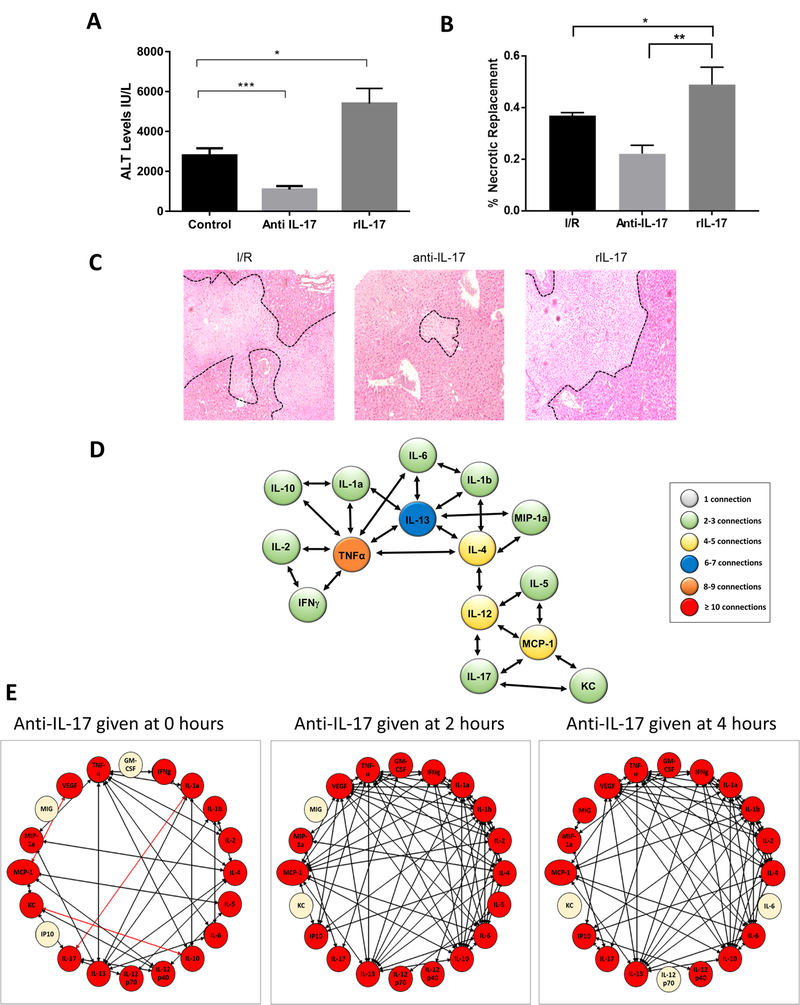
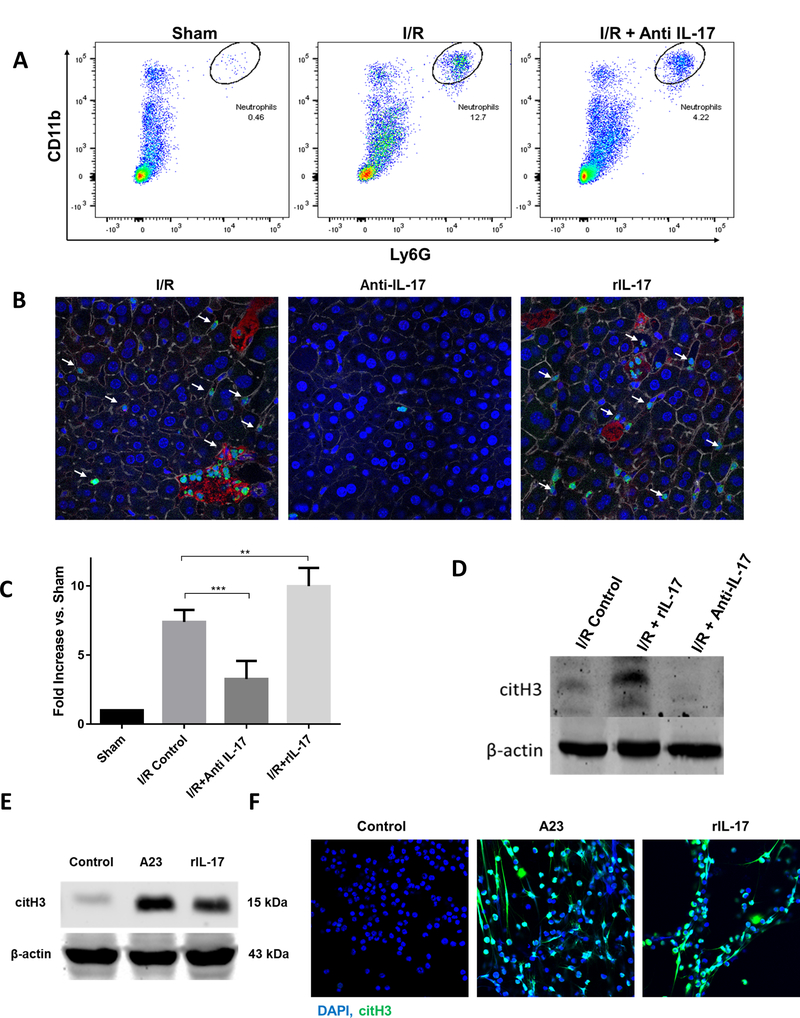
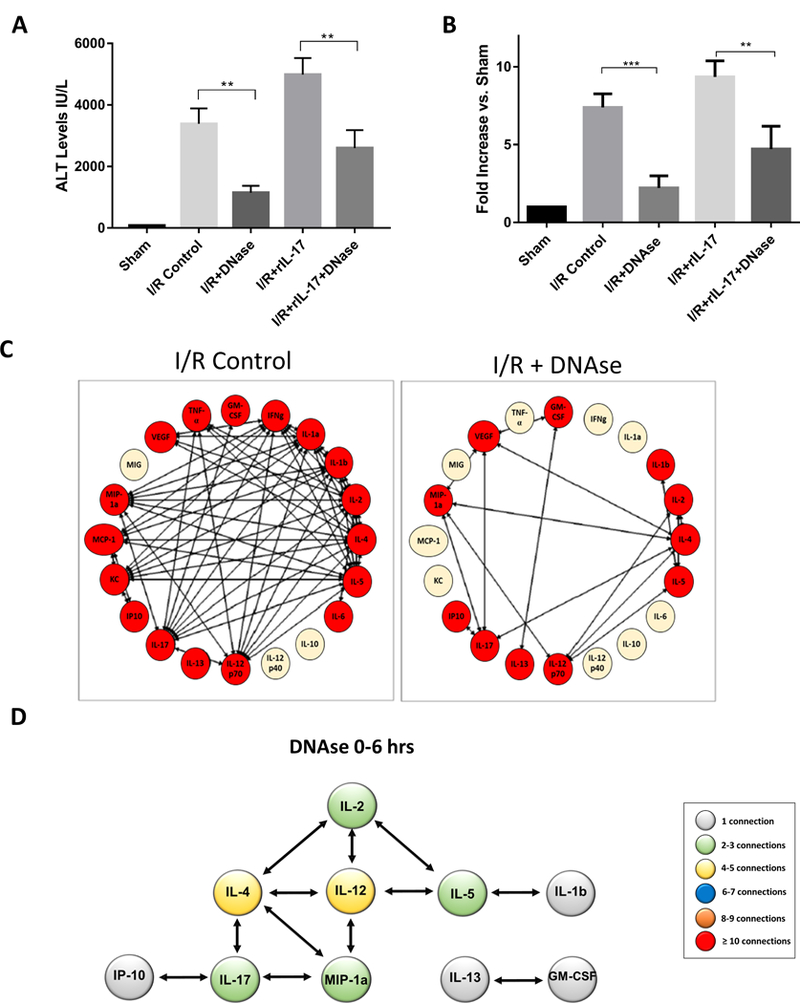
Hepatic ischemia reperfusion (I/R) is a clinically relevant model of acute sterile inflammation leading to a reverberating, self-sustaining inflammatory response with resultant necrosis. We hypothesized that computerized dynamic network analysis (DyNA) of 20 inflammatory mediators could help dissect the sequence of post-I/R mediator interactions that induce injury. Although the majority of measured inflammatory mediators become elevated in the first 24 h, we predicted that only a few would be secreted early in the process and serve as organizational centers of downstream intermediator complexity. In support of this hypothesis, DyNA inferred a central organizing role for IL-17A during the first 3 h of reperfusion. After that, DyNA revealed connections among almost all the inflammatory mediators, representing an ongoing cytokine storm. Blocking IL-17A immediately after reperfusion disassembled the inflammatory networks and protected the liver from injury. Disassembly of the networks was not achieved if IL-17A blockage was delayed two or more hours postreperfusion. Network disassembly was accompanied by decrease in neutrophil infiltration and neutrophil extracellular trap (NET) formation. By contrast, administration of recombinant IL-17A increased neutrophil infiltration, NET formation, and liver necrosis. The administration of DNase, a NET inhibitor, significantly reduced hepatic damage despite prior administration of IL-17A, and DNase also disassembled the inflammatory networks. In vitro, IL-17A was a potent promoter of NET formation. Therefore, computational analysis identified IL-17A's early, central organizing role in the rapid evolution of a network of inflammatory mediators that induce neutrophil infiltration and NET formation responsible for hepatic damage after liver I/R.
肝脏缺血再灌注(I/R)是一种与临床相关的急性无菌性炎症模型,导致持续的、自我维持的炎症反应,最终导致坏死。我们假设,对 20 种炎症介质的计算机动态网络分析(DyNA)可以帮助剖析再灌注后诱导损伤的介质相互作用的顺序。尽管大多数测量的炎症介质在最初的 24 小时内升高,但我们预测只有少数几种会在早期过程中分泌,并作为下游介质复杂性的组织中心。支持这一假说,DyNA 推断在再灌注的前 3 小时内,IL-17A 起着中央组织作用。在此之后,DyNA 揭示了几乎所有炎症介质之间的联系,代表了正在进行的细胞因子风暴。再灌注后立即阻断 IL-17A 会使炎症网络解体,并保护肝脏免受损伤。如果再灌注后两小时或更长时间才阻断 IL-17A,则无法实现网络解体。网络解体伴随着中性粒细胞浸润和中性粒细胞胞外陷阱(NET)形成的减少。相比之下,给予重组 IL-17A 会增加中性粒细胞浸润、NET 形成和肝坏死。尽管先前给予了 IL-17A,但给予 DNase(一种 NET 抑制剂)可显著减轻肝损伤,并且 DNase 还可使炎症网络解体。在体外,IL-17A 是 NET 形成的有力促进剂。因此,计算分析确定了 IL-17A 在诱导中性粒细胞浸润和 NET 形成的炎症介质网络的快速演变中的早期、中央组织作用,这是肝脏 I/R 后导致肝损伤的原因。