Department of Oncology, Xiangya Hospital, Central South University, Changsha, Hunan Province 410008, China.
Department of Outpatient, Xiangya Hospital, Central South University, Changsha, Hunan Province 410008, China.
Biosci Rep. 2019 Jan 15;39(1). doi: 10.1042/BSR20180653. Print 2019 Jan 31.
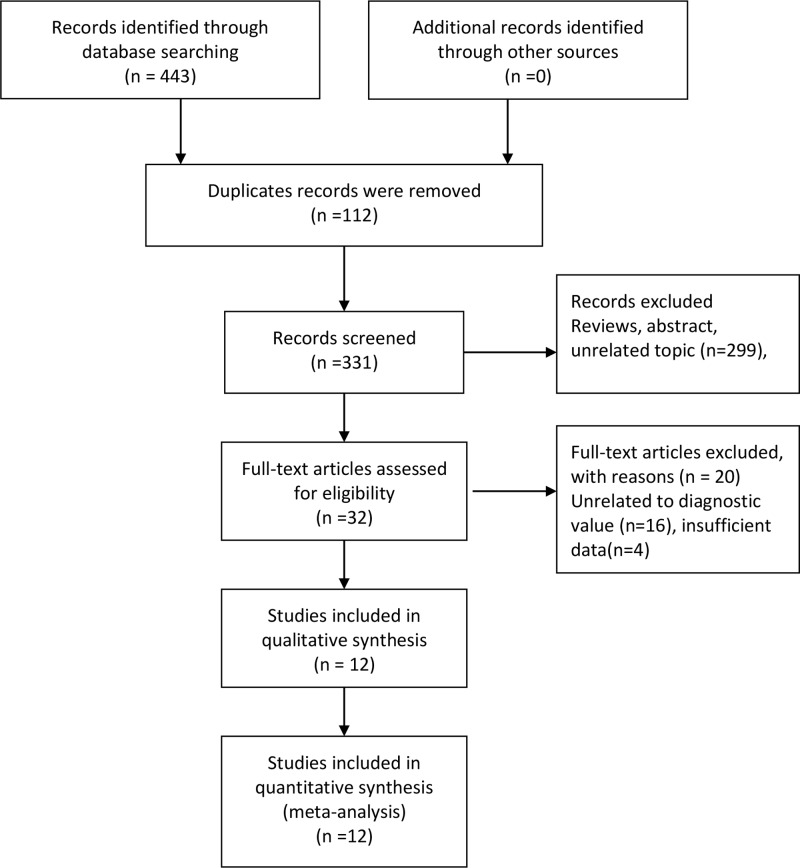
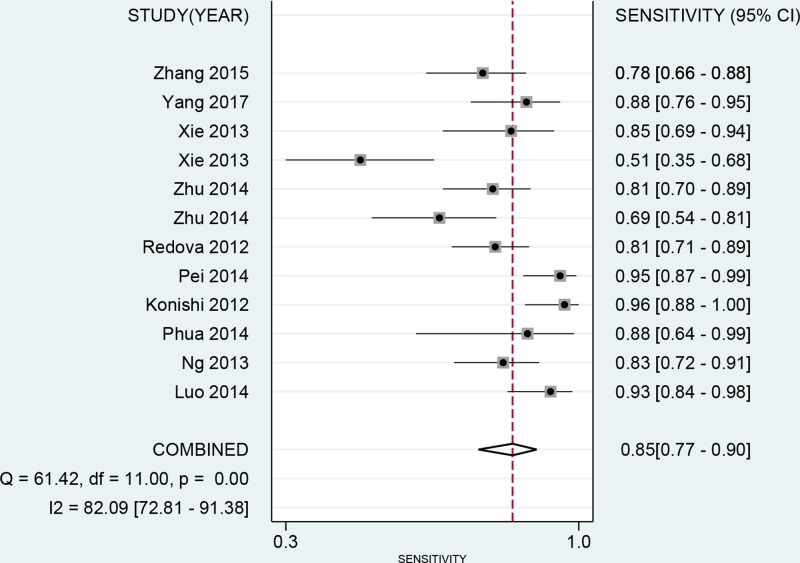
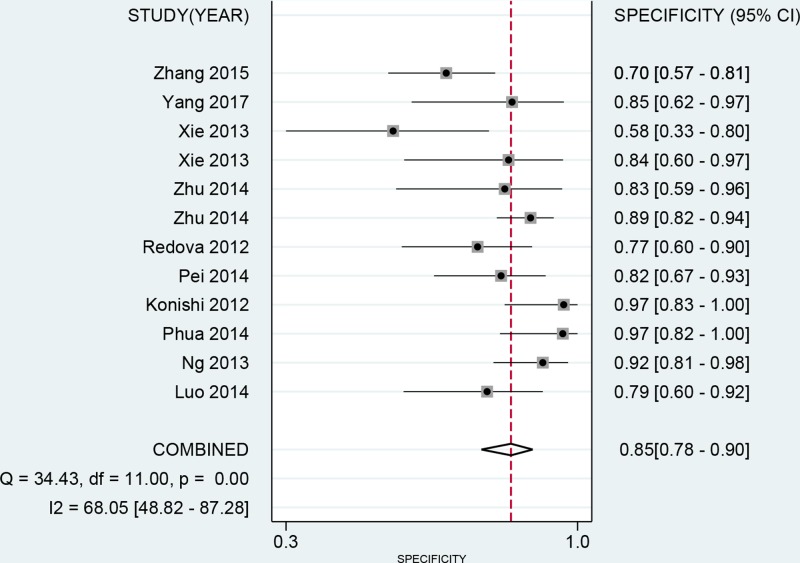
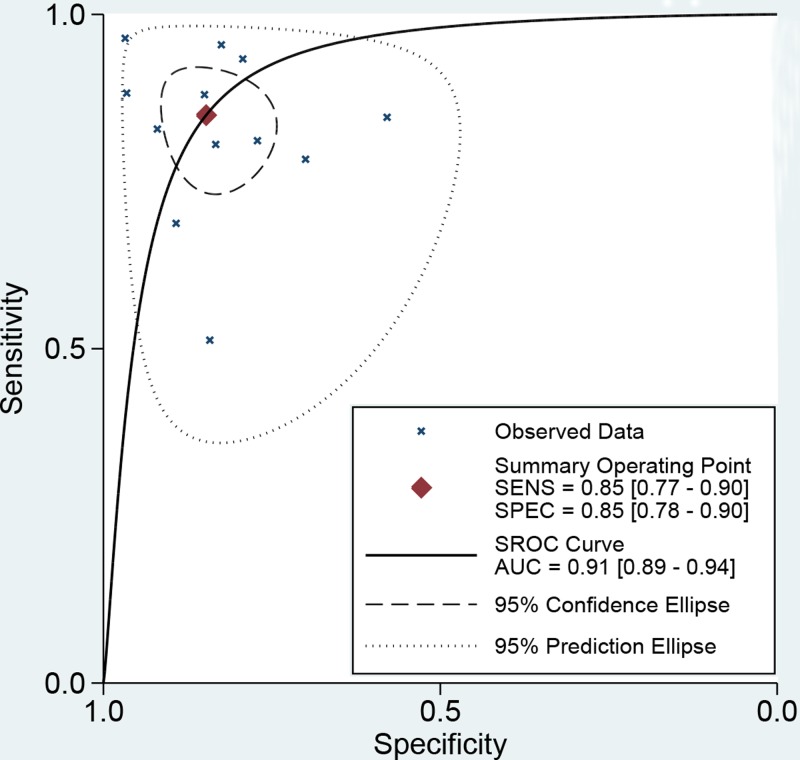
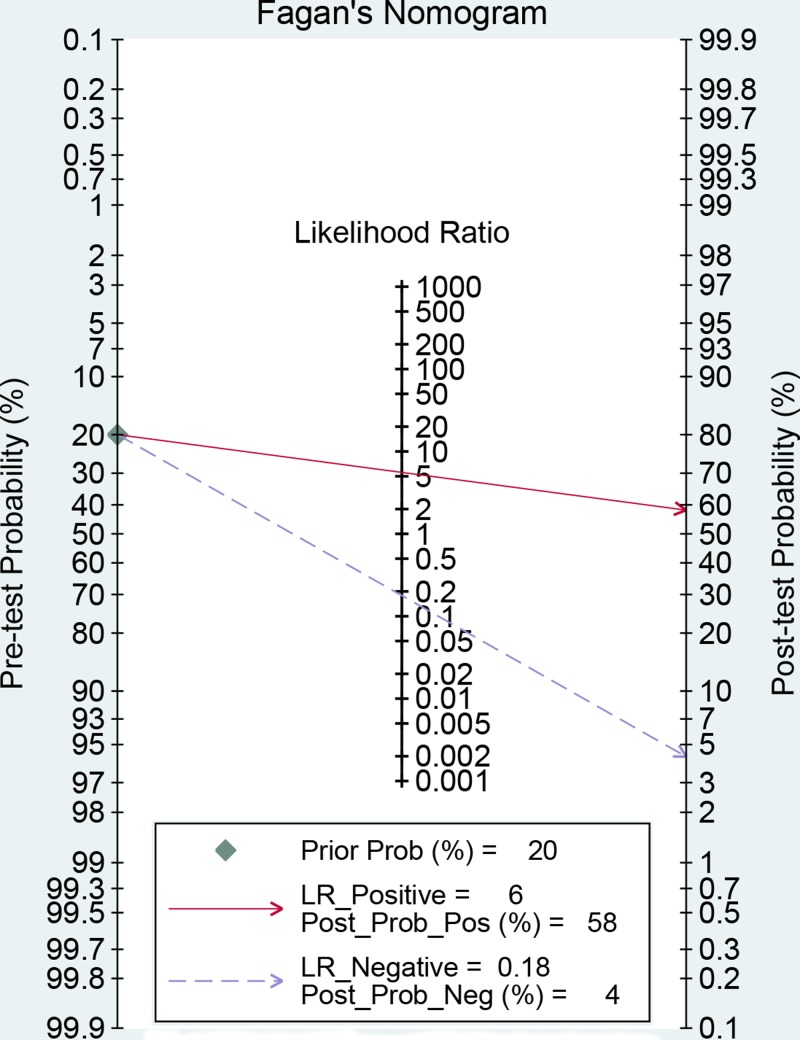
We conducted comprehensive analyses to assess the diagnostic ability of miRNA-451 in cancers. A systematic online search was conducted in PubMed, Web of Science, China's national knowledge infrastructure, and VIP databases from inception to July 31, 2017. The bivariate random effect model was used for calculating sensitivity, specificity, positive likelihood ratio, negative likelihood ratio, diagnostic odds ratio, and area under cure (AUC). The whole pooled sensitivity and specificity were 0.85 (0.77-0.90) and 0.85 (0.78-0.90) with their 95% confidence interval (95%CI), respectively. The pooled AUC was 0.91 (95%CI: 0.89-0.94). Positive likelihood ratio was 5.57 (95%CI: 3.74-8.31), negative likelihood ratio was 0.18 (95%CI: 0.11-0.28), and diagnostic odds ratio was 31.33 (95%CI: 15.19-64.61). Among Asian population, the sensitivity and specificity were 0.85 (95%CI: 0.77-0.91) and 0.86 (95%CI: 0.78-0.91), respectively. The positive likelihood ratio and negative likelihood ratio were 5.87 (95%CI: 3.78-9.12) and 0.17 (95%CI: 0.11-0.28). The diagnostic odds ratio and AUC were 34.31 (15.51-75.91) and 0.92 (0.89-0.94). The pooled sensitivity, specificity, positive likelihood ratio, negative likelihood ratio, diagnostic odds ratio, and AUC for digestive system cancer were 0.83, 0.88, 6.87, 0.20, 35.13, and 0.92, respectively. The other cancers were 0.87, 0.81, 4.55, 0.16, 28.51, and 0.90, respectively. For sample source, the results still remain consistent. Our results indicated miRNA-451 has a moderate diagnostic ability for cancers, and could be a potential early screening biomarker, and considered as an adjuvant diagnostic index when being combined with other clinical examinations.
我们进行了全面的分析,以评估 miRNA-451 在癌症中的诊断能力。我们在 PubMed、Web of Science、中国国家知识基础设施和 VIP 数据库中进行了系统的在线搜索,检索时间从建库至 2017 年 7 月 31 日。采用双变量随机效应模型计算敏感度、特异度、阳性似然比、阴性似然比、诊断优势比和曲线下面积(AUC)。总的汇总敏感度和特异度分别为 0.85(0.77-0.90)和 0.85(0.78-0.90),95%置信区间(95%CI)分别为 0.85(0.77-0.90)和 0.85(0.78-0.90)。汇总 AUC 为 0.91(95%CI:0.89-0.94)。阳性似然比为 5.57(95%CI:3.74-8.31),阴性似然比为 0.18(95%CI:0.11-0.28),诊断优势比为 31.33(95%CI:15.19-64.61)。在亚洲人群中,敏感度和特异度分别为 0.85(95%CI:0.77-0.91)和 0.86(95%CI:0.78-0.91)。阳性似然比和阴性似然比分别为 5.87(95%CI:3.78-9.12)和 0.17(95%CI:0.11-0.28)。诊断优势比和 AUC 分别为 34.31(15.51-75.91)和 0.92(0.89-0.94)。消化系统癌症的汇总敏感度、特异度、阳性似然比、阴性似然比、诊断优势比和 AUC 分别为 0.83、0.88、6.87、0.20、35.13 和 0.92。其他癌症的分别为 0.87、0.81、4.55、0.16、28.51 和 0.90。关于样本来源,结果仍然一致。我们的研究结果表明,miRNA-451 对癌症具有中等诊断能力,可能是一种潜在的早期筛查生物标志物,并可考虑作为其他临床检查的辅助诊断指标。