Nakagomi Takahiro, Goto Taichiro, Hirotsu Yosuke, Shikata Daichi, Yokoyama Yujiro, Higuchi Rumi, Otake Sotaro, Amemiya Kenji, Oyama Toshio, Mochizuki Hitoshi, Omata Masao
Lung Cancer and Respiratory Disease Center, Yamanashi Central Hospital, Yamanashi 400-8506, Japan.
Department of Surgery Keio University, Tokyo 160-8582, Japan.
Cancers (Basel). 2018 Nov 30;10(12):478. doi: 10.3390/cancers10120478.
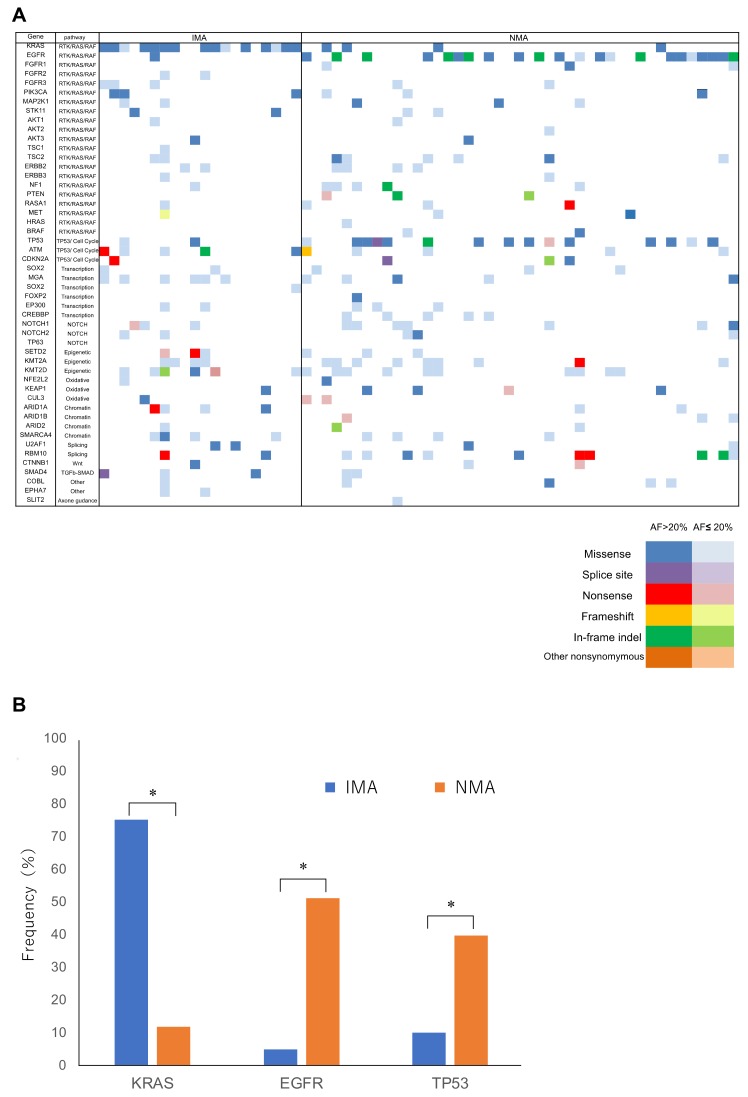
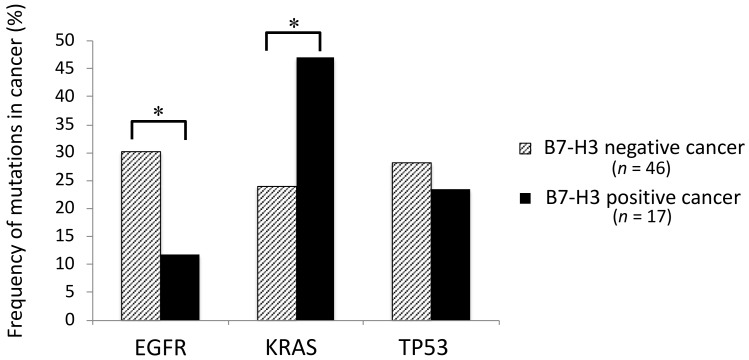
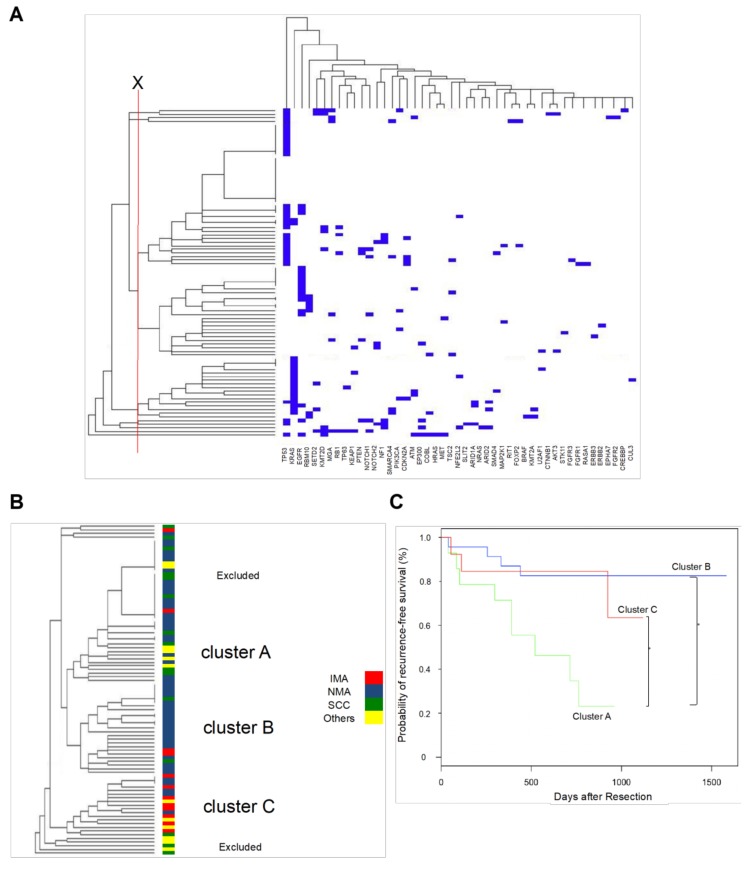
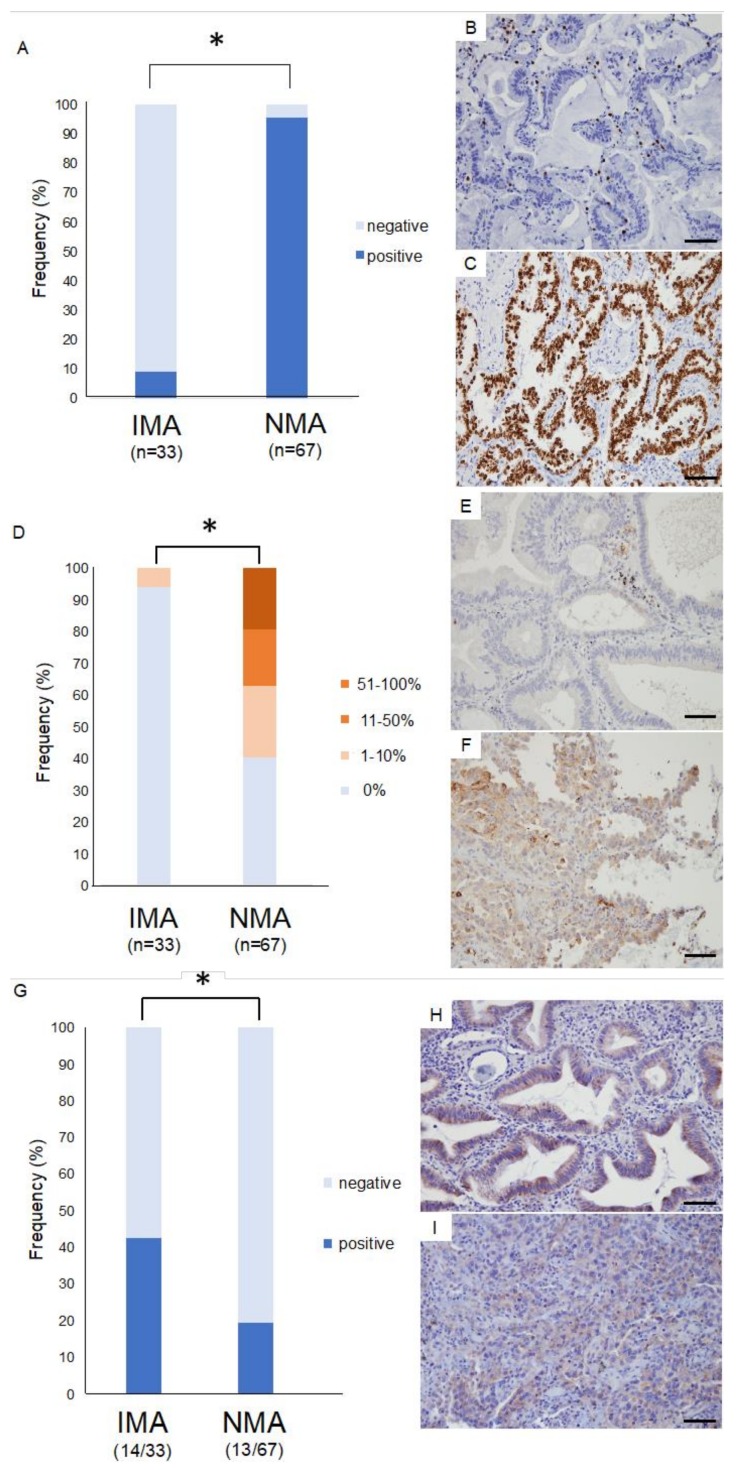
Pulmonary invasive mucinous adenocarcinoma (IMA) is considered a variant of lung adenocarcinomas based on the current World Health Organization classification of lung tumors. However, the molecular mechanism driving IMA development and progression is not well understood. Thus, we surveyed the genomic characteristics of IMA in association with immune-checkpoint expression to investigate new potential therapeutic strategies. Tumor cells were collected from surgical specimens of primary IMA, and sequenced to survey 53 genes associated with lung cancer. The mutational profiles thus obtained were compared in silico to conventional adenocarcinomas and other histologic carcinomas, thereby establishing the genomic clustering of lung cancers. Immunostaining was also performed to compare expression of programmed death ligand 1 (PD-L1) and B7-H3 in IMA and conventional adenocarcinomas. Mutations in Kirsten rat sarcoma viral oncogene homolog () were detected in 75% of IMAs, but in only 11.6% of conventional adenocarcinomas. On the other hand, the frequency of mutations in epidermal growth factor receptor () and tumor protein p53 ) genes was 5% and 10%, respectively, in the former, but 48.8% and 34.9%, respectively, in the latter. Clustering of all 78 lung cancers indicated that IMA is distinct from conventional adenocarcinoma or squamous cell carcinoma. Strikingly, expression of PD-L1 in ≥1% of cells was observed in only 6.1% of IMAs, but in 59.7% of conventional adenocarcinomas. Finally, 42.4% and 19.4% of IMAs and conventional adenocarcinomas, respectively, tested positive for B7-H3. Although currently classified as a variant of lung adenocarcinoma, it is also reasonable to consider IMA as fundamentally distinct, based on mutation profiles and genetic clustering as well as immune-checkpoint status. The immunohistochemistry data suggest that B7-H3 may be a new and promising therapeutic target for immune checkpoint therapy.
根据世界卫生组织目前的肺肿瘤分类,肺侵袭性黏液腺癌(IMA)被认为是肺腺癌的一种变体。然而,驱动IMA发生和发展的分子机制尚未完全明确。因此,我们研究了IMA的基因组特征及其与免疫检查点表达的关系,以探索新的潜在治疗策略。从原发性IMA手术标本中收集肿瘤细胞,对与肺癌相关的53个基因进行测序。将所得的突变谱与传统腺癌和其他组织学类型的癌进行计算机模拟比较,从而建立肺癌的基因组聚类。同时进行免疫染色,比较IMA和传统腺癌中程序性死亡配体1(PD-L1)和B7-H3的表达。在75%的IMA中检测到 Kirsten大鼠肉瘤病毒癌基因同源物()突变,而在传统腺癌中仅为11.6%。另一方面,表皮生长因子受体()和肿瘤蛋白p53()基因的突变频率在前者分别为5%和10%,在后者分别为48.8%和34.9%。对所有78例肺癌的聚类分析表明,IMA与传统腺癌或鳞状细胞癌不同。值得注意的是,仅6.1%的IMA中观察到≥1%的细胞表达PD-L1,而在传统腺癌中这一比例为59.7%。最后,分别有42.4%的IMA和19.4%的传统腺癌检测出B7-H3呈阳性。尽管目前IMA被归类为肺腺癌的一种变体,但基于突变谱、基因聚类以及免疫检查点状态,将其视为本质上不同的类型也是合理的。免疫组化数据表明,B7-H3可能是免疫检查点治疗的一个新的、有前景的治疗靶点。