Department of Electrical and Computer Engineering, University of Massachusetts, Amherst, 01003, USA.
Institute for Applied Life Sciences, University of Massachusetts, Amherst, 01003, USA.
Nat Commun. 2018 Dec 4;9(1):5161. doi: 10.1038/s41467-018-07672-2.
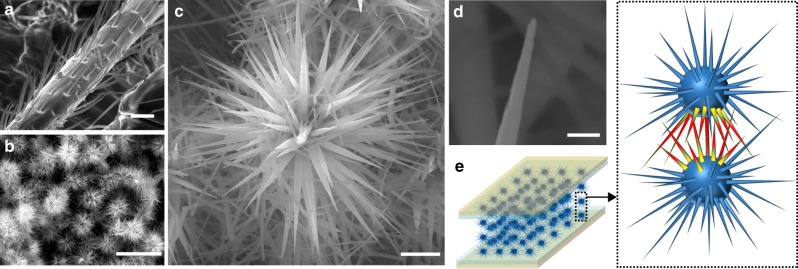
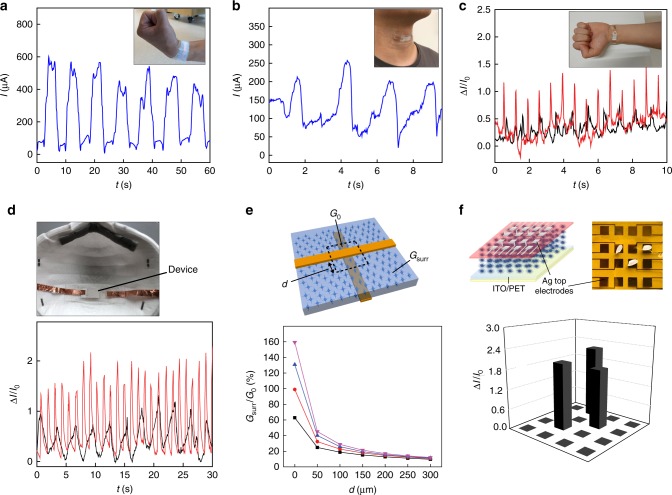
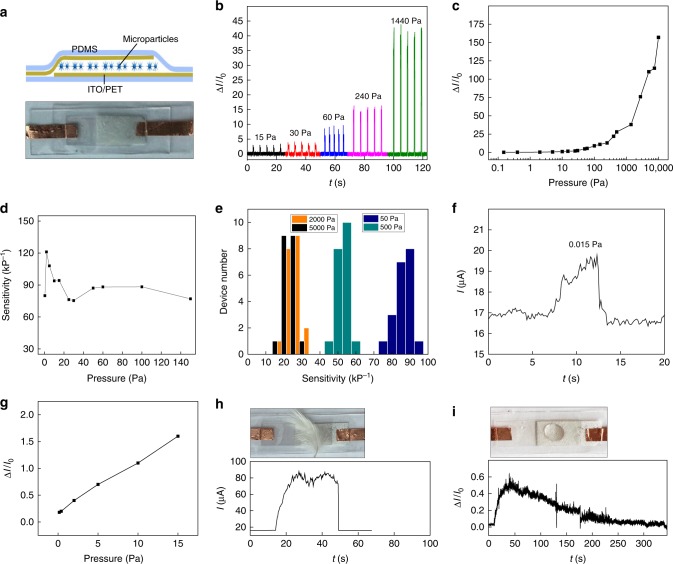
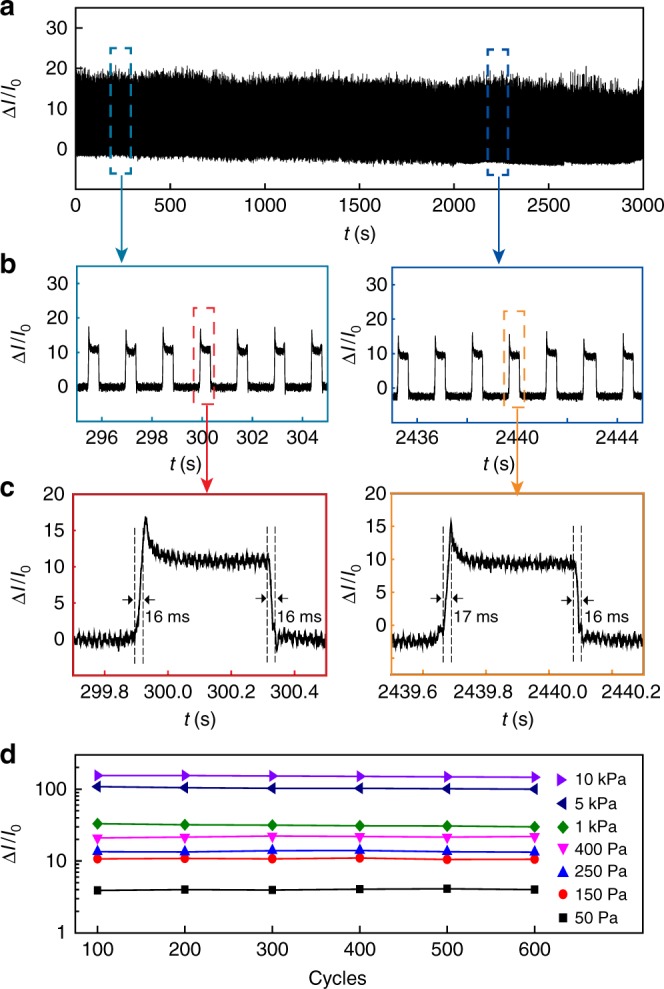
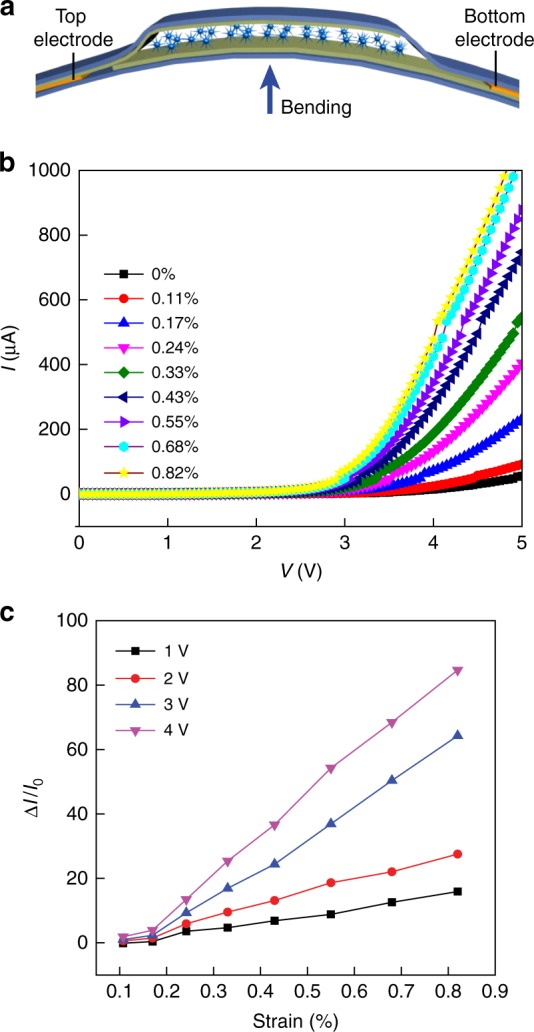
Biological sensory organelles are often structurally optimized for high sensitivity. Tactile hairs or bristles are ubiquitous mechanosensory organelles in insects. The bristle features a tapering spine that not only serves as a lever arm to promote signal transduction, but also a clever design to protect it from mechanical breaking. A hierarchical distribution over the body further improves the signal detection from all directions. We mimic these features by using synthetic zinc oxide microparticles, each having spherically-distributed, high-aspect-ratio, and high-density nanostructured spines resembling biological bristles. Sensors based on thin films assembled from these microparticles achieve static-pressure detection down to 0.015 Pa, sensitivity up to 121 kPa, and a strain gauge factor >10, showing supreme overall performance. Other properties including a robust cyclability >2000, fast response time ~7 ms, and low-temperature synthesis compatible to various integrations further indicate the potential of this sensor technology in applying to wearable technologies and human interfaces.
生物感觉器官通常在结构上被优化以实现高灵敏度。触须或刚毛是昆虫中普遍存在的机械感觉器官。刚毛的特点是逐渐变细的刺,它不仅作为促进信号转导的杠杆臂,而且还是一种巧妙的设计,可以保护它免受机械破坏。在身体上的层次分布进一步提高了来自各个方向的信号检测能力。我们通过使用合成氧化锌微粒子来模拟这些特征,每个微粒子都具有球形分布、高纵横比和高密度的纳米结构刺,类似于生物刚毛。基于由这些微粒子组装而成的薄膜的传感器可以实现低至 0.015 Pa 的静态压力检测、高达 121 kPa 的灵敏度和 >10 的应变计因子,表现出卓越的整体性能。其他性能包括稳健的循环能力>2000、快速响应时间~7 ms 和低温合成与各种集成兼容,进一步表明这种传感器技术在可穿戴技术和人机接口中的应用潜力。