Pendergrass Sarah A, Crawford Dana C
Biomedical and Translational Informatics Institute, Geisinger Research, Rockville, Maryland.
Cleveland Institute for Computational Biology, Department of Population and Quantitative Health Sciences, Case Western Reserve University, Cleveland, Ohio.
Curr Protoc Hum Genet. 2019 Jan;100(1):e80. doi: 10.1002/cphg.80. Epub 2018 Dec 5.
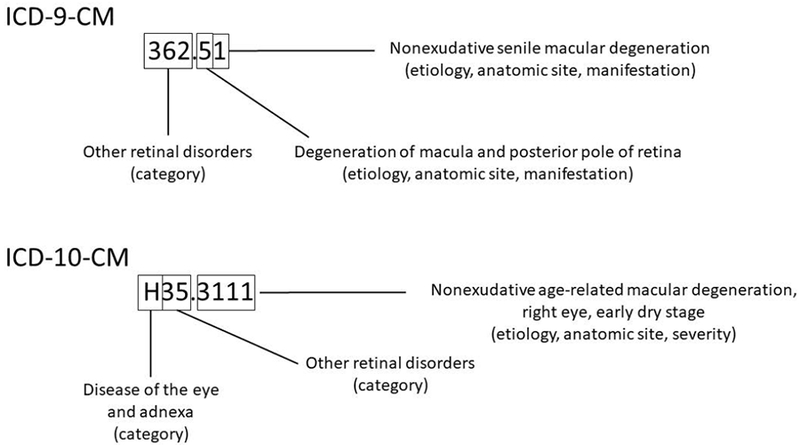
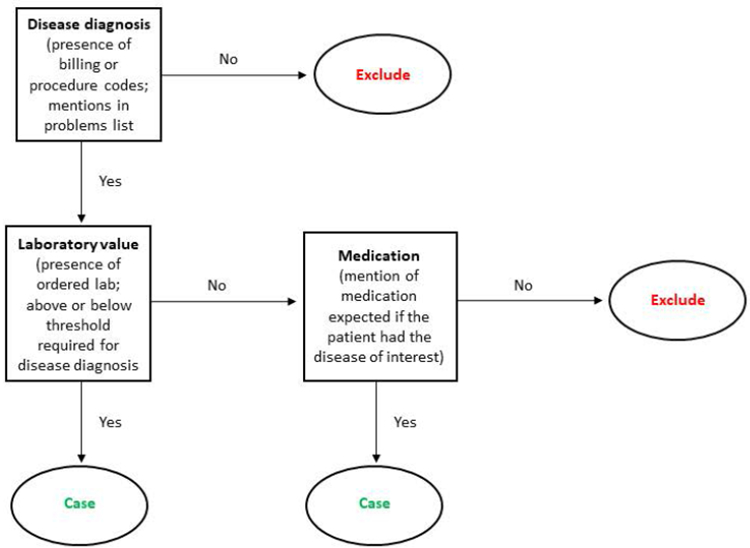
Electronic health records contain patient-level data collected during and for clinical care. Data within the electronic health record include diagnostic billing codes, procedure codes, vital signs, laboratory test results, clinical imaging, and physician notes. With repeated clinic visits, these data are longitudinal, providing important information on disease development, progression, and response to treatment or intervention strategies. The near universal adoption of electronic health records nationally has the potential to provide population-scale real-world clinical data accessible for biomedical research, including genetic association studies. For this research potential to be realized, high-quality research-grade variables must be extracted from these clinical data warehouses. We describe here common and emerging electronic phenotyping approaches applied to electronic health records, as well as current limitations of both the approaches and the biases associated with these clinically collected data that impact their use in research. © 2018 by John Wiley & Sons, Inc.
电子健康记录包含在临床护理期间收集的患者层面的数据以及用于临床护理的数据。电子健康记录中的数据包括诊断计费代码、程序代码、生命体征、实验室检查结果、临床影像和医生记录。随着患者多次就诊,这些数据具有纵向性,可提供有关疾病发展、进展以及对治疗或干预策略反应的重要信息。电子健康记录在全国范围内的近乎普遍采用,有可能提供可用于生物医学研究(包括基因关联研究)的人群规模的真实世界临床数据。为了实现这种研究潜力,必须从这些临床数据仓库中提取高质量的研究级变量。我们在此描述应用于电子健康记录的常见和新兴电子表型分析方法,以及这些方法的当前局限性,以及与这些临床收集数据相关的偏差,这些偏差会影响它们在研究中的使用。© 2018 约翰威立国际出版公司