Yan Dingding, Du Yian, Dai Gaiguo, Huang Ling, Xu Qi, Yu Pengfei
Department of Gynecologic oncology, Zhejiang Cancer Hospital, Hangzhou 310022, China.
Department of Abdominal Surgery, Zhejiang Cancer Hospital, Hangzhou 310022, China.
J Cancer. 2018 Oct 20;9(22):4197-4203. doi: 10.7150/jca.25593. eCollection 2018.
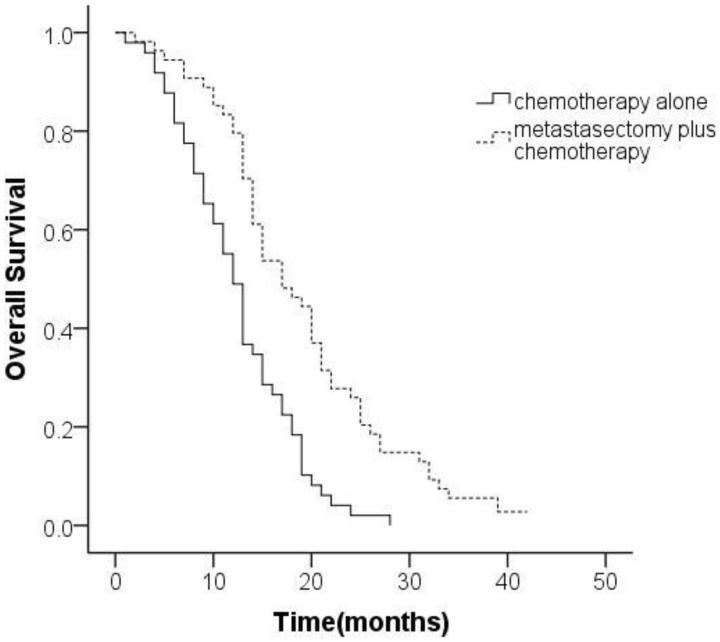
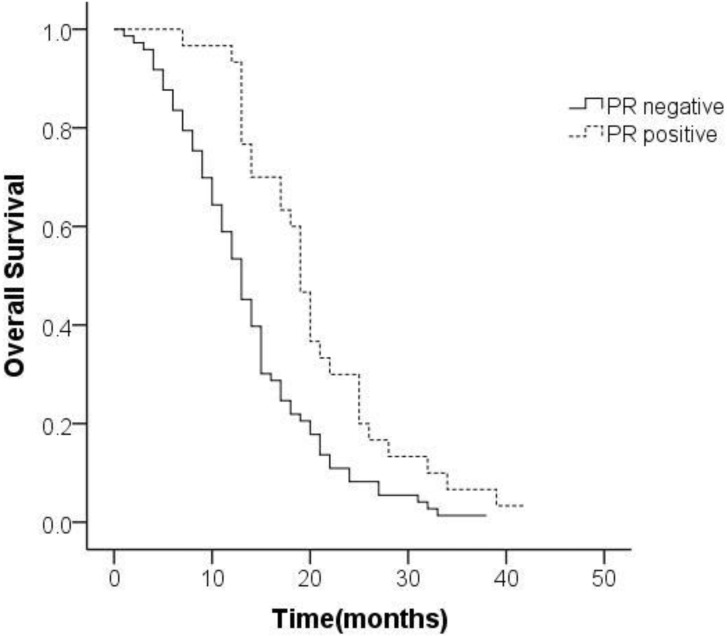
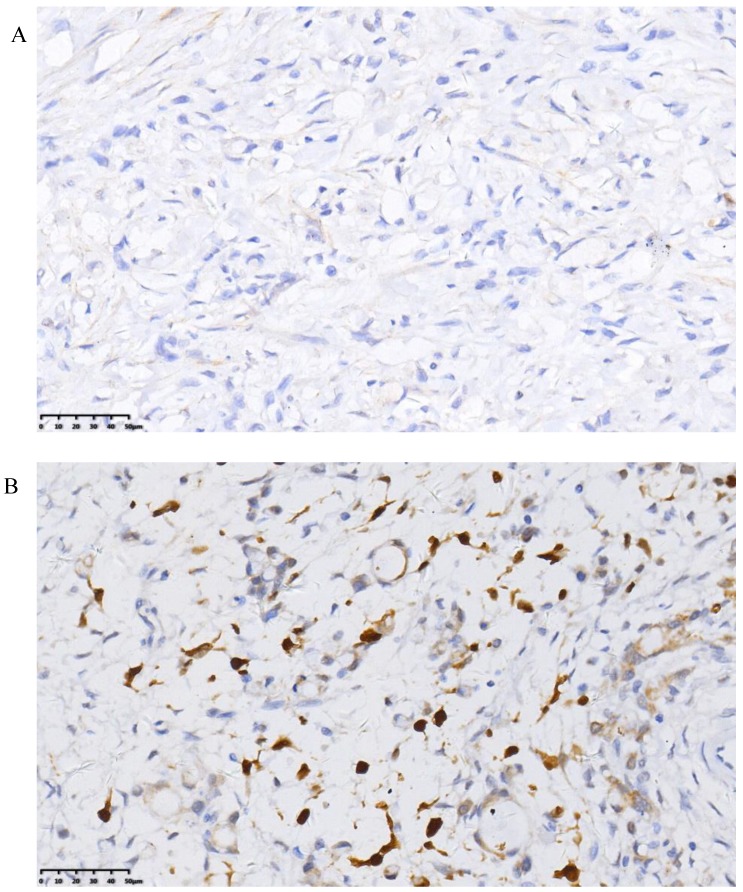
Whether metastasectomy improves prognosis of gastric cancer patients with ovarian metastases (Krukenberg tumors) is not clear. In this study, we examined the survival benefit of metastasectomy combined with chemotherapy for treatment of synchronous Krukenberg tumors from gastric cancer and identified the prognostic factors. The subjects of this study were patients diagnosed as synchronous Krukenberg tumors of gastric origin in the period between December 2004 and December 2015. Patients were classified in accordance with treatment modality: metastasectomy group (metastasectomy combined with chemotherapy) and non-metastasectomy group (chemotherapy alone). Clinicopathological characteristics together with treatment records were investigated in detail and their relationship with survival outcomes was examined. Out of a total of 103 patients, 54 (52.4%) underwent metastasectomy of Krukenberg tumors while 49 (47.6%) patients had chemotherapy alone. Overall survival (OS) in the metastasectomy group was significantly longer than that in the non-metastasectomy group (18.9 months vs. 12.4 months, respectively; <0.001). Metastasectomy (hazard ratio [HR] 0.486; 95% confidence interval [CI] 0.323-0.729; <0.001), signet ring cells (HR 1.938; 95% CI 1.182-3.175; =0.009), peritoneal carcinomatosis (HR 1.934; 95% CI 1.230-3.049; =0.004), expression of estrogen receptor-β (ER-β) (HR 0.404; 95% CI 0.251-0.648; <0.001), and progesterone receptor (PR) (HR 0.496; 95% CI 0.301-0.817; <0.001) were independent predictors of OS. Metastasectomy combined with chemotherapy showed an association with survival benefit in patients with synchronous Krukenberg tumors from gastric cancer. Metastasectomy, expression of ER-β and PR, peritoneal carcinomatosis, and signet ring cells were independent predictors of survival. Further prospective studies are warranted.
胃癌伴卵巢转移(库肯勃瘤)患者行转移灶切除术是否能改善预后尚不清楚。在本研究中,我们探讨了转移灶切除术联合化疗治疗胃癌同期库肯勃瘤的生存获益,并确定了预后因素。本研究的对象为2004年12月至2015年12月期间被诊断为胃源性同期库肯勃瘤的患者。患者根据治疗方式分类:转移灶切除组(转移灶切除术联合化疗)和非转移灶切除组(单纯化疗)。详细调查临床病理特征及治疗记录,并研究它们与生存结局的关系。在总共103例患者中,54例(52.4%)接受了库肯勃瘤转移灶切除术,49例(47.6%)患者仅接受了化疗。转移灶切除组的总生存期(OS)明显长于非转移灶切除组(分别为18.9个月和12.4个月;<0.001)。转移灶切除术(风险比[HR]0.486;95%置信区间[CI]0.323 - 0.729;<0.001)、印戒细胞(HR 1.938;95% CI 1.182 - 3.175;=0.009)、腹膜癌转移(HR 1.934;95% CI 1.230 - 3.049;=0.004)、雌激素受体-β(ER-β)表达(HR 0.404;95% CI 0.251 - 0.648;<0.001)和孕激素受体(PR)(HR 0.496;95% CI 0.301 - 0.817;<0.001)是OS的独立预测因素。转移灶切除术联合化疗对胃癌同期库肯勃瘤患者的生存获益有影响。转移灶切除术、ER-β和PR表达、腹膜癌转移及印戒细胞是生存的独立预测因素。有必要进行进一步的前瞻性研究。