Zhang Suping, Huang Qian, Cai Xiaoxia, Jiang Shan, Xu Nan, Zhou Qin, Cao Xiaoyun, Hultström Michael, Tian Jiong, Lai En Yin
Kidney Disease Center, First Affiliated Hospital, College of Medicine, Zhejiang University, Hangzhou, China.
Department of Physiology, School of Basic Medical Sciences, Zhejiang University School of Medicine, Hangzhou, China.
Front Physiol. 2018 Nov 21;9:1650. doi: 10.3389/fphys.2018.01650. eCollection 2018.
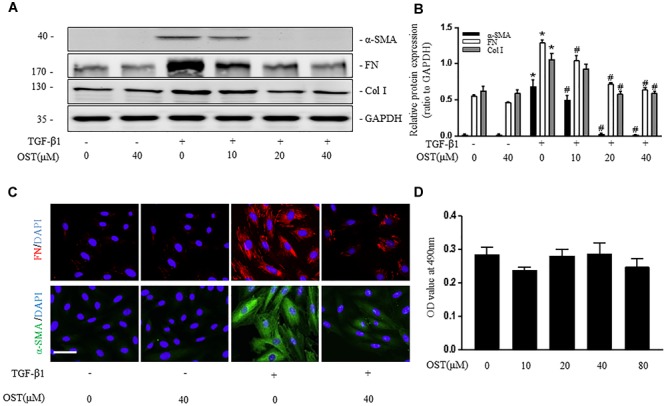
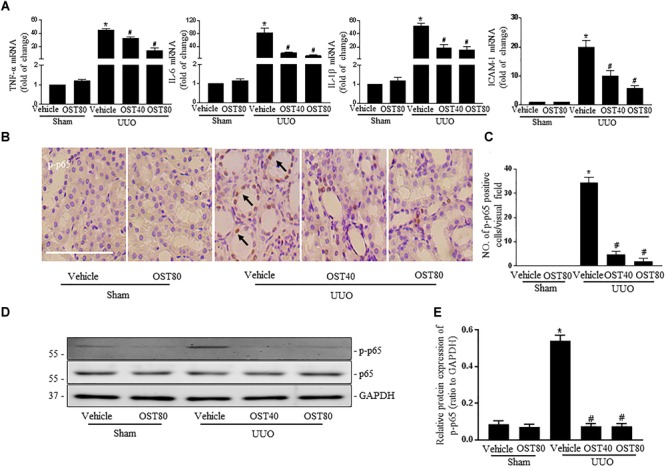
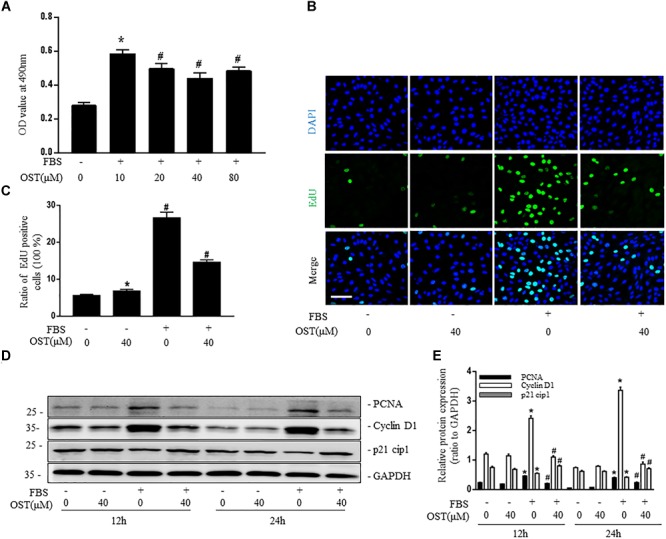
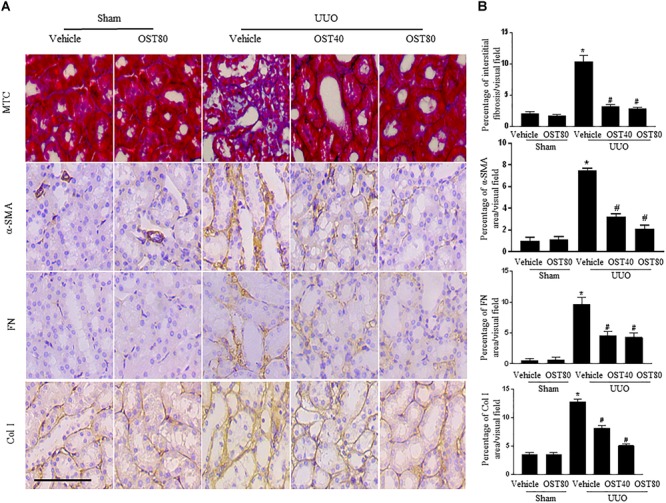
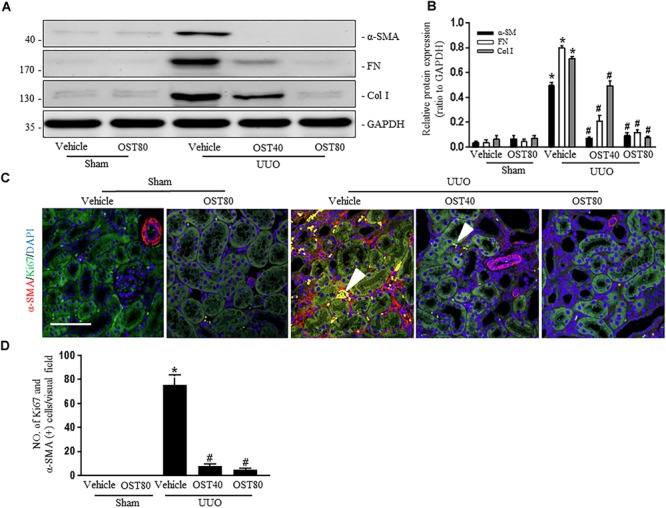
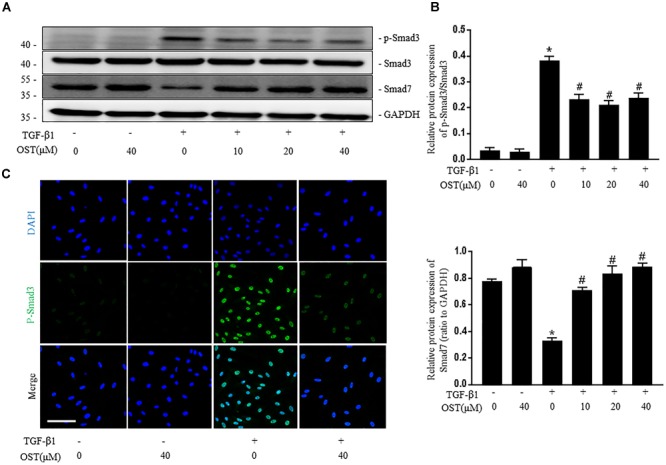
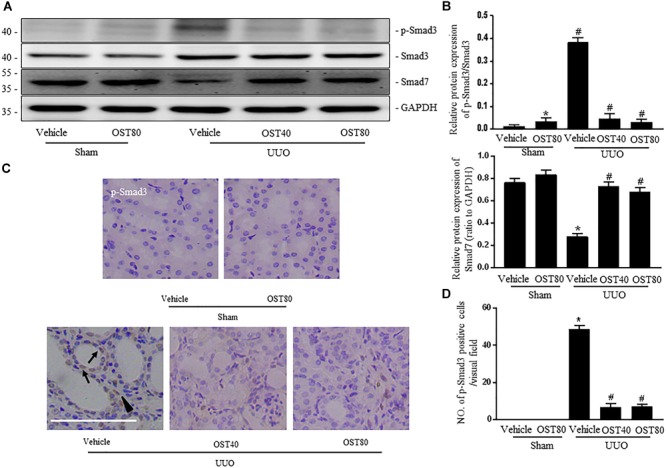
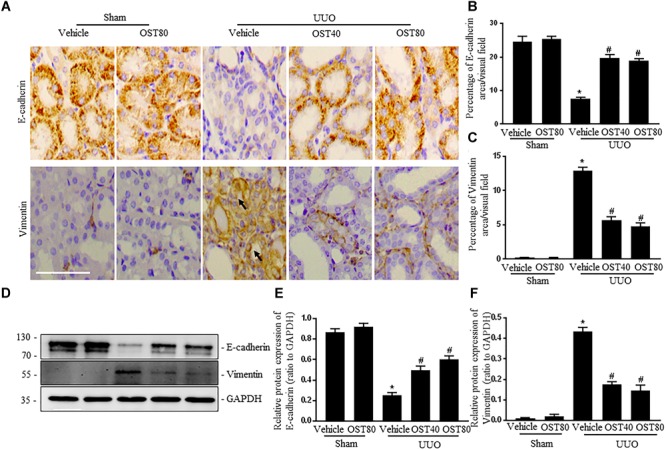
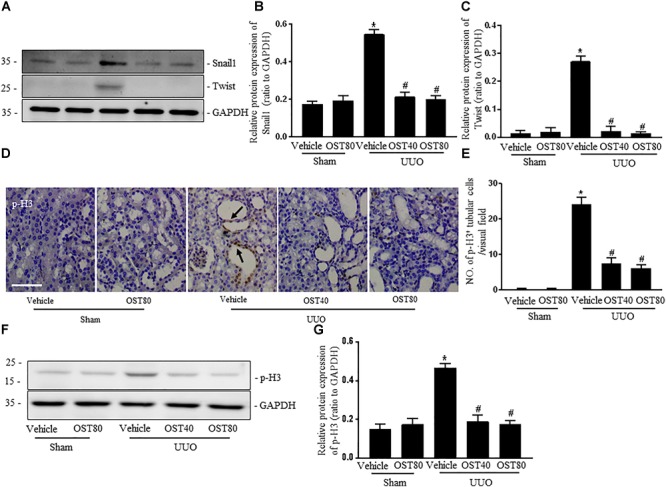
Renal fibrosis is a common pathway of virtually all progressive kidney diseases. Osthole (OST, 7-Methoxy-8-(3-methylbut-2-enyl)-2-chromenone), a derivative of coumarin mainly found in plants of the family, has shown inhibitory effects on inflammation, oxidative stress, fibrosis and tumor progression. The present study investigated whether OST mediates its effect via suppressing fibroblast activation and epithelial-mesenchymal transition (EMT) in unilateral ureteral obstruction (UUO)-induced renal fibrosis in mice. Herein, we found that OST inhibited fibroblast activation in a dose-dependent manner by inhibiting the transforming growth factor-β1 (TGFβ1)-Smad pathway. OST also blocked fibroblast proliferation by reducing DNA synthesis and downregulating the expressions of proliferation- and cell cycle-related proteins including proliferating cell nuclear antigen (PCNA), CyclinD1 and p21 Waf1/Cip1. Meanwhile, in the murine model of renal interstitial fibrosis induced by UUO, myofibroblast activation with increased expression of α-smooth muscle actin (α-SMA) and proliferation were attenuated by OST treatment. Additionally, we provided evidence suggesting that OST repressed EMT with preserved E-cadherin and reduced Vimentin expression in obstructed kidney. UUO injury-induced upregulation of EMT-related transcription factors, Snail family transcriptional repressor-1(Snail 1) and Twist family basic helix-loop-helix (BHLH) transcription factor (Twist) as well as elevated G2/M arrest of tubular epithelial cell, were rescued by OST treatment. Further, OST treatment reversed aberrant expression of TGFβ1-Smad signaling pathway, increased level of proinflammatory cytokines and NF-kappaB (NF-κB) activation in kidneys with obstructive nephropathy. Taken together, these findings suggest that OST hinder renal fibrosis in UUO mouse mainly through inhibition of fibroblast activation and EMT.
肾纤维化是几乎所有进行性肾脏疾病的共同途径。蛇床子素(OST,7-甲氧基-8-(3-甲基丁-2-烯基)-2-色原酮)是香豆素的一种衍生物,主要存在于伞形科植物中,已显示出对炎症、氧化应激、纤维化和肿瘤进展的抑制作用。本研究调查了蛇床子素是否通过抑制小鼠单侧输尿管梗阻(UUO)诱导的肾纤维化中的成纤维细胞活化和上皮-间质转化(EMT)来介导其作用。在此,我们发现蛇床子素通过抑制转化生长因子-β1(TGFβ1)-Smad途径以剂量依赖性方式抑制成纤维细胞活化。蛇床子素还通过减少DNA合成并下调包括增殖细胞核抗原(PCNA)、细胞周期蛋白D1和p21 Waf1/Cip1在内的增殖和细胞周期相关蛋白的表达来阻断成纤维细胞增殖。同时,在UUO诱导的肾间质纤维化小鼠模型中,蛇床子素治疗减弱了α-平滑肌肌动蛋白(α-SMA)表达增加的肌成纤维细胞活化和增殖。此外,我们提供的证据表明,蛇床子素在梗阻性肾脏中通过保留E-钙黏蛋白和降低波形蛋白表达来抑制EMT。OST治疗挽救了UUO损伤诱导的EMT相关转录因子、蜗牛家族转录抑制因子-1(Snail 1)和Twist家族碱性螺旋-环-螺旋(BHLH)转录因子(Twist)的上调以及肾小管上皮细胞G2/M期阻滞的增加。此外,蛇床子素治疗逆转了梗阻性肾病肾脏中TGFβ1-Smad信号通路的异常表达、促炎细胞因子水平的升高和核因子-κB(NF-κB)的激活。综上所述,这些发现表明蛇床子素主要通过抑制成纤维细胞活化和EMT来阻碍UUO小鼠的肾纤维化。