Department of Urology, Zhongshan Hospital, Fudan University, Shanghai, 200032, P. R. China.
Shanghai Medical College, Fudan University, Shanghai, 200032, P.R. China.
Cell Death Dis. 2021 Jan 5;12(1):44. doi: 10.1038/s41419-020-03322-y.
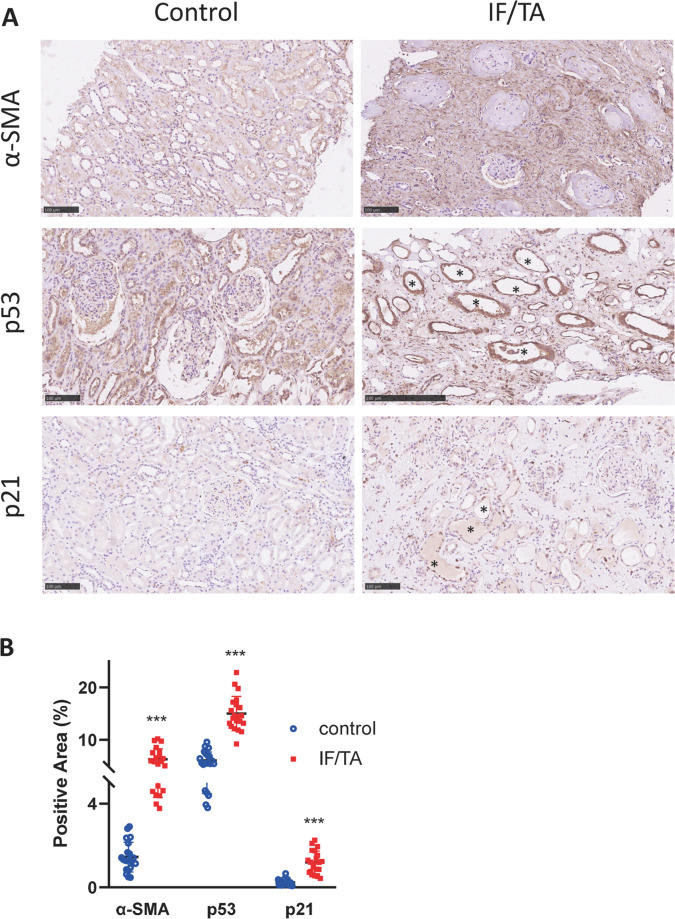
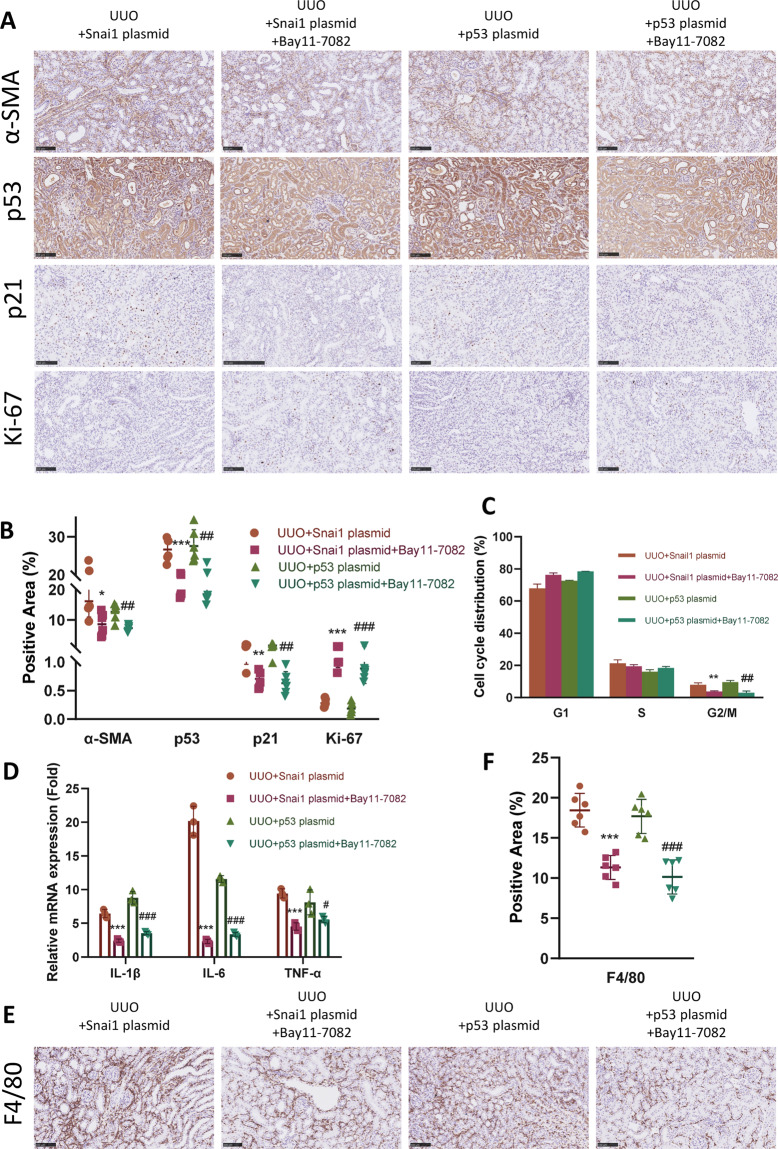
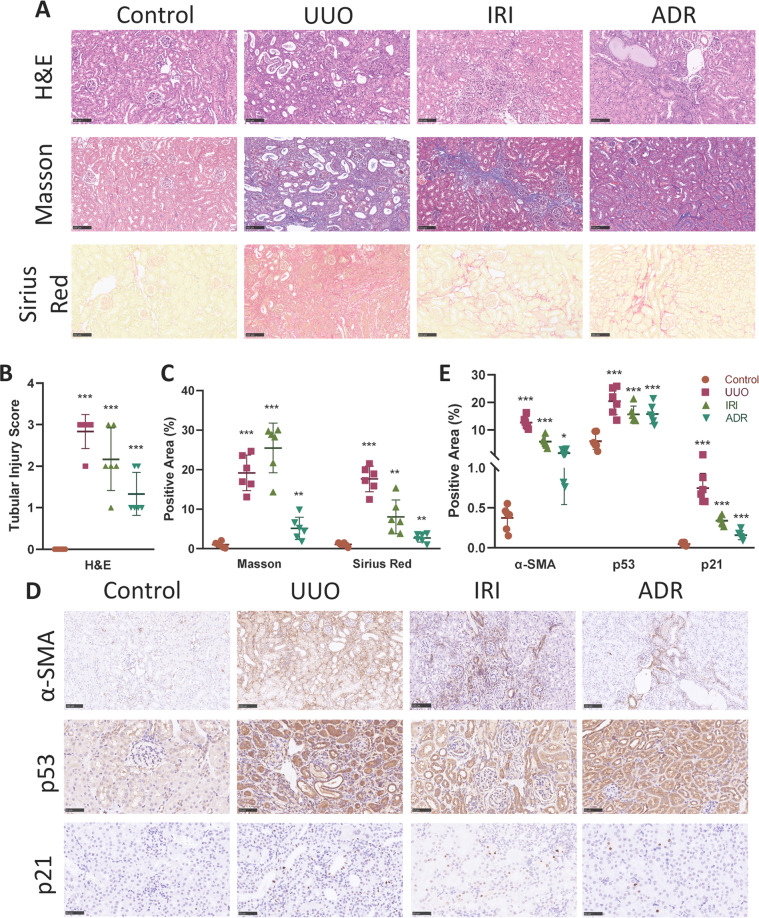
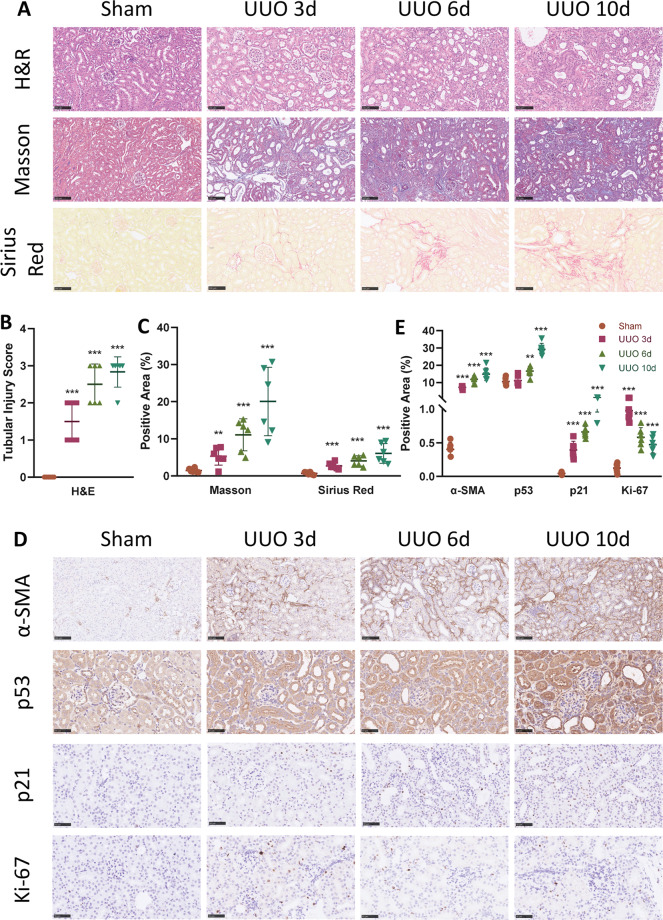
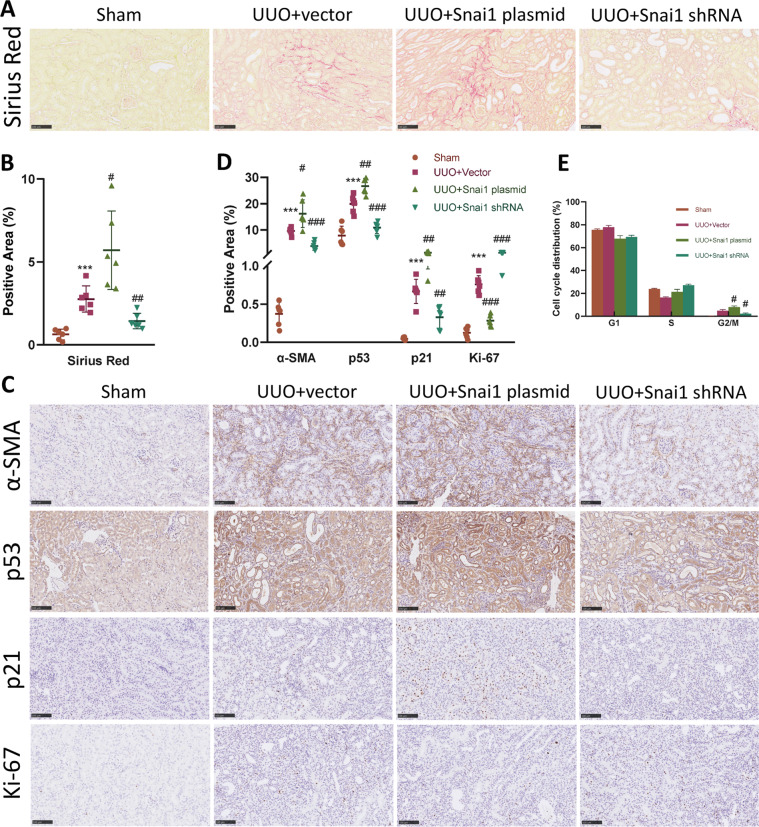
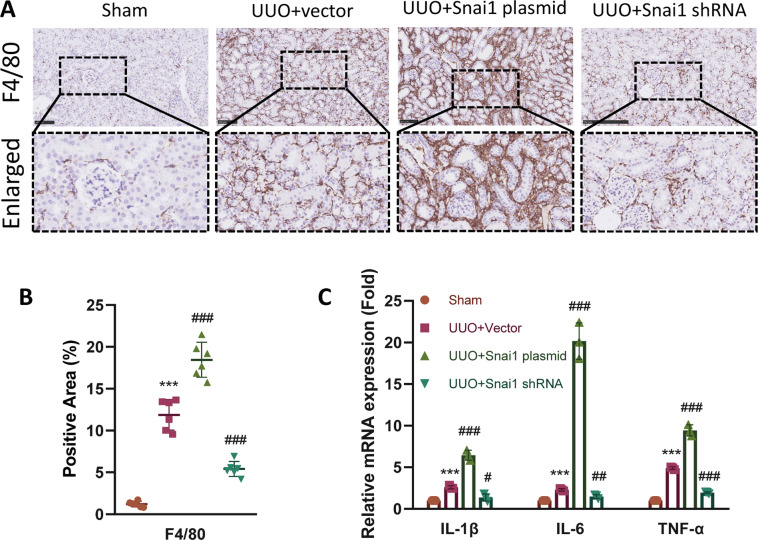
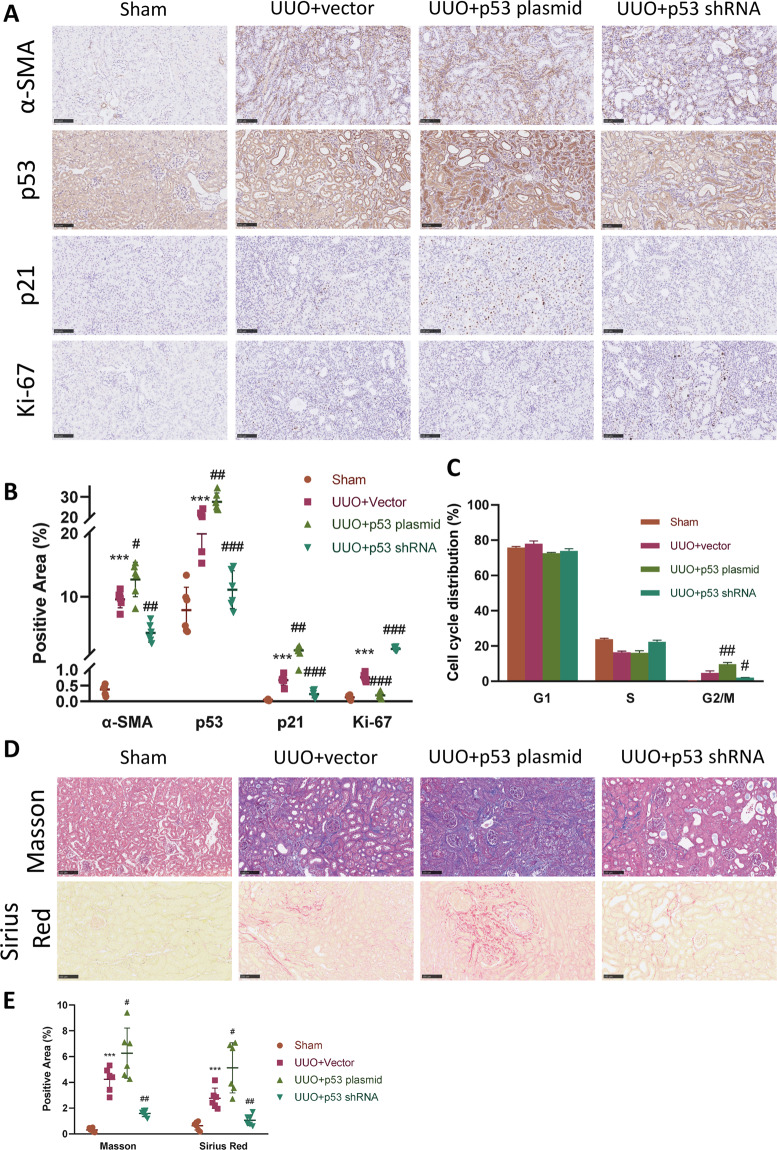
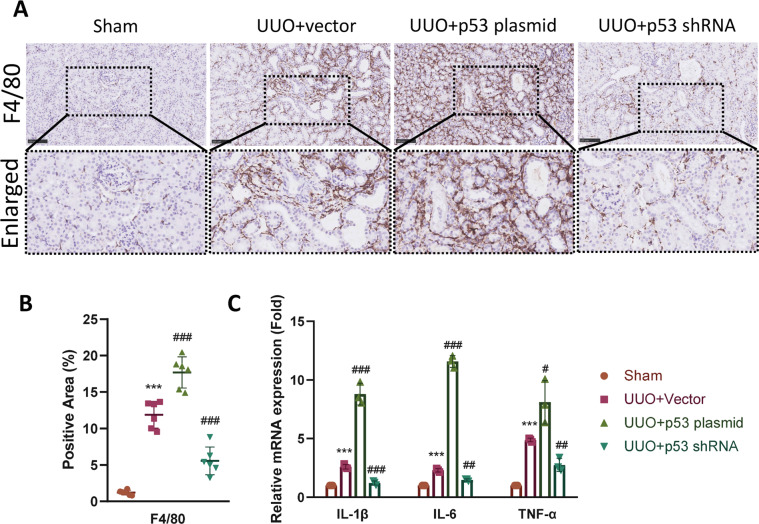
Renal fibrosis is the common feature of all progressive kidney diseases and exerts great burden on public health worldwide. The maladaptive repair mechanism of tubular epithelial cells, an important mediator of renal fibrogenesis, manifests with partial epithelial-mesenchymal transition (EMT) and cell cycle arrest. The aim of this study is to investigate the possible correlation between partial EMT and cell cycle arrest, and elucidate the underlying mechanism. We examined human kidney allograft samples with interstitial fibrosis and three mice renal fibrosis models, unilateral ureter obstruction (UUO), ischemia-reperfusion injury, and Adriamycin nephropathy. The partial EMT process and p53-p21 axis were elevated in both human allograft with interstitial fibrosis, as well as three mice renal fibrosis models, and showed a time-dependent increase as fibrosis progressed in the UUO model. Snai1 controlled the partial EMT process, and led to parallel changes in renal fibrosis, G2/M arrest, and inflammation. p53-p21 axis arrested cell cycle at G2/M, and prompted partial EMT and fibrosis together with inflammation. NF-κB inhibitor Bay11-7082 disrupted the reciprocal loop between Snai1-induced partial EMT and p53-p21-mediated G2/M arrest. We demonstrated the reciprocal loop between partial EMT and G2/M arrest of TECs during renal fibrogenesis and revealed NF-κB-mediated inflammatory response as the underlying mechanism. This study suggests that targeting NF-κB might be a plausible therapeutic strategy to disrupt the reciprocal loop between partial EMT and G2/M arrest, therefore alleviating renal fibrosis.
肾纤维化是所有进行性肾脏疾病的共同特征,给全球公共健康带来了巨大负担。肾小管上皮细胞的适应性修复机制是肾纤维化发生的重要介质,表现为部分上皮-间充质转化(EMT)和细胞周期停滞。本研究旨在探讨部分 EMT 与细胞周期停滞之间的可能相关性,并阐明其潜在机制。我们检测了伴有间质纤维化的人类肾移植样本和三种小鼠肾纤维化模型,即单侧输尿管梗阻(UUO)、缺血再灌注损伤和阿霉素肾病。部分 EMT 过程和 p53-p21 轴在人类肾移植伴有间质纤维化以及三种小鼠肾纤维化模型中均升高,并随着 UUO 模型中纤维化的进展呈时间依赖性增加。Snai1 控制部分 EMT 过程,并导致肾纤维化、G2/M 期阻滞和炎症的平行变化。p53-p21 轴使细胞周期在 G2/M 期阻滞,并促使部分 EMT 和纤维化以及炎症一起发生。NF-κB 抑制剂 Bay11-7082 破坏了 Snai1 诱导的部分 EMT 与 p53-p21 介导的 G2/M 期阻滞之间的相互循环。我们证明了在肾纤维化过程中 TEC 中部分 EMT 和 G2/M 期阻滞之间的相互循环,并揭示了 NF-κB 介导的炎症反应是其潜在机制。本研究表明,针对 NF-κB 可能是一种合理的治疗策略,可以破坏部分 EMT 和 G2/M 期阻滞之间的相互循环,从而缓解肾纤维化。