Mast Jesse M, Kuppusamy Periannan
Department of Radiology and Medicine, Norris Cotton Cancer Center, Geisel School of Medicine, Dartmouth College, Lebanon, NH, United States.
Front Oncol. 2018 Nov 20;8:527. doi: 10.3389/fonc.2018.00527. eCollection 2018.
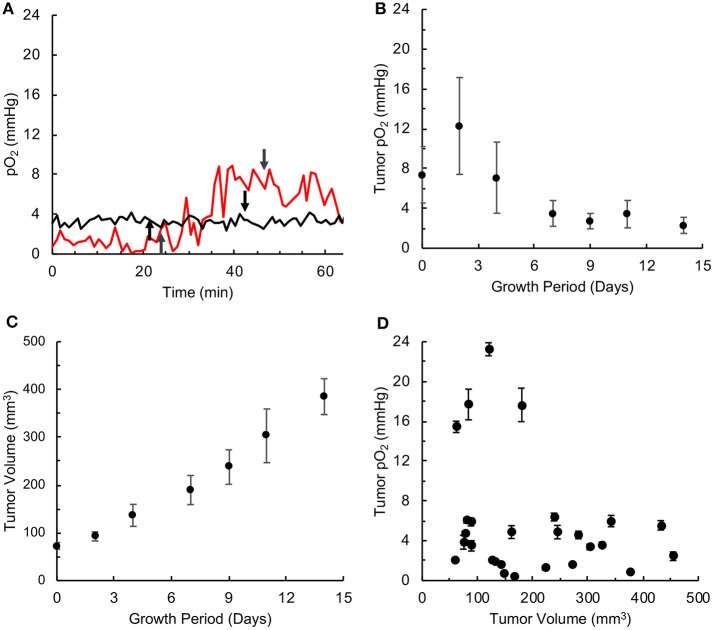
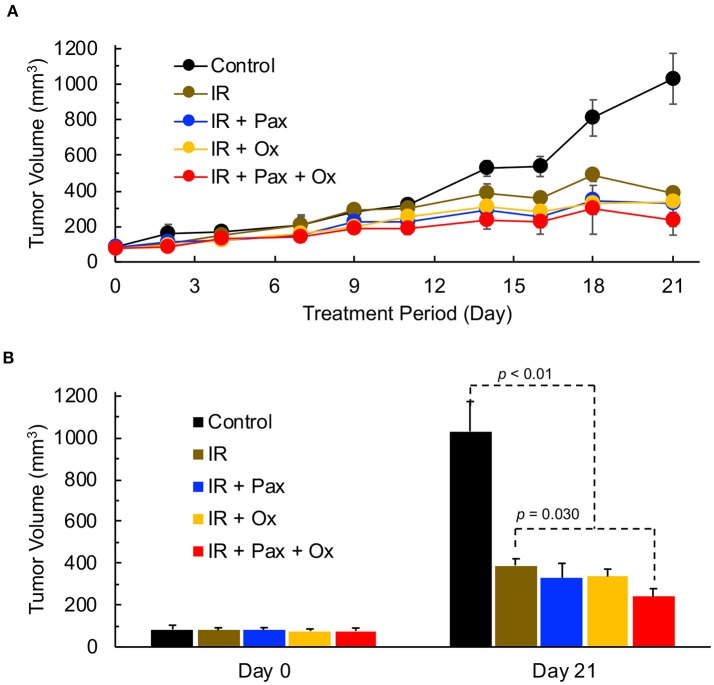
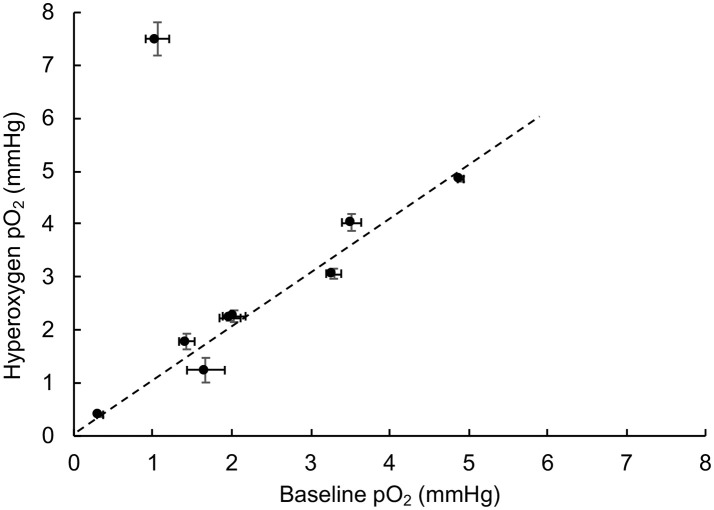
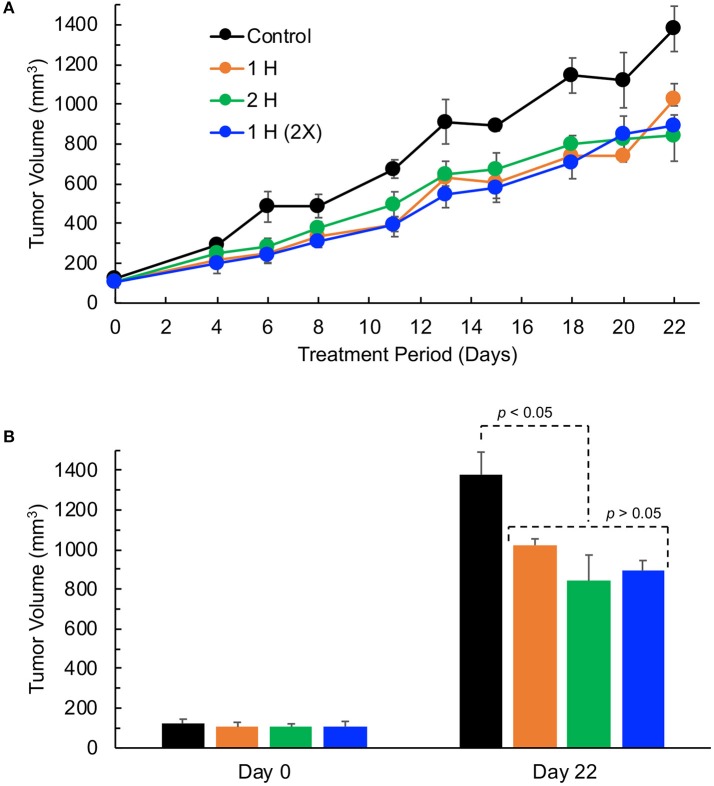
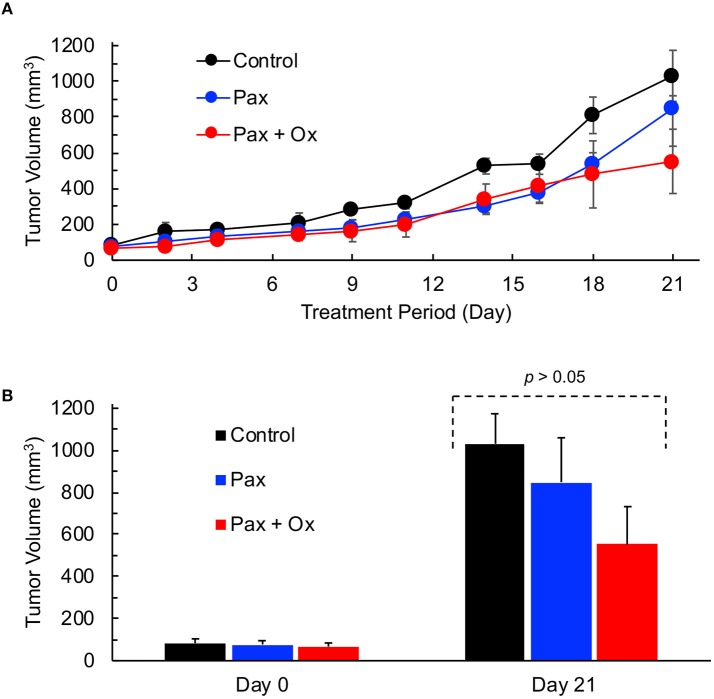
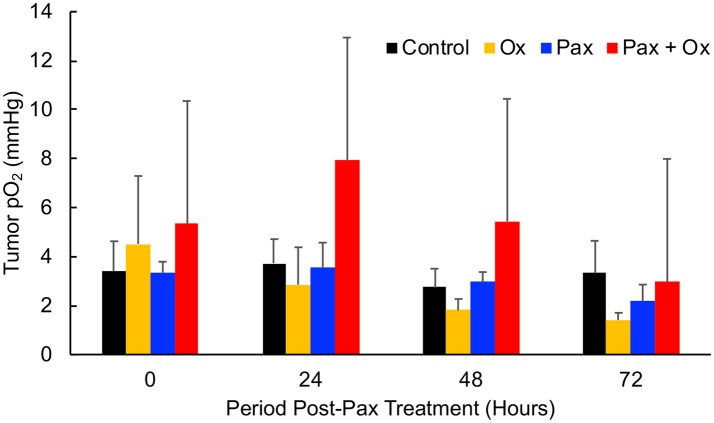
Triple-negative breast cancer (TNBC) refers to a group of biologically aggressive breast cancers that do not express estrogen, progesterone or epidermal growth factor receptor 2 hormone receptors. Each subset of TNBC has a unique molecular profile and may require specific treatments. A combination of surgery and chemotherapy followed by radiation therapy is the standard treatment mode for TNBC patients. Tumor oxygen status (hypoxia) is a key factor that may compromise the effectiveness of radiation treatment, as it is known that hypoxia can confer radiation resistance. In this study, we characterized MDA-MB-231 orthotropic xenograft tumors with respect to tumor oxygen level and their response to supplemental oxygen therapy in combination with paclitaxel and radiation therapy. We observed that the TNBC tumors became severely hypoxic (pO < 4 mmHg) within 1 week of tumor growth and responded poorly to administration of respiratory hyperoxygenation (100% O) to mitigate hypoxia. However, periodic administration of supplemental oxygen (100% O; 60 min/day for 21 days) showed a significant inhibitory effect on tumor volume when compared to control (1,023 ± 32 mm vs. 1,378 ± 114 mm; < 0.05). Combination of supplemental oxygen with paclitaxel and radiation therapy led to a significant reduction in tumor growth when compared to radiation alone (239 ± 40 mm vs. 390 ± 32 mm; < 0.05). The therapeutic enhancement by supplemental oxygen is possibly attributed to increase in tumor oxygenation with paclitaxel at the time of radiation treatment. These findings may have important implications in the understanding of the role of oxygen and supplemental oxygen therapy for the treatment of TNBC patients.
三阴性乳腺癌(TNBC)是指一组生物学行为侵袭性较强的乳腺癌,其不表达雌激素、孕激素或表皮生长因子受体2激素受体。TNBC的每个亚组都有独特的分子特征,可能需要特定的治疗方法。手术和化疗联合放疗是TNBC患者的标准治疗模式。肿瘤氧状态(缺氧)是一个可能会影响放射治疗效果的关键因素,因为已知缺氧可导致放射抗性。在本研究中,我们对MDA-MB-231原位异种移植肿瘤的肿瘤氧水平及其对补充氧气疗法联合紫杉醇和放射治疗的反应进行了表征。我们观察到,TNBC肿瘤在生长1周内就会变得严重缺氧(pO<4 mmHg),并且对给予呼吸性高氧(100% O)以减轻缺氧的反应较差。然而,与对照组相比(1,023±32 mm³ 对 1,378±114 mm³;P<0.05),定期给予补充氧气(100% O;每天60分钟,共21天)对肿瘤体积显示出显著的抑制作用。与单纯放疗相比,补充氧气联合紫杉醇和放射治疗导致肿瘤生长显著减少(239±40 mm³ 对 390±32 mm³;P<0.05)。补充氧气的治疗增强作用可能归因于在放射治疗时紫杉醇使肿瘤氧合增加。这些发现可能对理解氧气和补充氧气疗法在TNBC患者治疗中的作用具有重要意义。