From the Departments of Cell Biology and Plastic Surgery, University of Texas Southwestern Medical Center; and the Division of Plastic Surgery, University of Colorado.
Plast Reconstr Surg. 2019 Feb;143(2):490-494. doi: 10.1097/PRS.0000000000005257.
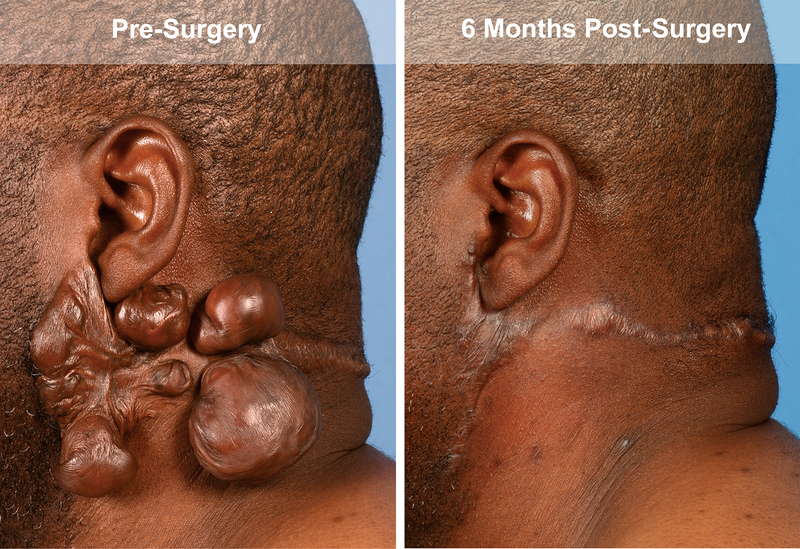
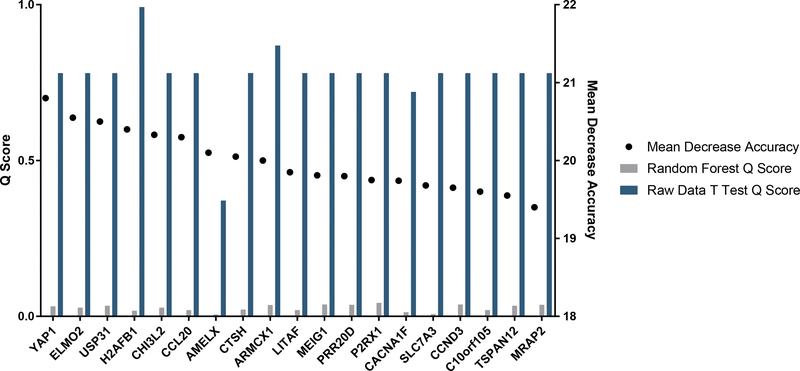
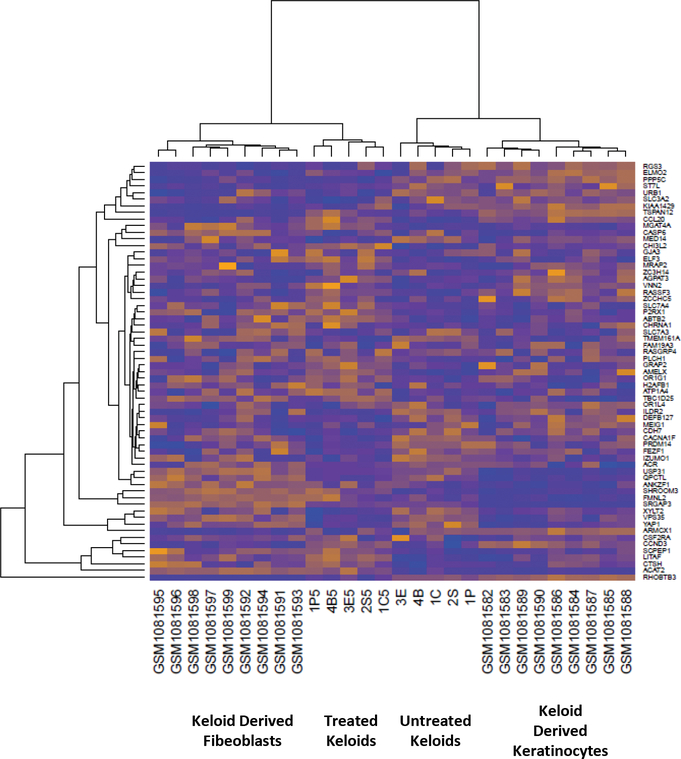
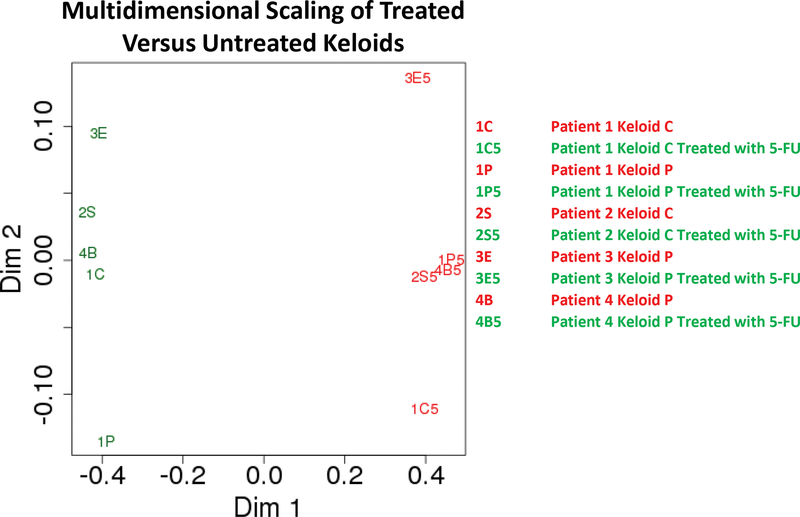
Keloids are benign fibroproliferative skin tumors that can cause disfigurement and disability. Although they frequently recur after excision or medical management and can affect 6 to 16 percent of African Americans, there is no gold standard therapy. Keloids are challenging to study because there are no animal or in vitro models of this disorder. This makes it very difficult to validate data from treated tissue samples or cells and develop targeted therapies for this disease. In this study, the authors demonstrate that intralesional 5-fluorouracil injection after keloid excision prevents recurrence for 2 years, with no reported adverse events. The authors analyze the expression of treated and untreated biopsy specimens of the same keloids in their native context to capture insights that may be missed by in vitro cell culture models and correct for intrakeloid variability. Random forest analysis of the microarray data dramatically increased the statistical power of the authors' results, permitting hypothesis-free creation of a gene expression profile of 5-fluorouracil-treated keloids. Through this analysis, the authors found a set of genes, including YAP1 and CCL-2, whose expression changes predict 5-fluorouracil therapy status and include genes that have not previously been associated with keloid biology and are of unknown function. The authors further describe keloid heterogeneity for the first time using multidimensional analysis of their microarray results. The methods and tools the authors developed in this research may overcome some of the challenges in studying keloids and developing effective treatments for this disease. CLINICAL QUESTION/LEVEL OF EVIDENCE:: Therapeutic, V.
瘢痕疙瘩是良性的纤维增生性皮肤肿瘤,可导致毁容和残疾。尽管它们在切除或医学治疗后经常复发,并且可能影响 6%至 16%的非裔美国人,但目前尚无金标准治疗方法。瘢痕疙瘩的研究具有挑战性,因为这种疾病没有动物或体外模型。这使得很难验证治疗组织样本或细胞的数据,并为这种疾病开发靶向治疗方法。在这项研究中,作者证明了在瘢痕疙瘩切除后局部注射氟尿嘧啶可预防 2 年内复发,且无不良事件报告。作者分析了相同瘢痕疙瘩的治疗和未治疗活检标本的表达,以捕捉体外细胞培养模型可能错过的见解,并纠正瘢痕疙瘩内的变异性。微阵列数据的随机森林分析极大地提高了作者结果的统计效力,允许在没有假设的情况下创建氟尿嘧啶治疗瘢痕疙瘩的基因表达谱。通过该分析,作者发现了一组基因,包括 YAP1 和 CCL-2,其表达变化可预测氟尿嘧啶治疗状态,并且包括以前与瘢痕疙瘩生物学无关且功能未知的基因。作者首次使用多维分析他们的微阵列结果来描述瘢痕疙瘩的异质性。作者在这项研究中开发的方法和工具可能克服研究瘢痕疙瘩和开发这种疾病有效治疗方法的一些挑战。临床问题/证据水平:治疗,V。