Department of Biological and Environmental Sciences, University of Gothenburg, 41319, Gothenburg, Sweden.
Global Gothenburg Biodiversity Centre, 41319, Gothenburg, Sweden.
Nat Commun. 2018 Dec 7;9(1):5237. doi: 10.1038/s41467-018-07622-y.
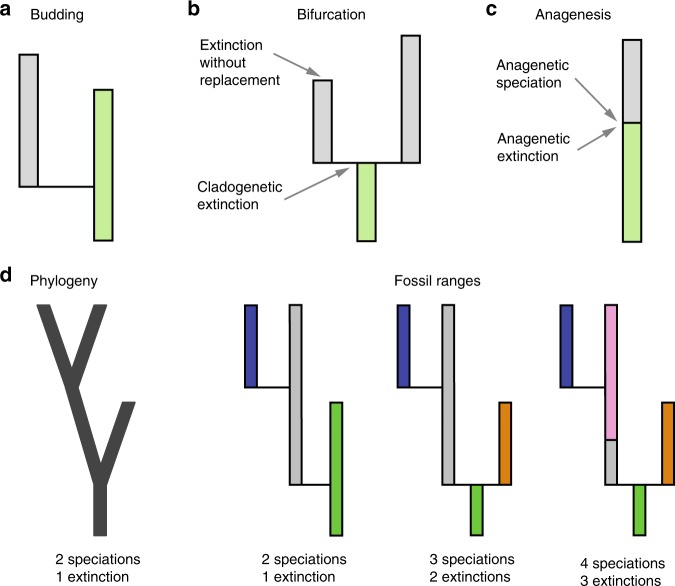
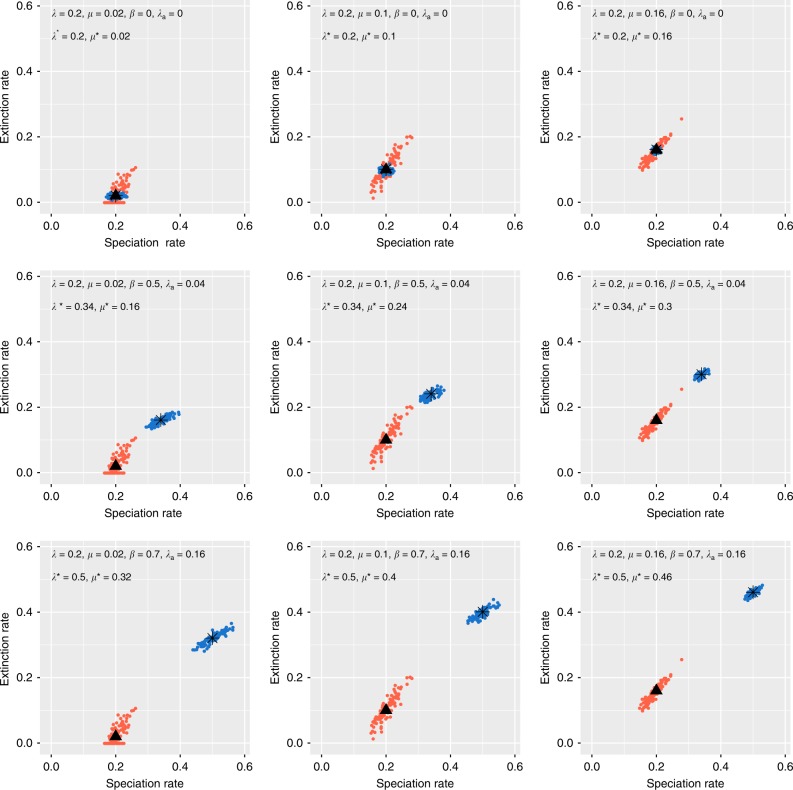
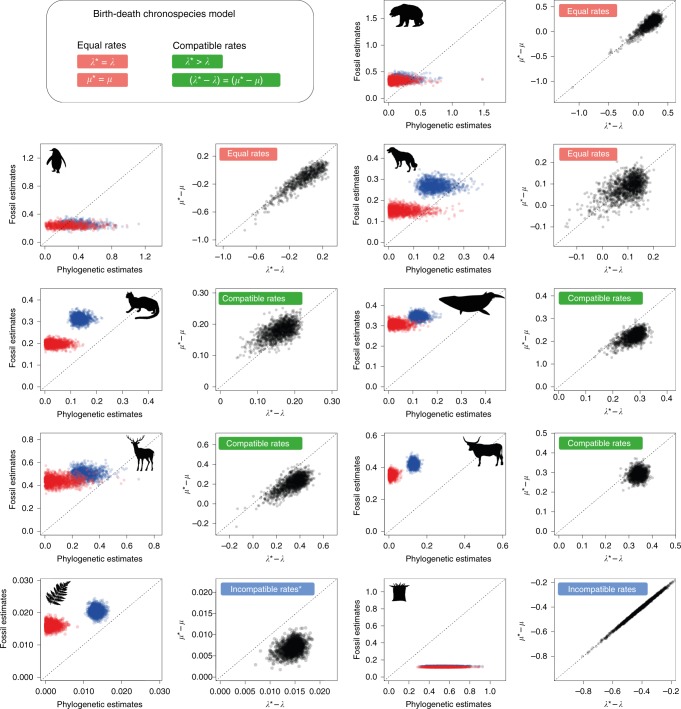
Measuring the pace at which speciation and extinction occur is fundamental to understanding the origin and evolution of biodiversity. Both the fossil record and molecular phylogenies of living species can provide independent estimates of speciation and extinction rates, but often produce strikingly divergent results. Despite its implications, the theoretical reasons for this discrepancy remain unknown. Here, we reveal a conceptual and methodological basis able to reconcile palaeontological and molecular evidence: discrepancies are driven by different implicit assumptions about the processes of speciation and species evolution in palaeontological and neontological analyses. We present the "birth-death chronospecies" model that clarifies the definition of speciation and extinction processes allowing for a coherent joint analysis of fossil and phylogenetic data. Using simulations and empirical analyses we demonstrate not only that this model explains much of the apparent incongruence between fossils and phylogenies, but that differences in rate estimates are actually informative about the prevalence of different speciation modes.
衡量物种形成和灭绝的速度是理解生物多样性起源和进化的基础。化石记录和现存物种的分子系统发育都可以为物种形成和灭绝率提供独立的估计,但通常会产生截然不同的结果。尽管有其影响,但这种差异的理论原因尚不清楚。在这里,我们揭示了一个能够调和古生物学和分子证据的概念和方法基础:差异是由古生物学和新生物学分析中对物种形成和物种进化过程的不同隐含假设驱动的。我们提出了“诞生-死亡时系种”模型,该模型阐明了物种形成和灭绝过程的定义,允许对化石和系统发育数据进行一致的联合分析。通过模拟和实证分析,我们不仅证明了该模型解释了化石和系统发育之间明显不一致的大部分原因,而且表明率估计值的差异实际上提供了关于不同物种形成模式流行程度的信息。