Salvia Rosanna, Nardiello Marisa, Scieuzo Carmen, Scala Andrea, Bufo Sabino A, Rao Asha, Vogel Heiko, Falabella Patrizia
Department of Sciences, University of Basilicata, Potenza, Italy.
Department of Biology, Texas A&M University, College Station, TX, United States.
Front Physiol. 2018 Nov 26;9:1678. doi: 10.3389/fphys.2018.01678. eCollection 2018.
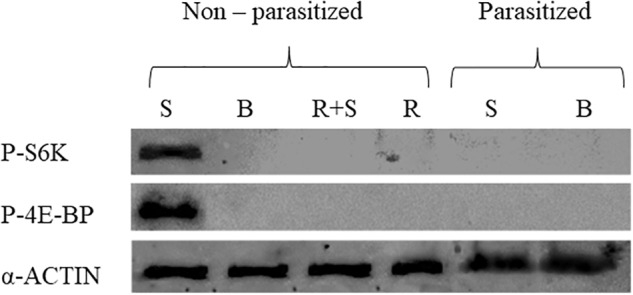
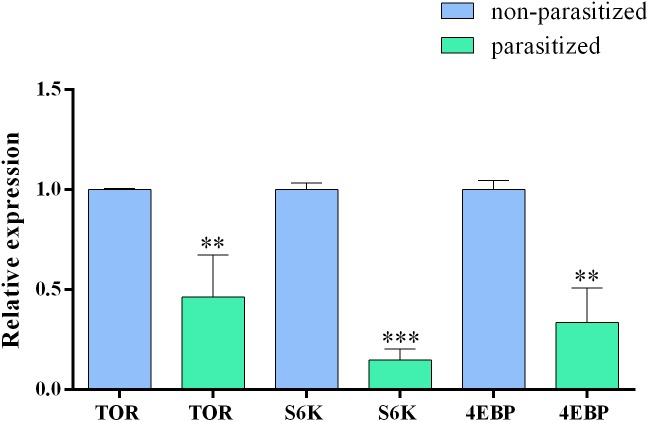
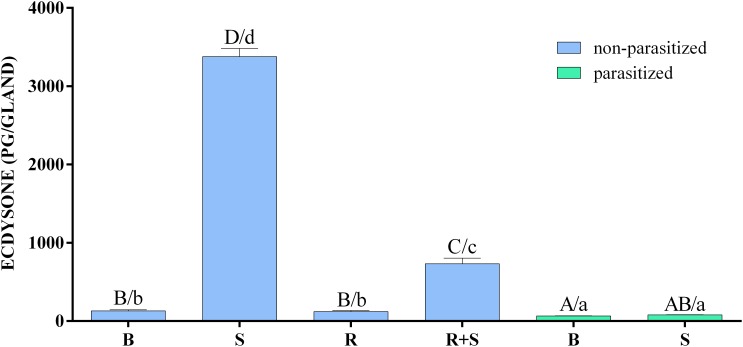
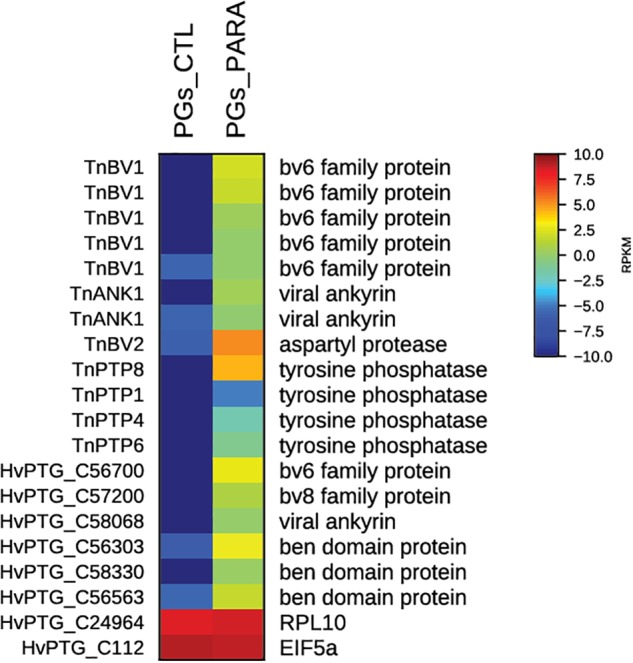
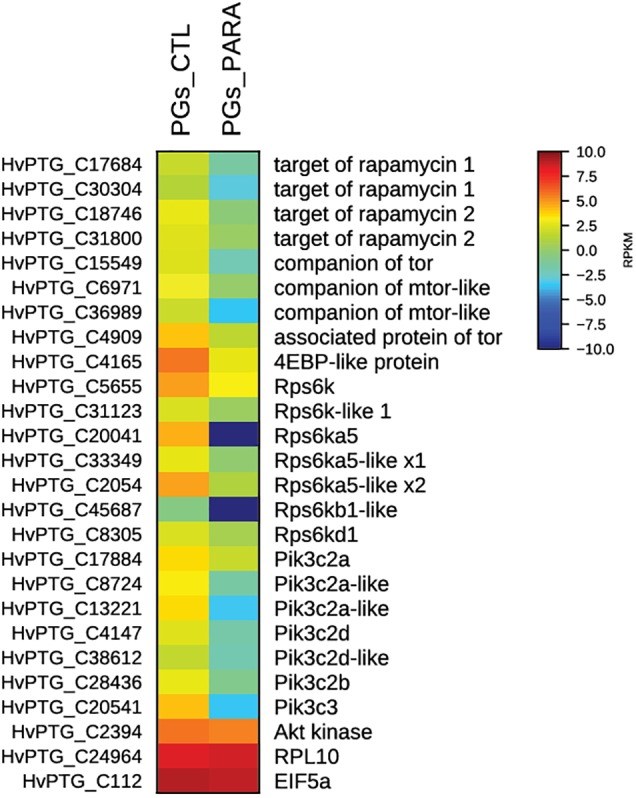
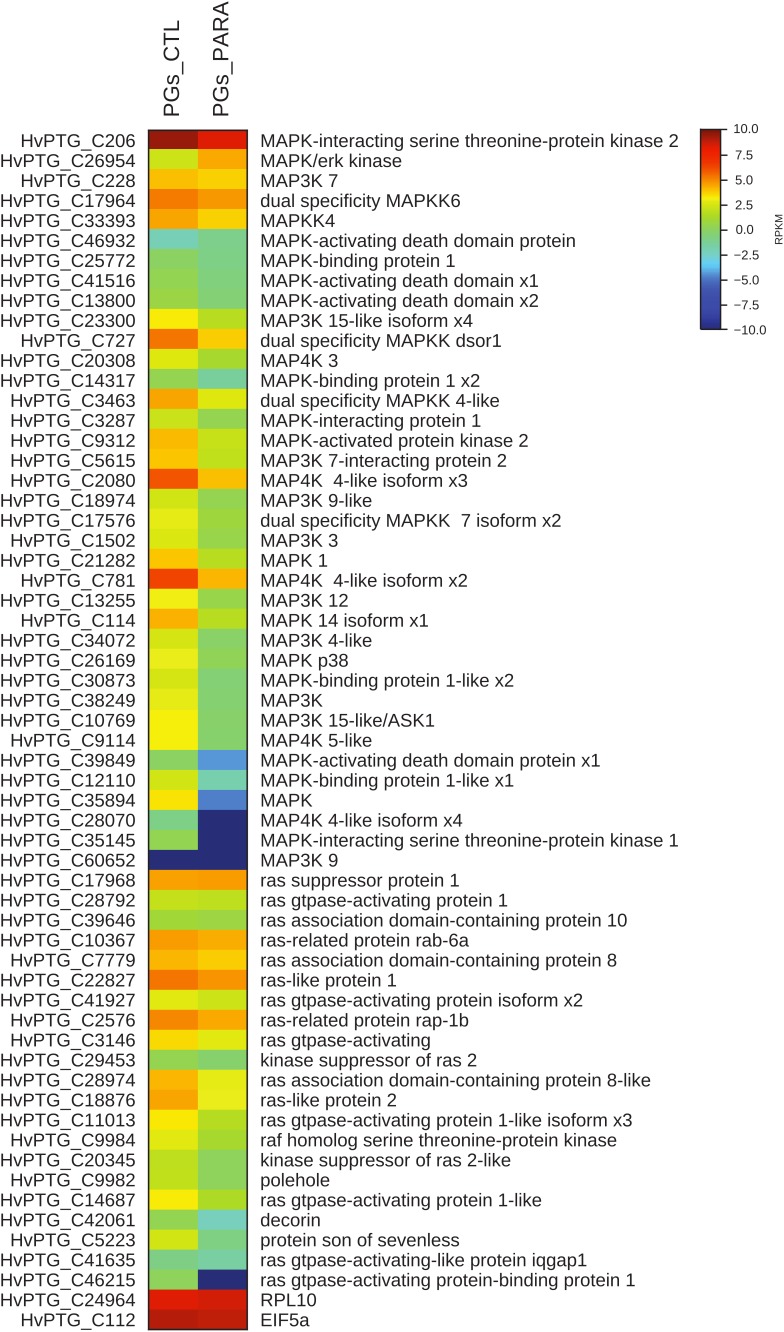
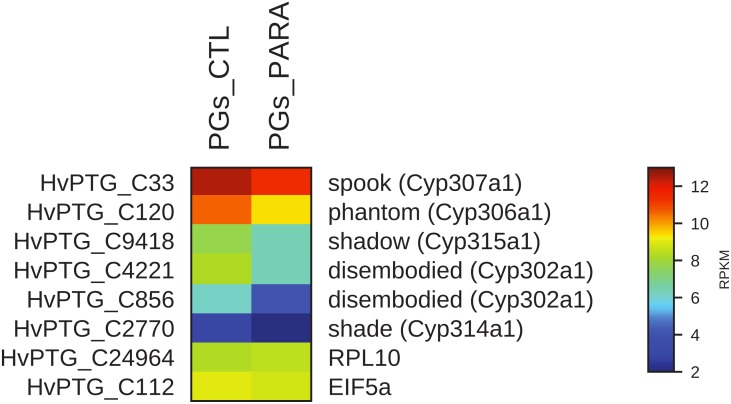
Polydnaviruses (PDVs) are obligate symbionts of endoparasitoid wasps, which exclusively attack the larval stages of their lepidopteran hosts. The Polydnavirus is injected by the parasitoid female during oviposition to selectively infect host tissues by the expression of viral genes without undergoing replication. bracovirus (BV) is associated with (Hymenoptera: Braconidae) wasp, an endoparasitoid of the tobacco budworm larval stages, (Lepidoptera: Noctuidae). Previous studies showed that BV is responsible for alterations in host physiology. The arrest of ecdysteroidogenesis is the main alteration which occurs in last (fifth) instar larvae and, as a consequence, prevents pupation. BV induces the functional inactivation of prothoracic glands (PGs), resulting in decreased protein synthesis and phosphorylation. Previous work showed the involvement of the PI3K/Akt/TOR pathway in PG ecdysteroidogenesis. Here, we demonstrate that this cellular signaling is one of the targets of BV infection. Western blot analysis and enzyme immunoassay (EIA) showed that parasitism inhibits ecdysteroidogenesis and the phosphorylation of the two targets of TOR (4E-BP and S6K), despite the stimulation of PTTH contained in the brain extract. Using a transcriptomic approach, we identified viral genes selectively expressed in last instar PGs, 48 h after parasitization, and evaluated expression levels of PI3K/Akt/TOR pathway genes in these tissues. The relative expression of selected genes belonging to the TOR pathway (, , and ) in PGs of parasitized larvae was further confirmed by qRT-PCR. The down-regulation of these genes in PGs of parasitized larvae supports the hypothesis of BV involvement in blocking ecdysteroidogenesis, through alterations of the PI3K/Akt/TOR pathway at the transcriptional level.
多DNA病毒(PDVs)是内寄生蜂的专性共生体,这些内寄生蜂专门攻击鳞翅目宿主的幼虫阶段。多DNA病毒由寄生蜂雌性在产卵时注入,通过病毒基因的表达选择性地感染宿主组织,而不进行复制。杆状病毒(BV)与烟芽夜蛾幼虫阶段的内寄生蜂茧蜂(膜翅目:茧蜂科)相关。先前的研究表明,BV负责宿主生理的改变。蜕皮甾体生成的停滞是在最后(第五)龄幼虫中发生的主要改变,结果是阻止化蛹。BV诱导前胸腺(PGs)的功能失活,导致蛋白质合成和磷酸化减少。先前的工作表明PI3K/Akt/TOR信号通路参与了PG蜕皮甾体生成。在这里,我们证明这种细胞信号传导是BV感染的靶标之一。蛋白质印迹分析和酶免疫测定(EIA)表明,尽管脑提取物中含有促前胸腺激素(PTTH)的刺激,但寄生抑制了蜕皮甾体生成以及TOR的两个靶标(4E-BP和S6K)的磷酸化。使用转录组学方法,我们鉴定了寄生后48小时在最后一龄PGs中选择性表达的病毒基因,并评估了这些组织中PI3K/Akt/TOR信号通路基因的表达水平。通过qRT-PCR进一步证实了寄生幼虫PGs中属于TOR信号通路的选定基因(、和)的相对表达。寄生幼虫PGs中这些基因的下调支持了BV通过在转录水平改变PI3K/Akt/TOR信号通路参与阻断蜕皮甾体生成的假说。