INSERM UMR-S1124, Toxicologie Pharmacologie et Signalisation Cellulaire, Université Paris Descartes, USPC, Paris, France.
Toxalim (Research Centre in Food Toxicology), Université de Toulouse, INRA, ENVT, INP-Purpan, UPS, Toulouse, France.
Toxicol Sci. 2019 Apr 1;168(2):315-338. doi: 10.1093/toxsci/kfy298.
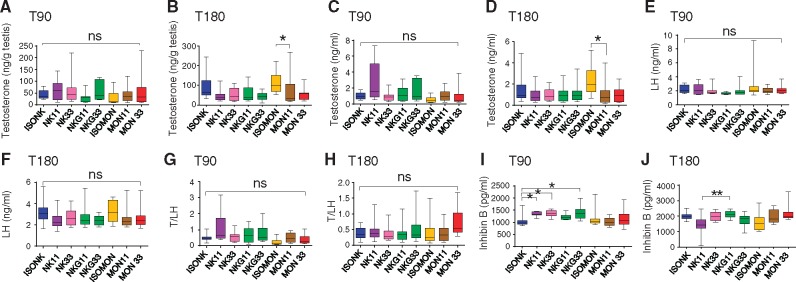
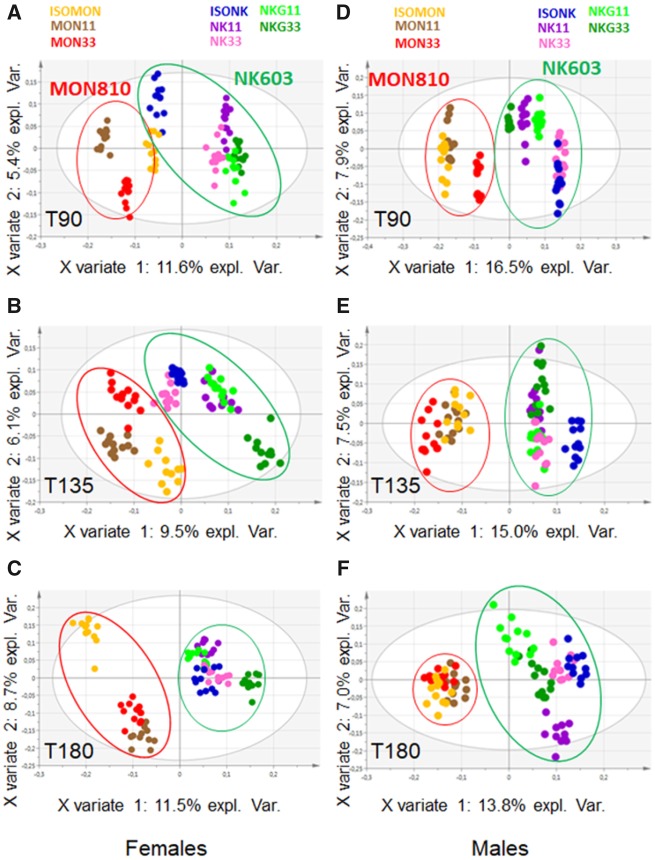
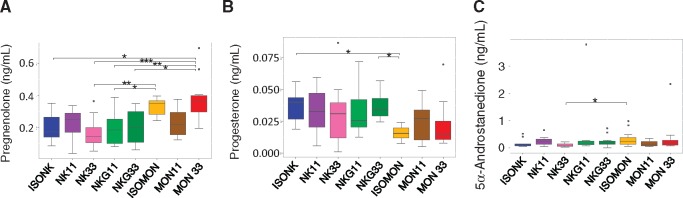
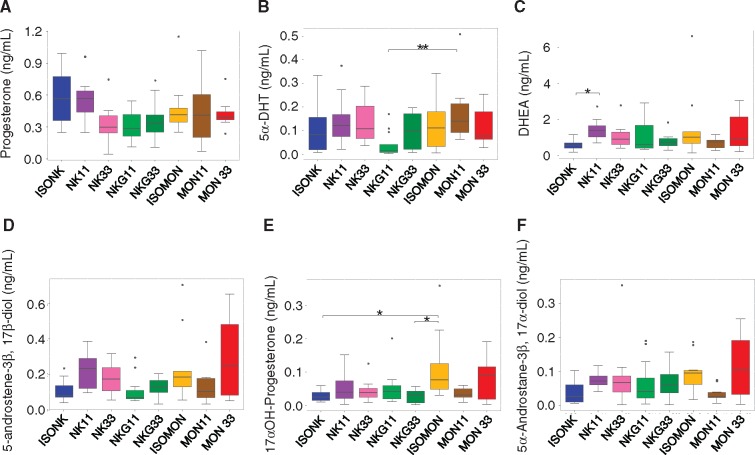
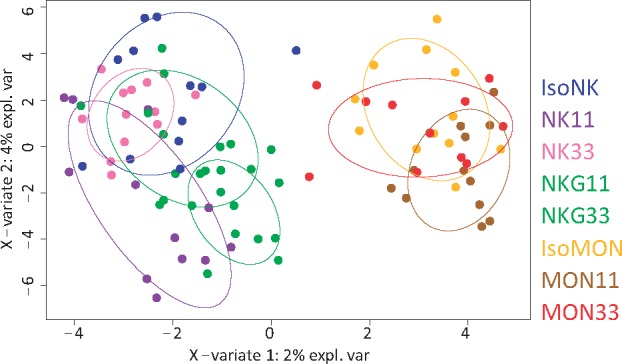
The GMO90+ project was designed to identify biomarkers of exposure or health effects in Wistar Han RCC rats exposed in their diet to 2 genetically modified plants (GMP) and assess additional information with the use of metabolomic and transcriptomic techniques. Rats were fed for 6-months with 8 maize-based diets at 33% that comprised either MON810 (11% and 33%) or NK603 grains (11% and 33% with or without glyphosate treatment) or their corresponding near-isogenic controls. Extensive chemical and targeted analyses undertaken to assess each diet demonstrated that they could be used for the feeding trial. Rats were necropsied after 3 and 6 months. Based on the Organization for Economic Cooperation and Development test guideline 408, the parameters tested showed a limited number of significant differences in pairwise comparisons, very few concerning GMP versus non-GMP. In such cases, no biological relevance could be established owing to the absence of difference in biologically linked variables, dose-response effects, or clinical disorders. No alteration of the reproduction function and kidney physiology was found. Metabolomics analyses on fluids (blood, urine) were performed after 3, 4.5, and 6 months. Transcriptomics analyses on organs (liver, kidney) were performed after 3 and 6 months. Again, among the significant differences in pairwise comparisons, no GMP effect was observed in contrast to that of maize variety and culture site. Indeed, based on transcriptomic and metabolomic data, we could differentiate MON- to NK-based diets. In conclusion, using this experimental design, no biomarkers of adverse health effect could be attributed to the consumption of GMP diets in comparison with the consumption of their near-isogenic non-GMP controls.
GMO90+ 项目旨在鉴定 Wistar Han RCC 大鼠经饮食暴露于两种转基因植物(GM)后的暴露或健康效应生物标志物,并利用代谢组学和转录组学技术评估其他信息。大鼠用 8 种基于玉米的饮食喂养 6 个月,每种饮食的含量为 33%,其中包含 MON810(11%和 33%)或 NK603 谷物(11%和 33%,有或无草甘膦处理)或其相应的近等基因对照。为评估每种饮食而进行的广泛的化学和靶向分析表明,它们可用于喂养试验。大鼠在 3 个月和 6 个月后进行解剖。根据经济合作与发展组织测试指南 408,测试的参数显示在两两比较中只有少数有显著差异,很少涉及 GM 与非 GM。在这种情况下,由于没有生物学相关变量、剂量反应效应或临床疾病的差异,因此无法确定生物学相关性。未发现生殖功能和肾功能改变。在 3、4.5 和 6 个月后对体液(血液、尿液)进行代谢组学分析。在 3 和 6 个月后对器官(肝脏、肾脏)进行转录组学分析。同样,在两两比较的显著差异中,与玉米品种和培养地点相比,没有观察到 GM 的影响。实际上,基于转录组学和代谢组学数据,我们可以区分基于 MON-和 NK-的饮食。总之,使用这种实验设计,与食用近等基因非 GM 对照相比,不能将 GM 饮食的消耗归因于不良健康效应的生物标志物。