The Second Clinical Medical College, Southern Medical University, Guangzhou, Guangdong 510515, P.R. China.
Thoracic Surgery Department, Affiliated Cancer Hospital and Institute of Guangzhou Medical University, Guangzhou, Guangdong 510095, P.R. China.
Oncol Rep. 2019 Feb;41(2):789-800. doi: 10.3892/or.2018.6900. Epub 2018 Nov 30.
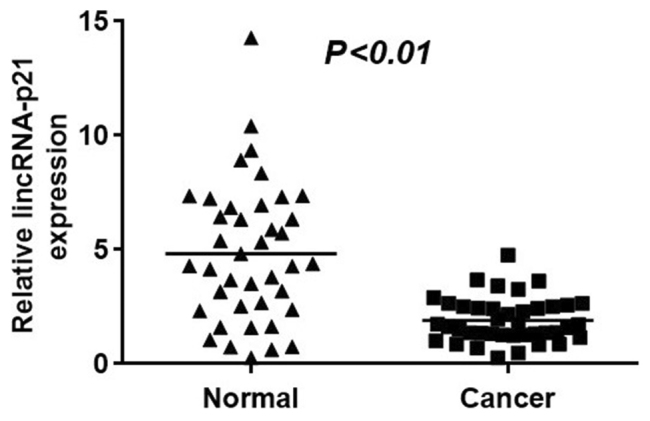
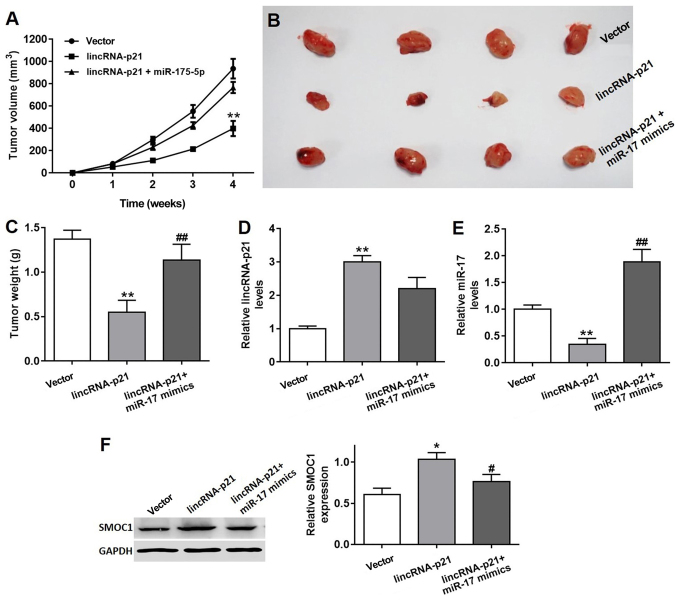
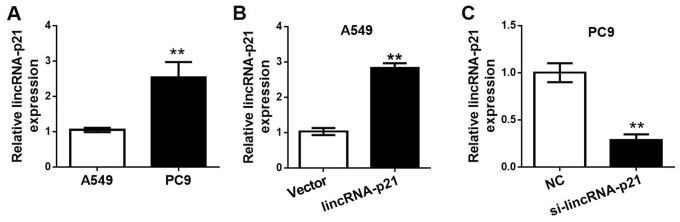
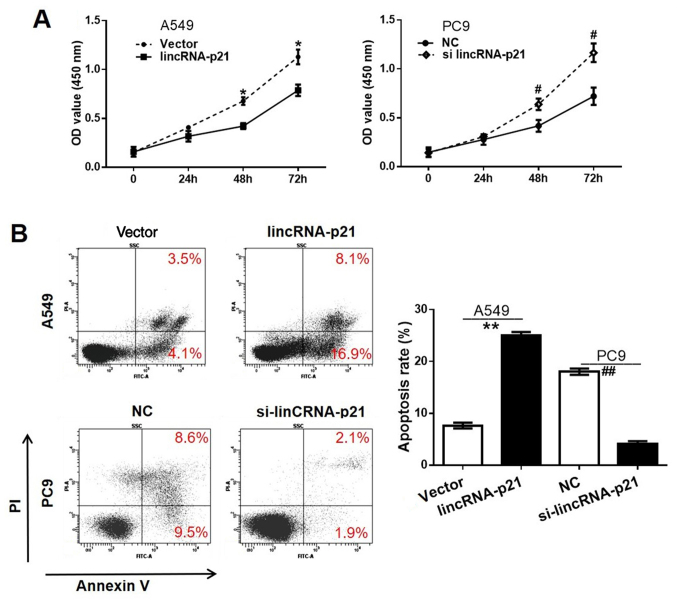
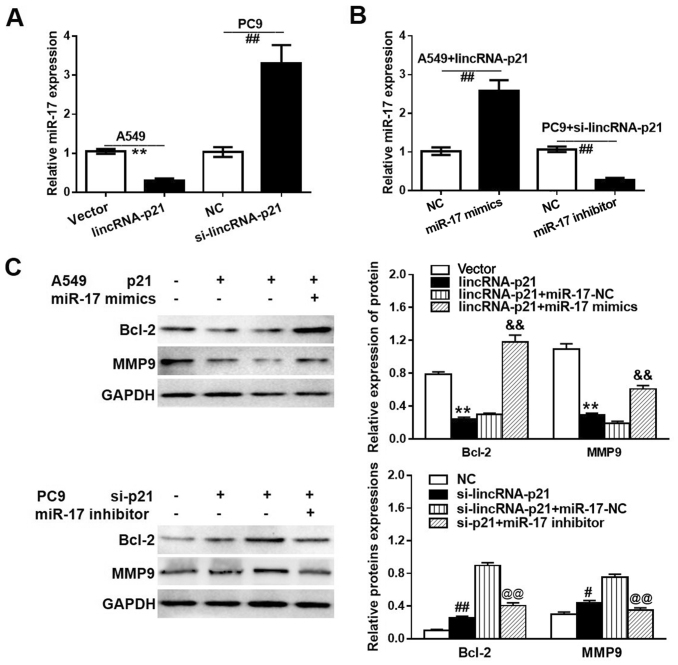
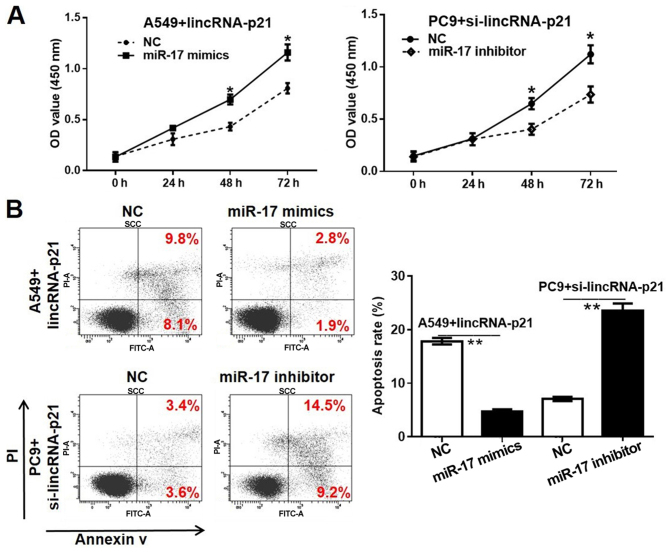
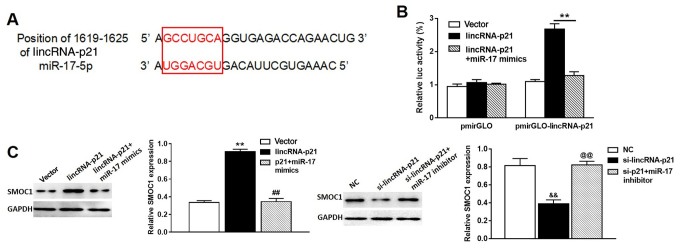
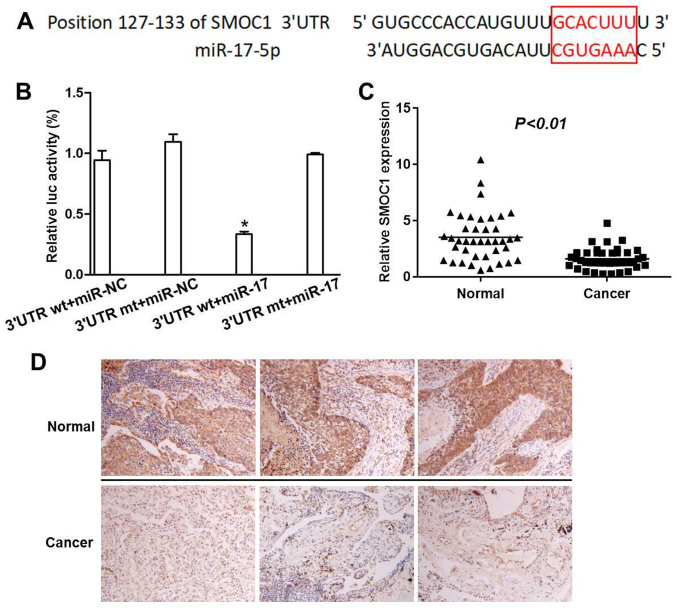
Non‑small‑cell lung cancer (NSCLC) is well established as one of the major subtypes of human lung cancer. NSCLC is characterized by a high incidence rate and poor patient prognosis. Previous studies have identified that long intergenic non-coding RNA (lincRNA) serves a key role in the development of tumor and malignant metastasis. However, the majority of the underlying mechanisms for lincRNA deregulation in various diseases, including cancer and diabetes, have not been completely elucidated. In the present study, the deregulation of lincRNA‑p21 in NSCLC tumor tissues in comparison to adjacent healthy tissues was examined using reverse transcription‑quantitative polymerase chain reaction. Furthermore, the effect of lincRNA‑p21 overexpression and knockdown on different NSCLC cell lines was further investigated in vitro. The association between lincRNA‑p21 expression and microRNA (miR)‑17‑5p level in NSCLC tumor cells was also investigated to clarify the underlying mechanism. The influence of miR‑17‑5p on different NSCLC cell lines A549 and PC9 were also examined in vitro using miR‑17‑5p mimics and inhibitors. Bioinformatics and luciferase assays were conducted to verify the direct binding sites on lincRNA‑p21 for miR‑17‑5p. The results demonstrated that there was a significant low‑expression of lincRNA‑p21 in NSCLC tumor tissues, and lincRNA‑p21 effectively inhibited the progression of lung cancer cells by suppressing cell proliferation and migration and promoting cell apoptosis. An evident negative association between lincRNA‑p21 and miR‑17‑5p expression was observed, and the inhibitory effect of overexpressed lincRNA‑p21 on lung cancer cells was counteracted by miR‑17‑5p. Bioinformatics and luciferase reporter analysis results confirmed that miR‑17‑5p is a direct target for lincRNA‑p21. The present study provides evidence for lincRNA‑p21 to inhibit the progression of NSCLC via direct targeting of a miR‑17‑5p associated signaling pathway.
非小细胞肺癌(NSCLC)是人类肺癌的主要亚型之一。NSCLC 的发病率高,患者预后差。先前的研究表明,长链非编码 RNA(lncRNA)在肿瘤的发生和恶性转移中起着关键作用。然而,lncRNA 在包括癌症和糖尿病在内的各种疾病中的失调的大多数潜在机制尚未完全阐明。在本研究中,通过逆转录定量聚合酶链反应(RT-qPCR)检测 NSCLC 肿瘤组织与相邻正常组织中 lincRNA-p21 的失调情况。此外,还进一步在体外研究了 lincRNA-p21 过表达和敲低对不同 NSCLC 细胞系的影响。还研究了 NSCLC 肿瘤细胞中 lincRNA-p21 表达与 microRNA(miR)-17-5p 水平之间的关系,以阐明潜在机制。还通过 miR-17-5p 模拟物和抑制剂在体外研究了 miR-17-5p 对不同 NSCLC 细胞系 A549 和 PC9 的影响。通过生物信息学和荧光素酶测定进行了实验,以验证 lincRNA-p21 与 miR-17-5p 之间的直接结合位点。结果表明,NSCLC 肿瘤组织中 lincRNA-p21 的表达显著降低,lincRNA-p21 通过抑制细胞增殖、迁移和促进细胞凋亡有效抑制肺癌细胞的进展。观察到 lincRNA-p21 与 miR-17-5p 表达之间存在明显的负相关,miR-17-5p 表达上调可拮抗过表达 lincRNA-p21 对肺癌细胞的抑制作用。生物信息学和荧光素酶报告基因分析结果证实,miR-17-5p 是 lincRNA-p21 的直接靶标。本研究为 lincRNA-p21 通过直接靶向 miR-17-5p 相关信号通路抑制 NSCLC 进展提供了证据。