Department of Biology, Tufts University, Medford, Massachusetts.
Program in Genetics, Sackler School of Graduate Biomedical Sciences, Tufts University, Boston, Massachusetts.
Genes Chromosomes Cancer. 2019 May;58(5):270-283. doi: 10.1002/gcc.22721. Epub 2019 Jan 29.
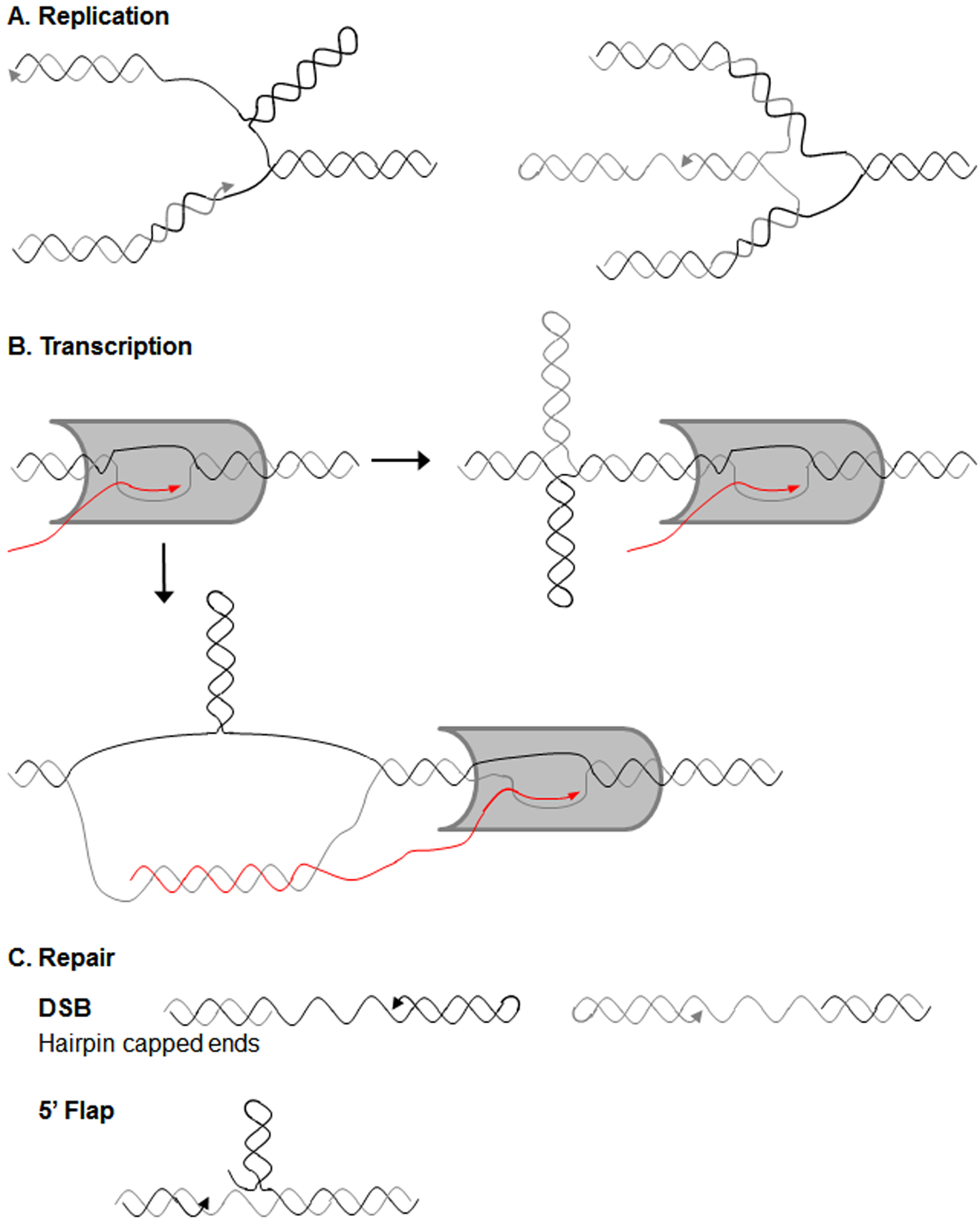
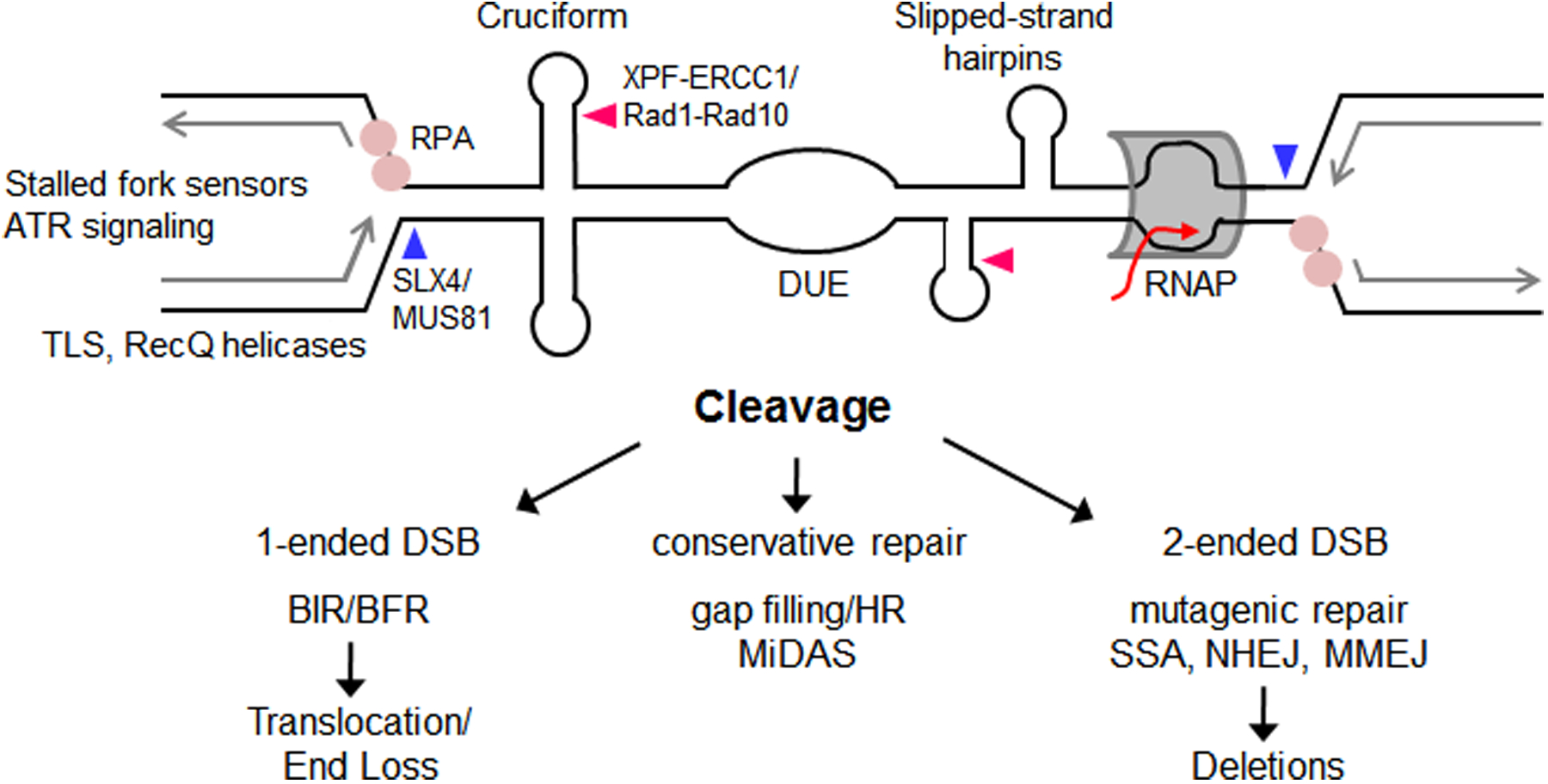
Alternative non-B form DNA structures, also called secondary structures, can form in certain DNA sequences under conditions that produce single-stranded DNA, such as during replication, transcription, and repair. Direct links between secondary structure formation, replication fork stalling, and genomic instability have been found for many repeated DNA sequences that cause disease when they expand. Common fragile sites (CFSs) are known to be AT-rich and break under replication stress, yet the molecular basis for their fragility is still being investigated. Over the past several years, new evidence has linked both the formation of secondary structures and transcription to fork stalling and fragility of CFSs. How these two events may synergize to cause fragility and the role of nuclease cleavage at secondary structures in rare and CFSs are discussed here. We also highlight evidence for a new hypothesis that secondary structures at CFSs not only initiate fragility but also inhibit healing, resulting in their characteristic appearance.
替代非 B 型 DNA 结构,也称为二级结构,在产生单链 DNA 的条件下,如在复制、转录和修复过程中,可在某些 DNA 序列中形成。当引起疾病的重复 DNA 序列扩展时,已发现二级结构形成、复制叉停滞和基因组不稳定性之间存在直接联系。众所周知,常见的脆性位点 (CFS) 富含 AT,在复制压力下断裂,但它们脆弱性的分子基础仍在研究中。在过去几年中,新的证据将二级结构的形成和转录与叉停滞和 CFS 的脆性联系起来。这两个事件如何协同作用导致脆性,以及核酸内切酶在罕见和 CFS 中对二级结构的切割作用在这里进行了讨论。我们还强调了一个新假设的证据,即 CFS 中的二级结构不仅引发脆性,而且还抑制修复,从而导致其特征性外观。