Department of Physics and Astronomy, College of Science, King Saud University, Riyadh, Saudi Arabia,
Committee of Radiation and Environmental Pollution Protection, Department of Physics, College of Science, Al-Imam Mohammad Ibn Saud Islamic University, Riyadh, Saudi Arabia.
Int J Nanomedicine. 2018 Nov 23;13:7931-7938. doi: 10.2147/IJN.S171931. eCollection 2018.
The objective of this study was to verify and confirm the oxidative-mediated hepatotoxicity, inflammatory liver damage, and oxidative stress induced by intraperitoneal administration of gold nanoparticles (GNPs) in vivo; characterize the effect of different natural antioxidants on these hazardous changes; and finally choose the most powerful antioxidant among these different natural antioxidants.
Ten-nanometer GNPs were dissolved in aqueous solution of 0.01% concentration. A dose of 50 µL of 10 nm GNPs was administered intraperitoneally for 7 days to the rats, whereas the antioxidants were orally administered for the same time period. The antioxidants used in the study were vitamin E (Vit E), α-lipoic acid (ALA), quercetin (Qur), arginine (Arg), and melanin. Forty Wistar-Kyoto male rats were used. Rats were arbitrarily divided into seven groups after acclimatization for 1 week. For serum separation, blood samples were obtained from each animal. Serum liver function markers and tissue oxidative stress and lipid proxidation biomarkers were assessed.
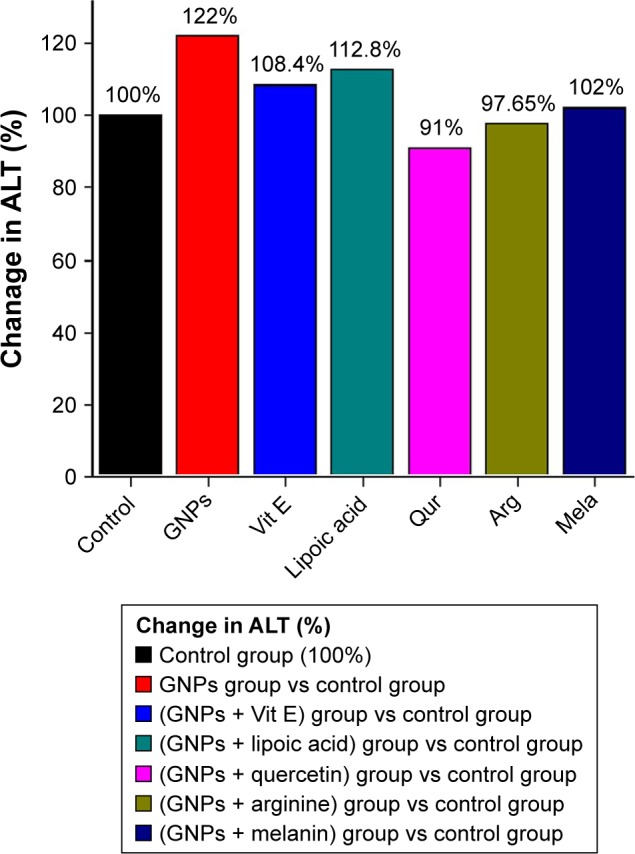
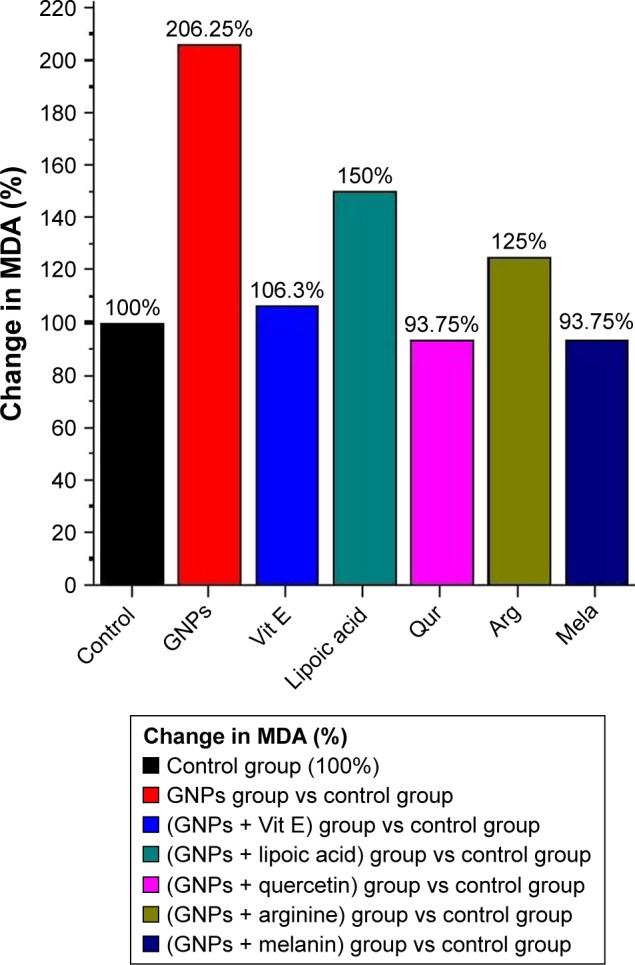
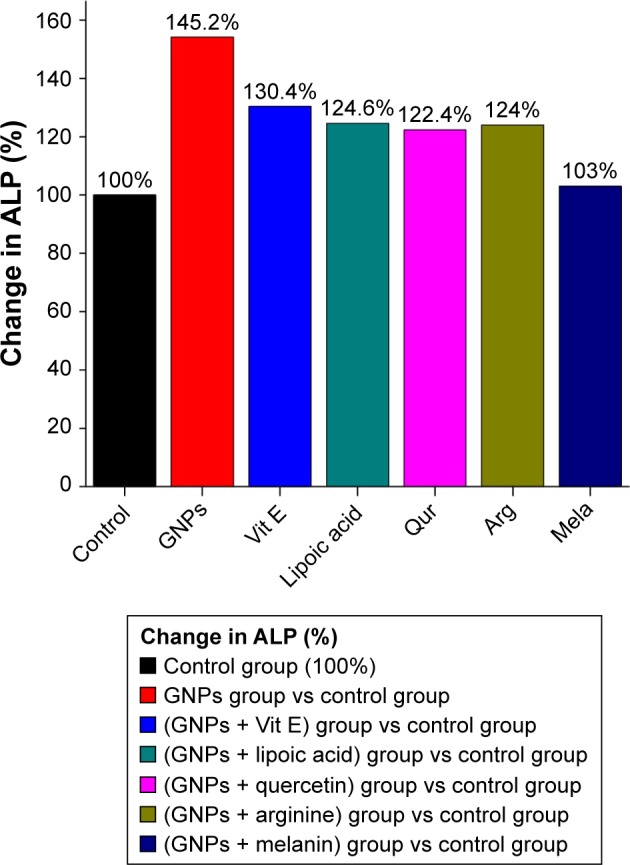
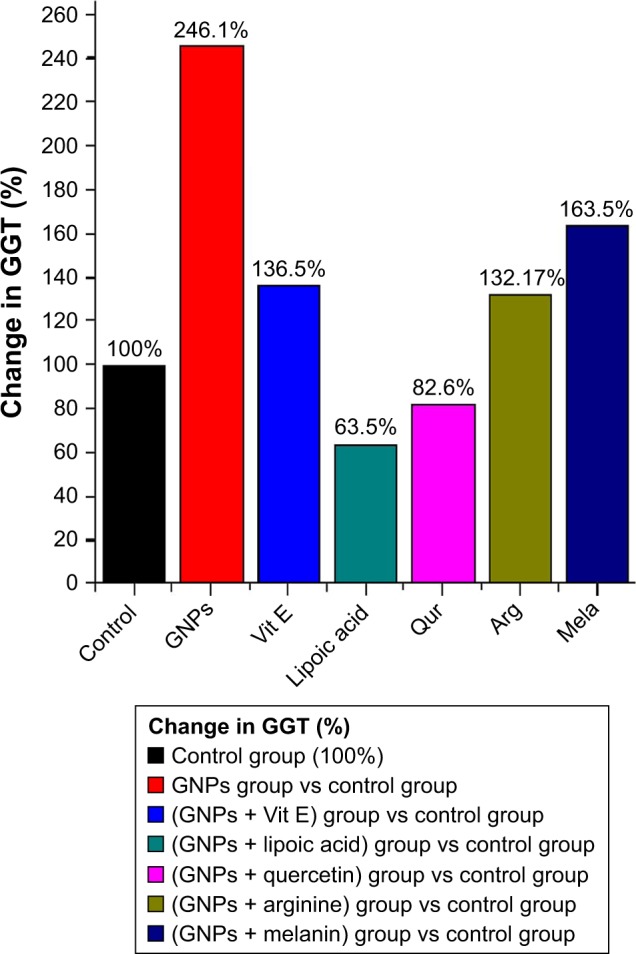
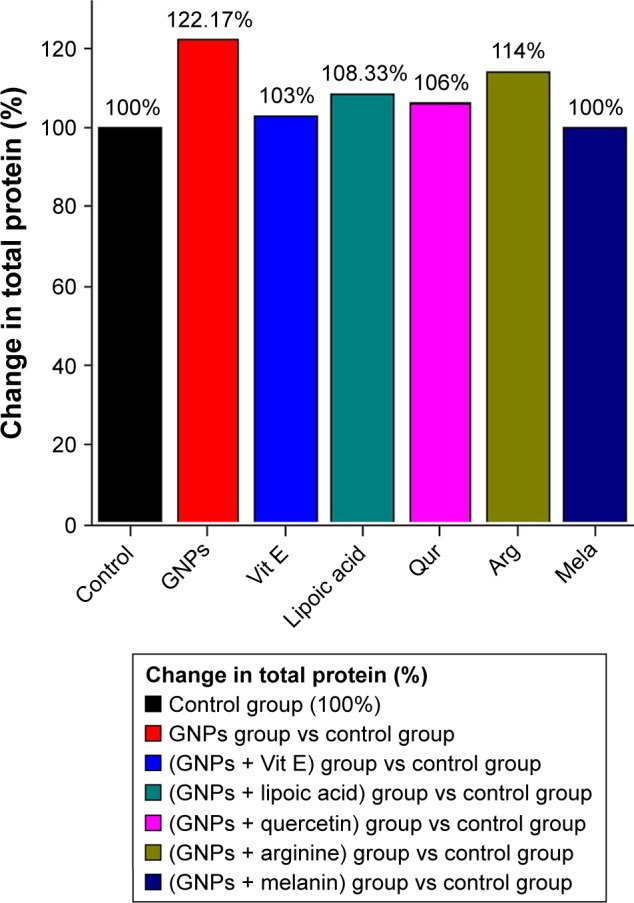
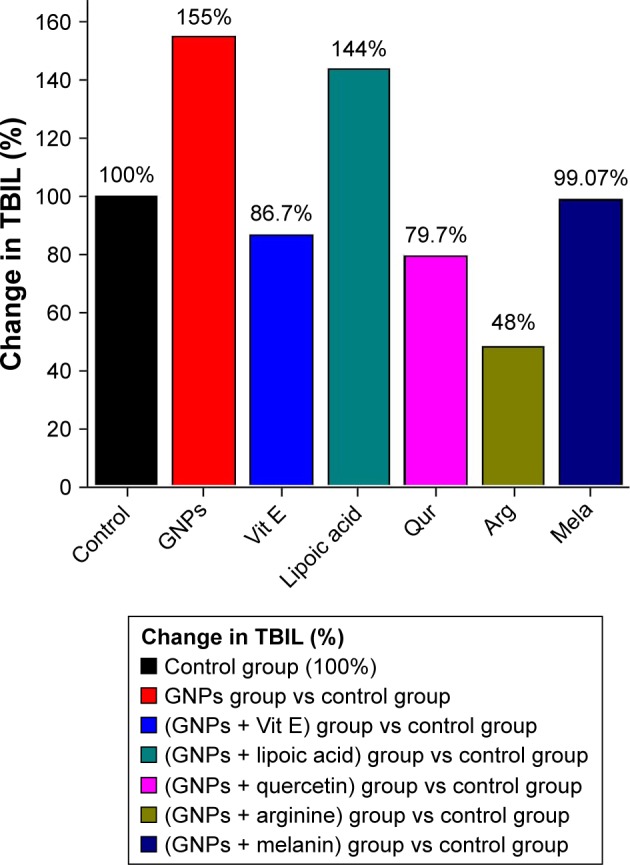
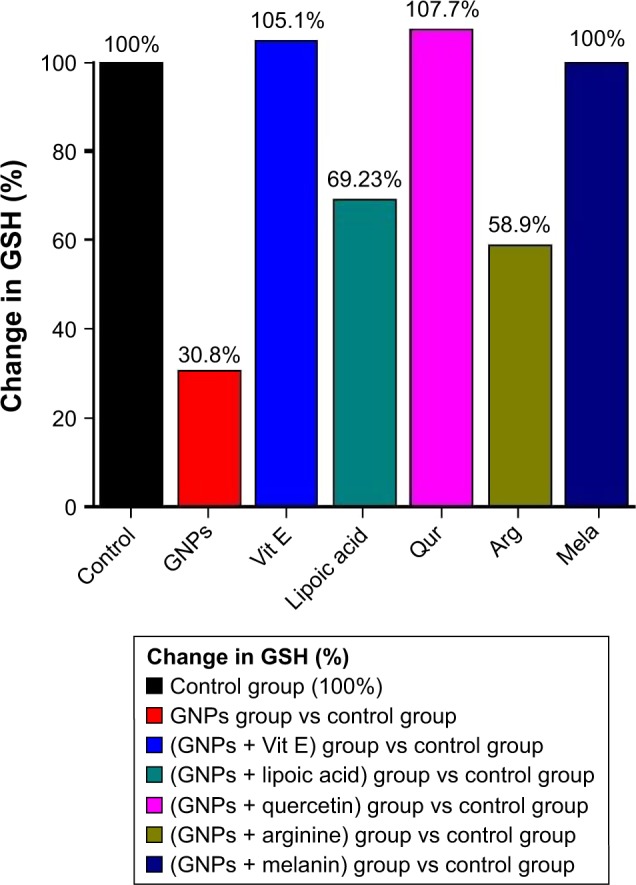
The increase in the levels of gamma-glutamyl transferase, alkaline phosphatase, total protein, alanine aminotransferase, and total bilirubin in the serum of rats and the increase of malondialdehyde in the hepatic tissue and decrease in reduced glutathione when compared with the control in this study confirmed the ability of GNPs to cause hazardous effects.
Treatment of rats with Vit E, ALA, Qur, Arg, and melanin along with GNPs significantly inhibited the inflammatory liver damage, lipid peroxidation, and the oxidative stress induced by GNPs in vivo, but with different responses due to their evaluated normalization values, and it has been confirmed that melanin is the most powerful antioxidant among these different natural antioxidants, ie, it has the most effective potential role against the hepatic inflammatory damage, oxidative stress, and lipid peroxidation.
本研究旨在验证和确认腹腔内给予金纳米颗粒(GNPs)后体内氧化介导的肝毒性、炎症性肝损伤和氧化应激;描述不同天然抗氧化剂对这些有害变化的影响;并最终在这些不同的天然抗氧化剂中选择最有效的抗氧化剂。
将 10nm GNPs 溶解在 0.01%浓度的水溶液中。将 50μL 10nm GNPs 剂量腹腔内给予大鼠 7 天,而抗氧化剂则在同一时期口服给予。本研究中使用的抗氧化剂为维生素 E(Vit E)、α-硫辛酸(ALA)、槲皮素(Qur)、精氨酸(Arg)和黑色素。使用 40 只 Wistar-Kyoto 雄性大鼠。适应环境 1 周后,大鼠被随机分为 7 组。为了分离血清,从每只动物中采集血液样本。评估血清肝功能标志物和组织氧化应激及脂质过氧化生物标志物。
与对照组相比,本研究中大鼠血清中γ-谷氨酰转移酶、碱性磷酸酶、总蛋白、丙氨酸氨基转移酶和总胆红素水平升高,肝组织中丙二醛升高,还原型谷胱甘肽降低,证实了 GNPs 引起有害作用的能力。
Vit E、ALA、Qur、Arg 和黑色素与 GNPs 一起治疗大鼠可显著抑制 GNPs 体内诱导的炎症性肝损伤、脂质过氧化和氧化应激,但由于其评估的归一化值,它们的反应不同,并且已经证实黑色素是这些不同天然抗氧化剂中最有效的抗氧化剂,即它对肝炎症损伤、氧化应激和脂质过氧化具有最有效的潜在作用。