Department of Cardiology, Clinical Sciences, Lund University, Skane University Hospital, Lund, Sweden.
Department of clinical sciences, Danderyd's University Hospital, Karolinska Institutet, Stockholm, Sweden.
BMJ. 2018 Dec 12;363:k4811. doi: 10.1136/bmj.k4811.
To study circadian rhythm aspects, national holidays, and major sports events as triggers of myocardial infarction.
Retrospective observational study using the nationwide coronary care unit registry, SWEDEHEART.
Sweden.
283 014 cases of myocardial infarction reported to SWEDEHEART between 1998 and 2013. Symptom onset date was documented for all cases, and time to the nearest minute for 88%.
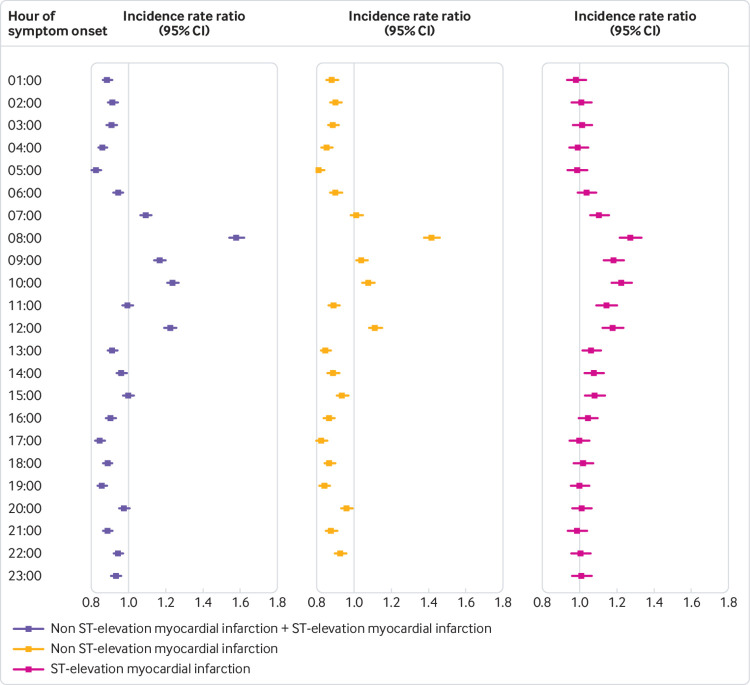
Myocardial infarctions with symptom onset on Christmas/New Year, Easter, and Midsummer holiday were identified. Similarly, myocardial infarctions that occurred during a FIFA World Cup, UEFA European Championship, and winter and summer Olympic Games were identified. The two weeks before and after a holiday were set as a control period, and for sports events the control period was set to the same time one year before and after the tournament. Circadian and circaseptan analyses were performed with Sunday and 24:00 as the reference day and hour with which all other days and hours were compared. Incidence rate ratios were calculated using a count regression model.
Daily count of myocardial infarction.
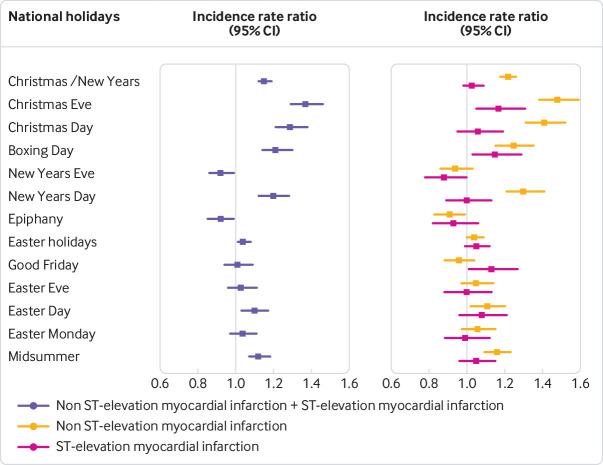
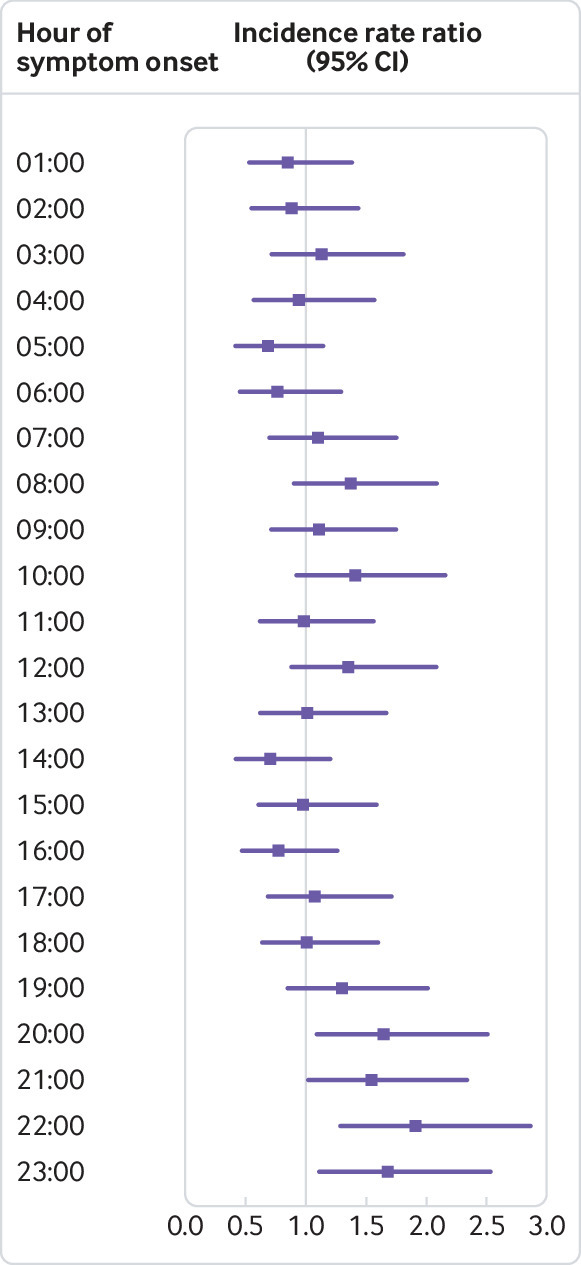
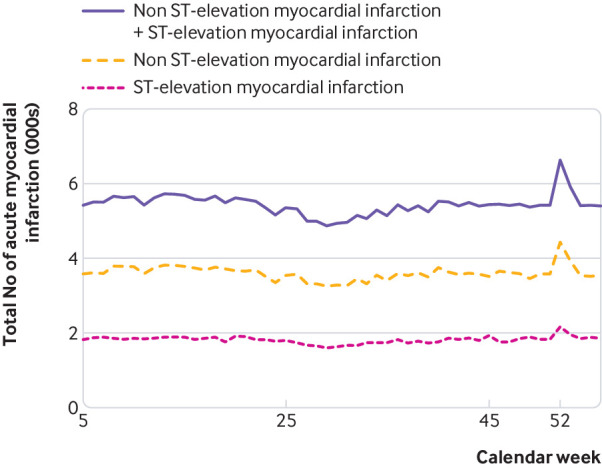
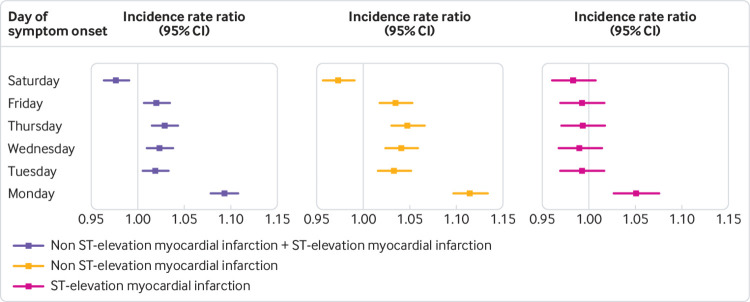
Christmas and Midsummer holidays were associated with a higher risk of myocardial infarction (incidence rate ratio 1.15, 95% confidence interval 1.12 to 1.19, P<0.001, and 1.12, 1.07 to 1.18, P<0.001, respectively). The highest associated risk was observed for Christmas Eve (1.37, 1.29 to 1.46, P<0.001). No increased risk was observed during Easter holiday or sports events. A circaseptan and circadian variation in the risk of myocardial infarction was observed, with higher risk during early mornings and on Mondays. Results were more pronounced in patients aged over 75 and those with diabetes and a history of coronary artery disease.
In this nationwide real world study covering 16 years of hospital admissions for myocardial infarction with symptom onset documented to the nearest minute, Christmas, and Midsummer holidays were associated with higher risk of myocardial infarction, particularly in older and sicker patients, suggesting a role of external triggers in vulnerable individuals.
研究昼夜节律、国定假日和重大体育赛事作为心肌梗死的诱因。
使用全国性的冠心病监护病房登记处 SWEDEHEART 进行回顾性观察研究。
瑞典。
1998 年至 2013 年间向 SWEDEHEART 报告的 283014 例心肌梗死病例。所有病例均记录了症状发作日期,其中 88%记录到了最近的分钟数。
确定了圣诞节/新年、复活节和仲夏假期期间症状发作的心肌梗死病例。同样,确定了发生在国际足联世界杯、欧洲冠军联赛以及冬季和夏季奥运会期间的心肌梗死病例。将假期前后两周设为对照期,对于体育赛事,对照期设为比赛前后一年的同一时间。使用周日和 24:00 作为参考日和参考时,对昼夜节律和 24 小时节律进行分析,并将所有其他日和时与参考日和时进行比较。使用计数回归模型计算发病率比值。
心肌梗死的每日计数。
圣诞节和仲夏假期与心肌梗死风险增加相关(发病率比值 1.15,95%置信区间 1.12 至 1.19,P<0.001,和 1.12,1.07 至 1.18,P<0.001)。在圣诞节前夕风险最高(1.37,1.29 至 1.46,P<0.001)。复活节假期或体育赛事期间没有观察到风险增加。昼夜节律和 24 小时节律的风险呈周期性变化,清晨和周一的风险较高。在年龄超过 75 岁的患者、患有糖尿病和冠心病病史的患者中,结果更为明显。
在这项全国范围内的真实世界研究中,对发病症状记录到最近分钟的 16 年的心肌梗死住院病例进行了研究,发现圣诞节和仲夏假期与心肌梗死风险增加相关,特别是在年龄较大和病情较重的患者中,这表明在易受影响的个体中,外部触发因素可能起作用。