Department of Biomedical and Biotechnological Sciences, Physiology Section, University of Catania, Catania 95123, Italy.
Int J Mol Sci. 2018 Dec 7;19(12):3944. doi: 10.3390/ijms19123944.
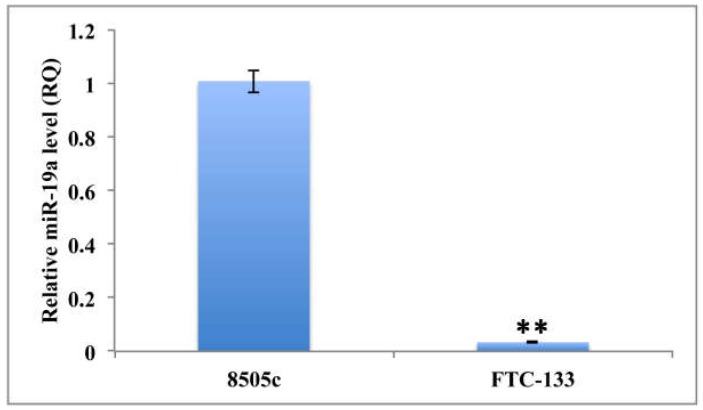
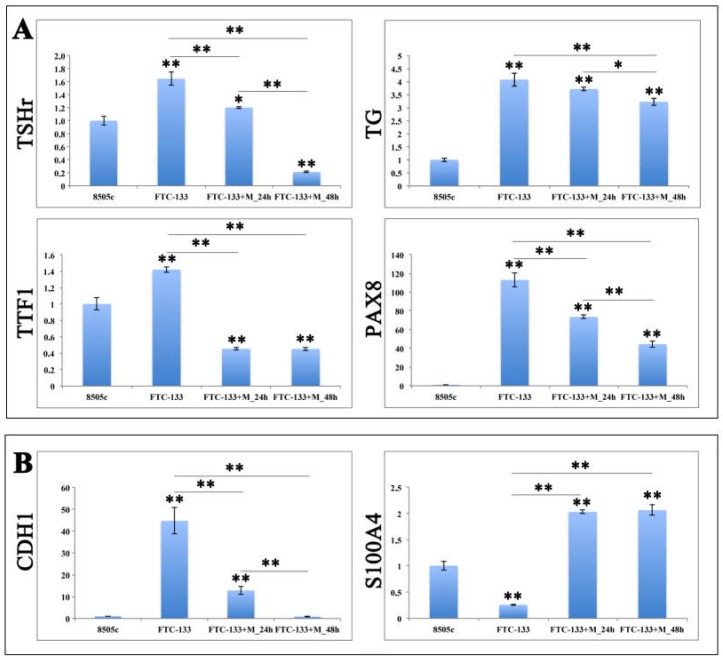
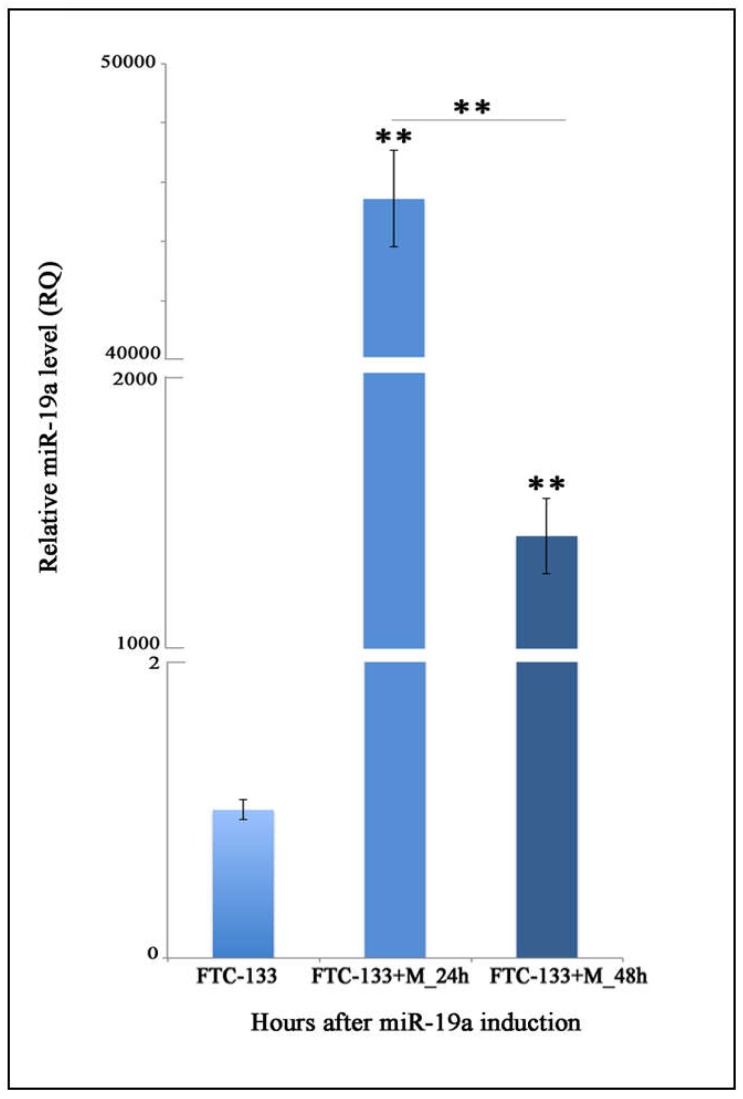
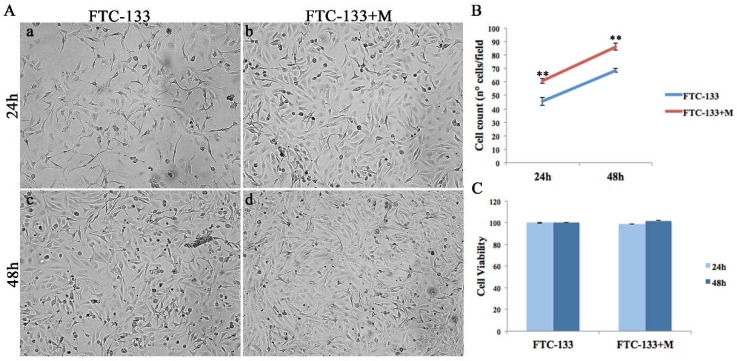
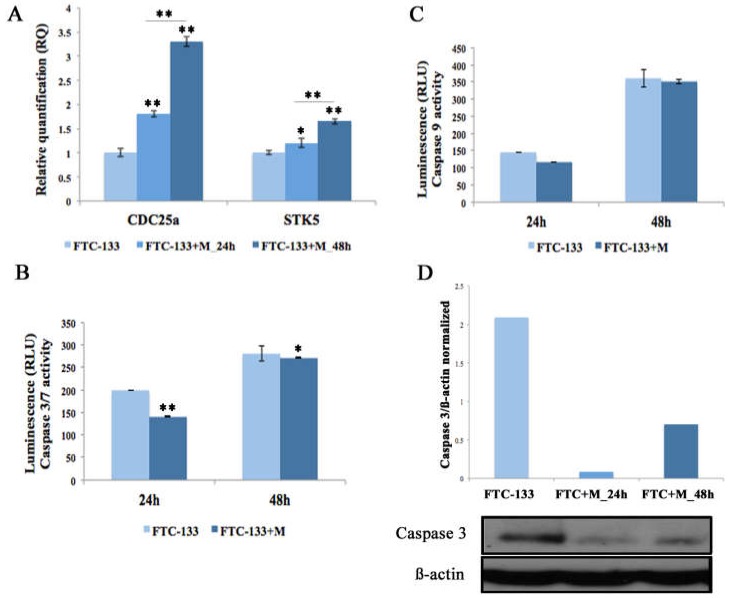
In recent years, microRNAs (miRNAs) have received increasing attention for their important role in tumor initiation and progression. MiRNAs are a class of endogenous small non-coding RNAs that negatively regulate the expression of several oncogenes or tumor suppressor genes. MiR-19a, a component of the oncogenic miR-17-92 cluster, has been reported to be highly expressed only in anaplastic thyroid cancer, the most undifferentiated, aggressive and lethal form of thyroid neoplasia. In this work, we evaluated the putative contribution of miR-19a in de-differentiation and aggressiveness of thyroid tumors. To this aim, we induced miR-19a expression in the well-differentiated follicular thyroid cancer cell line and evaluated proliferation, apoptosis and gene expression profile of cancer cells. Our results showed that miR-19a overexpression stimulates cell proliferation and alters the expression profile of genes related to thyroid cell differentiation and aggressiveness. These findings not only suggest that miR-19a has a possible involvement in de-differentiation and malignancy, but also that it could represent an important prognostic indicator and a good therapeutic target for the most aggressive thyroid cancer.
近年来,微小 RNA(miRNAs)因其在肿瘤发生和发展中的重要作用而受到越来越多的关注。miRNAs 是一类内源性的小非编码 RNA,可负调控多个癌基因或肿瘤抑制基因的表达。miR-19a 是致癌 miR-17-92 簇的一个组成部分,据报道仅在间变性甲状腺癌中高表达,间变性甲状腺癌是甲状腺肿瘤中最未分化、侵袭性和致命的形式。在这项工作中,我们评估了 miR-19a 在甲状腺肿瘤去分化和侵袭性中的潜在作用。为此,我们在分化良好的滤泡性甲状腺癌细胞系中诱导 miR-19a 的表达,并评估癌细胞的增殖、凋亡和基因表达谱。我们的结果表明,miR-19a 的过表达刺激细胞增殖,并改变与甲状腺细胞分化和侵袭性相关的基因的表达谱。这些发现不仅表明 miR-19a 可能参与去分化和恶性转化,而且还表明它可能成为最具侵袭性甲状腺癌的重要预后指标和良好的治疗靶点。