Agronomy College of Henan Agricultural University, National Key Laboratory of Wheat and Maize Crop Science, and Collaborative Innovation Center of Henan Grain Crops, Zhengzhou 450046, Henan, China.
Int J Mol Sci. 2018 Dec 10;19(12):3969. doi: 10.3390/ijms19123969.
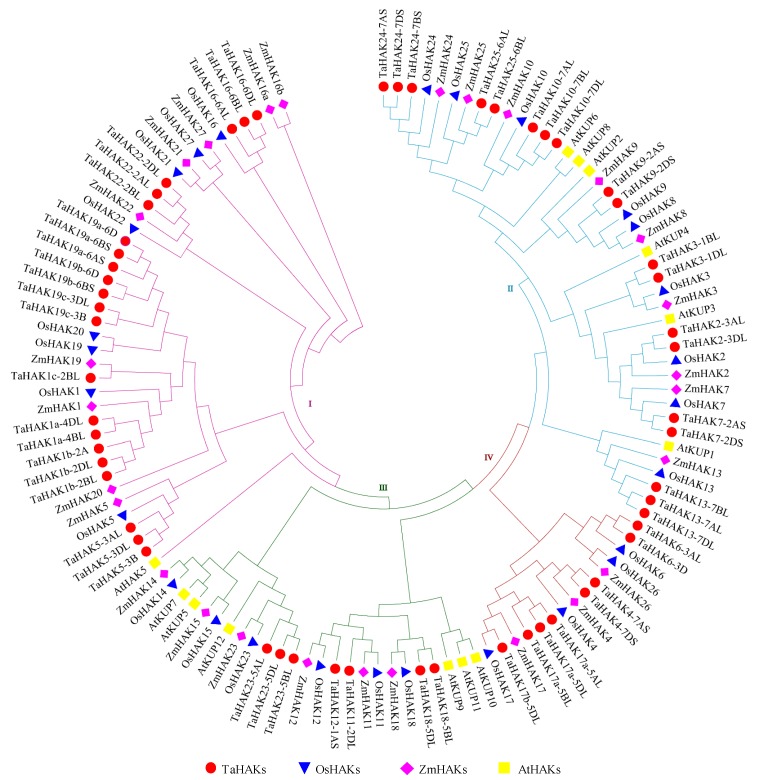
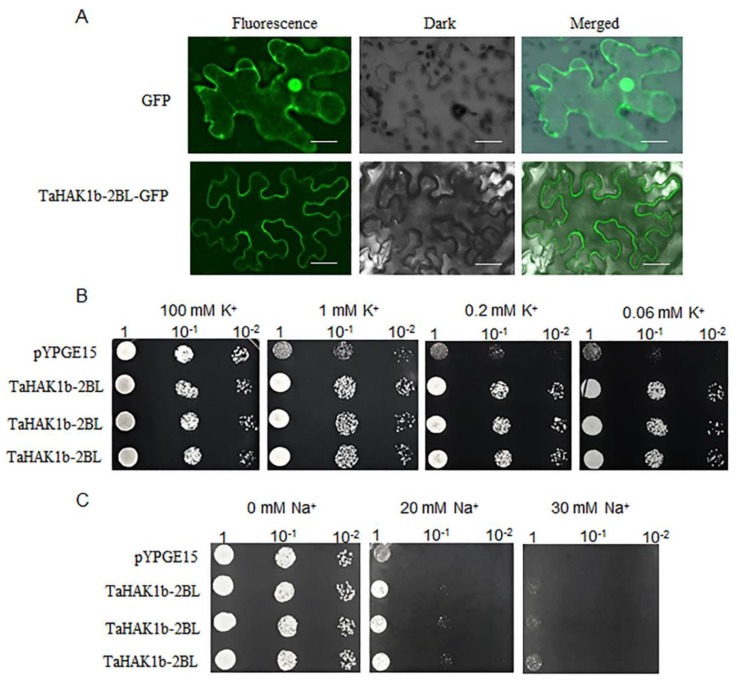
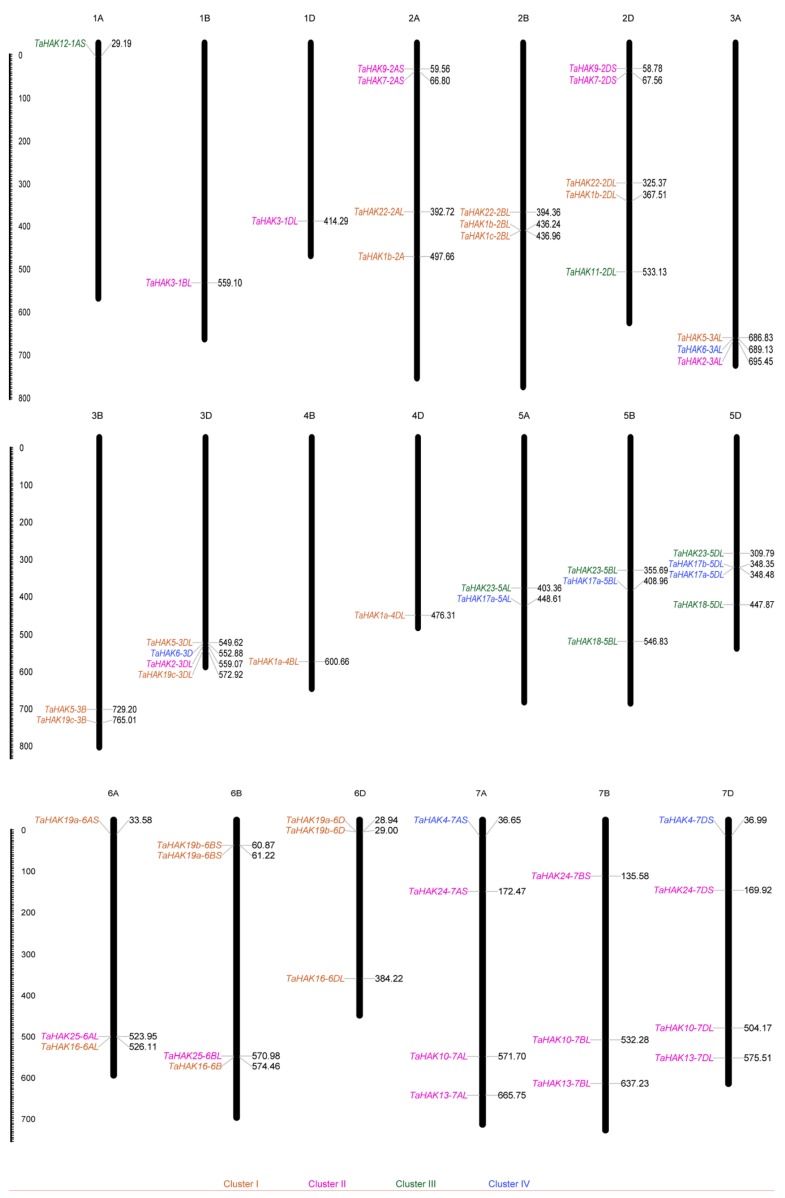
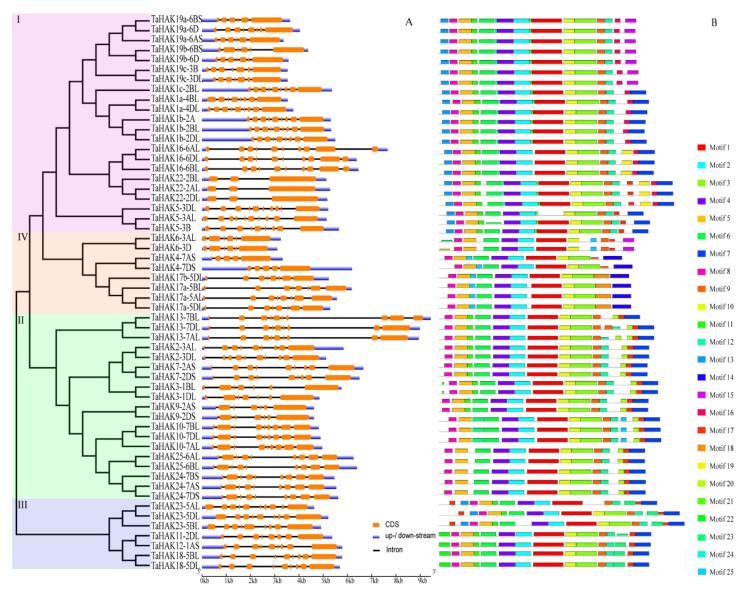
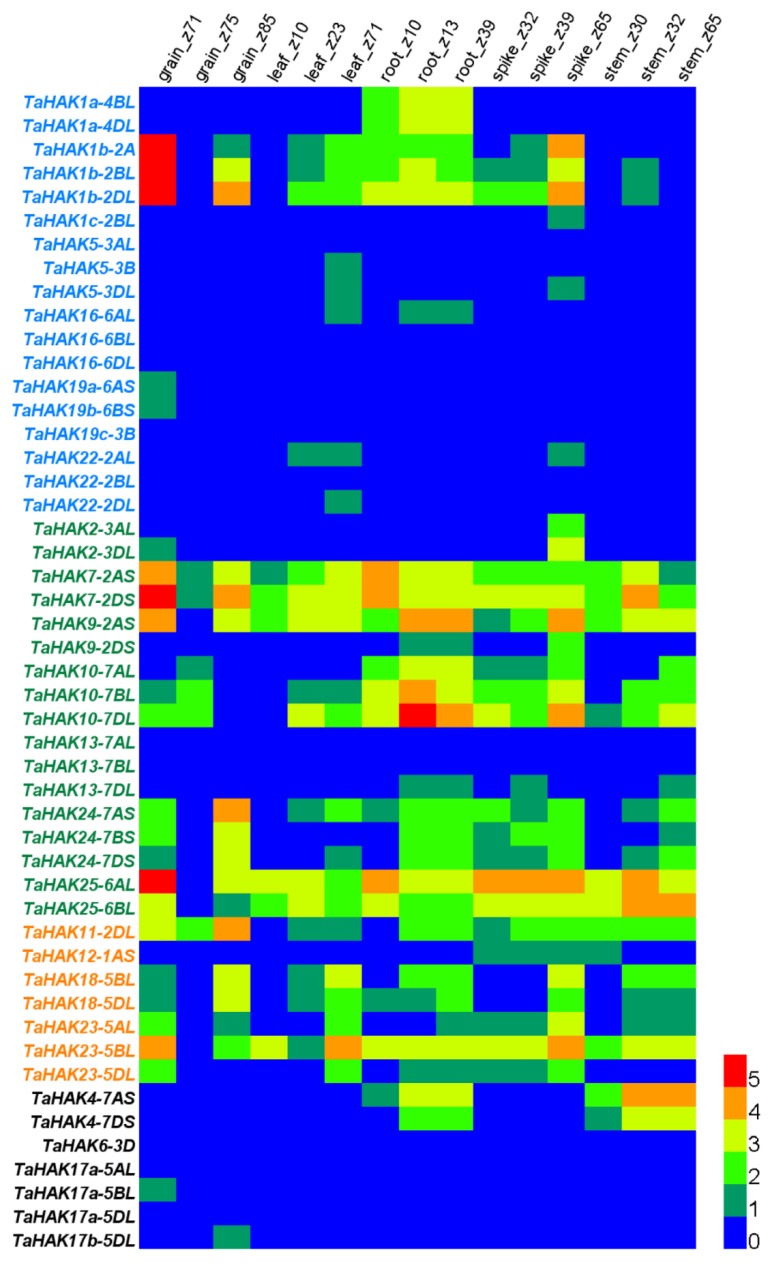
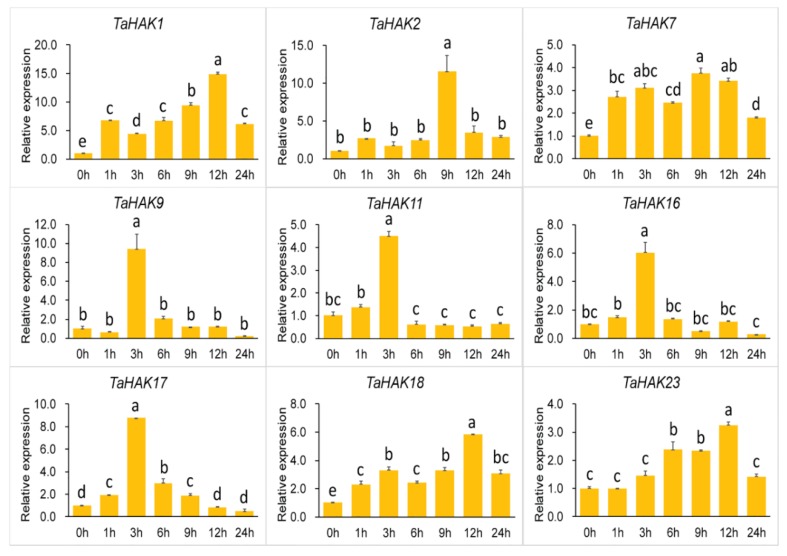
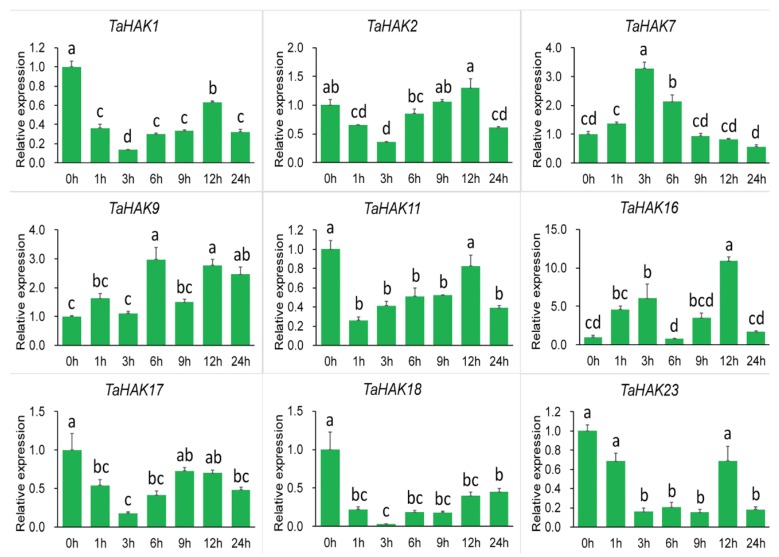
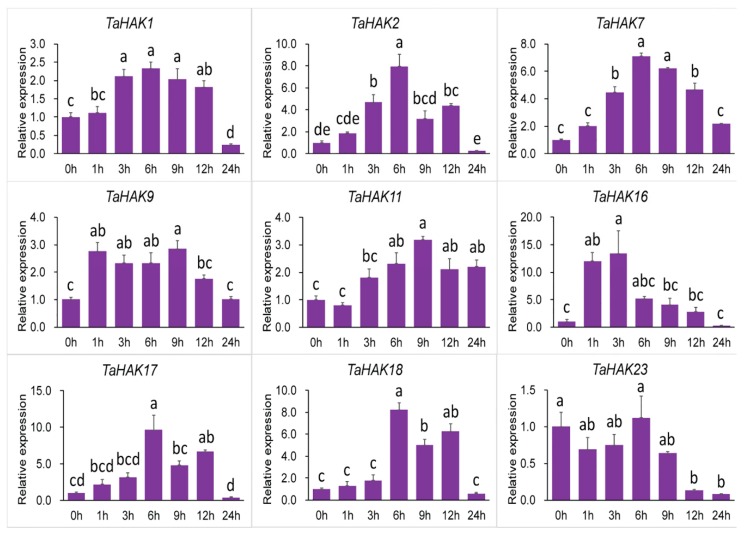
In plants, the HAK (high-affinity K⁺)/KUP (K⁺ uptake)/KT (K⁺ transporter) family represents a large group of potassium transporters that play important roles in plant growth and environmental adaptation. Although genes have been extensively investigated in many plant species, they remain uncharacterized in wheat, especially those involved in the response to environmental stresses. In this study, 56 wheat (hereafter called s) genes were identified by a genome-wide search using recently released wheat genomic data. Phylogenetic analysis grouped these genes into four clusters (Ι, II, III, IV), containing 22, 19, 7 and 8 genes, respectively. Chromosomal distribution, gene structure, and conserved motif analyses of the 56 genes were subsequently performed. In silico RNA-seq data analysis revealed that s from clusters II and III are constitutively expressed in various wheat tissues, while most genes from clusters I and IV have very low expression levels in the examined tissues at different developmental stages. qRT-PCR analysis showed that expression levels of genes in wheat seedlings were significantly up- or downregulated when seedlings were exposed to K⁺ deficiency, high salinity, or dehydration. Furthermore, we functionally characterized and showed that it facilitates K⁺ transport in yeast. Collectively, these results provide valuable information for further functional studies of , and contribute to a better understanding of the molecular basis of wheat development and stress tolerance.
在植物中,HAK(高亲和力 K⁺)/KUP(K⁺摄取)/KT(K⁺转运蛋白)家族代表了一大类钾转运蛋白,它们在植物生长和环境适应中发挥重要作用。尽管在许多植物物种中已经广泛研究了 基因,但它们在小麦中仍然没有被描述,特别是那些参与环境胁迫响应的基因。在这项研究中,通过使用最近发布的小麦基因组数据进行全基因组搜索,鉴定了 56 个小麦 (以下简称 s)基因。系统发育分析将这些基因分为四个簇(I、II、III、IV),分别包含 22、19、7 和 8 个基因。随后对 56 个 s 基因的染色体分布、基因结构和保守基序进行了分析。基于 RNA-seq 的计算机数据分析表明,簇 II 和 III 的 s 在各种小麦组织中持续表达,而簇 I 和 IV 的大多数基因在不同发育阶段的检查组织中表达水平非常低。qRT-PCR 分析表明,当幼苗暴露于低钾、高盐或干旱时,小麦幼苗中 基因的表达水平显著上调或下调。此外,我们还对 进行了功能表征,并表明它有助于酵母中的 K⁺转运。总之,这些结果为进一步研究 提供了有价值的信息,并有助于更好地理解小麦发育和耐胁迫的分子基础。