Busatto Sara, Vilanilam George, Ticer Taylor, Lin Wen-Lang, Dickson Dennis W, Shapiro Shane, Bergese Paolo, Wolfram Joy
Department of Transplantation Medicine; Department of Physiology and Biomedical Engineering, Mayo Clinic, Jacksonville, FL 32224, USA.
Department of Molecular and Translational Medicine, University of Brescia, 25123 Brescia, Italy.
Cells. 2018 Dec 16;7(12):273. doi: 10.3390/cells7120273.
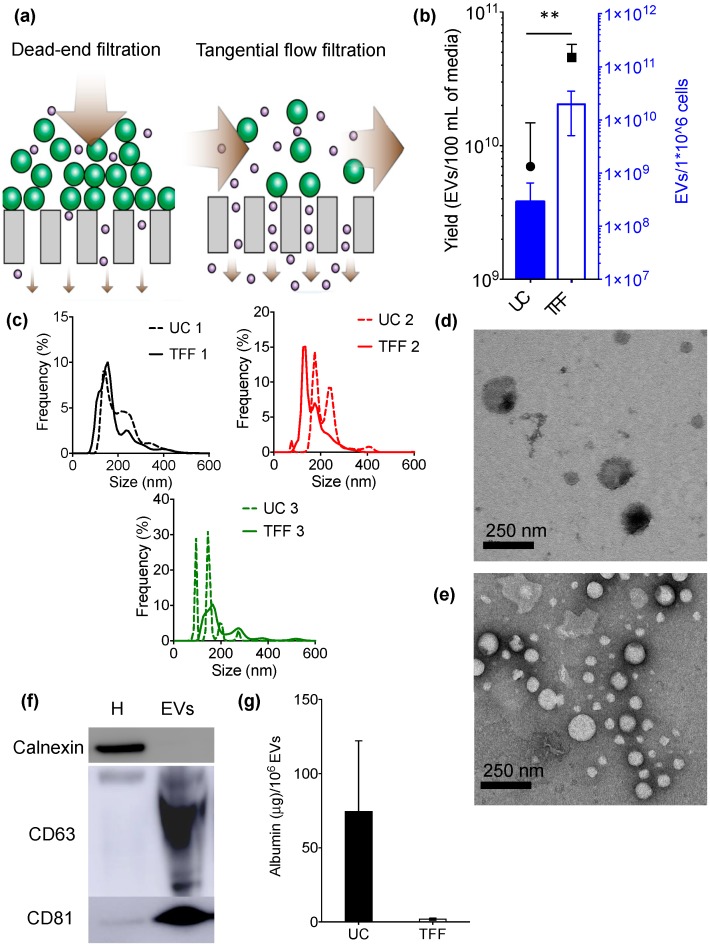
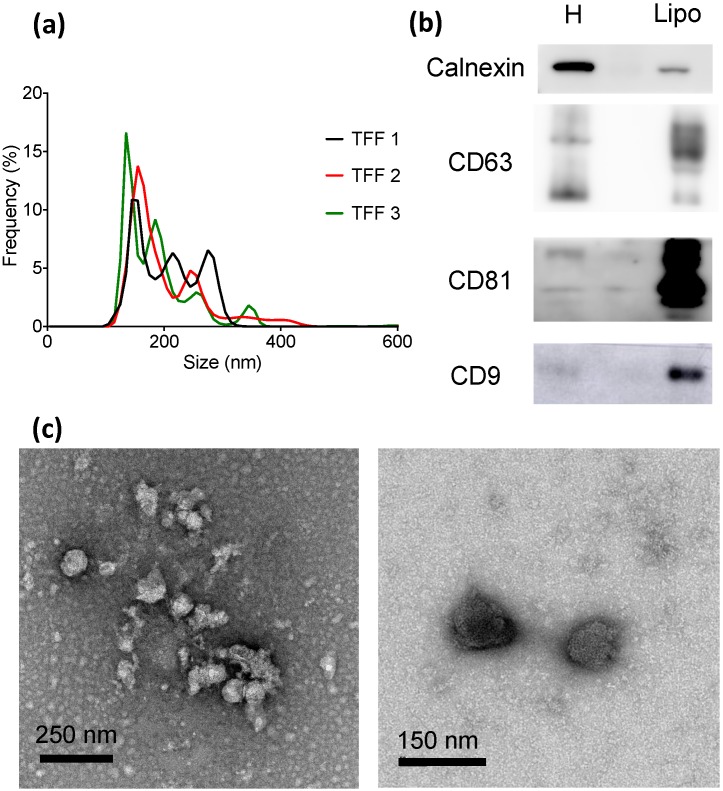
Concentration of extracellular vesicles (EVs) from biological fluids in a scalable and reproducible manner represents a major challenge. This study reports the use of tangential flow filtration (TFF) for the highly efficient isolation of EVs from large volumes of samples. When compared to ultracentrifugation (UC), which is the most widely used method to concentrate EVs, TFF is a more efficient, scalable, and gentler method. Comparative assessment of TFF and UC of conditioned cell culture media revealed that the former concentrates EVs of comparable physicochemical characteristics, but with higher yield, less single macromolecules and aggregates (<15 nm in size), and improved batch-to-batch consistency in half the processing time (1 h). The TFF protocol was then successfully implemented on fluids derived from patient lipoaspirate. EVs from adipose tissue are of high clinical relevance, as they are expected to mirror the regenerative properties of the parent cells.
以可扩展且可重复的方式从生物流体中浓缩细胞外囊泡(EVs)是一项重大挑战。本研究报告了使用切向流过滤(TFF)从大量样品中高效分离EVs的方法。与用于浓缩EVs的最广泛使用的方法——超速离心(UC)相比,TFF是一种更高效、可扩展且更温和的方法。对条件性细胞培养基进行TFF和UC的比较评估表明,前者浓缩的EVs具有相当的物理化学特性,但产量更高,单个大分子和聚集体(尺寸<15 nm)更少,并且在一半的处理时间(1小时)内批次间一致性得到改善。然后,TFF方案在患者抽脂物衍生的流体上成功实施。来自脂肪组织的EVs具有高度的临床相关性,因为它们有望反映亲代细胞的再生特性。