Ottawa Hospital Research Institute, Regenerative Medicine Program, Ottawa, ON, Canada.
Department of Cellular and Molecular Medicine, Faculty of Medicine, University of Ottawa, Ottawa, ON, Canada.
Skelet Muscle. 2024 Oct 11;14(1):22. doi: 10.1186/s13395-024-00355-1.
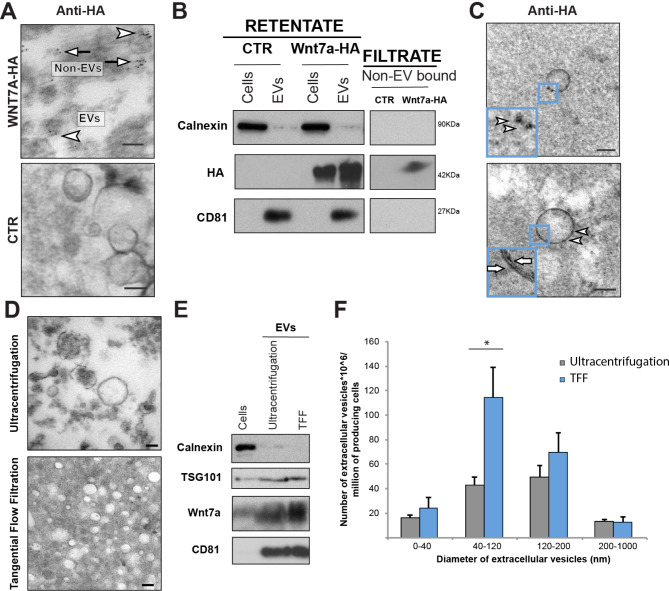
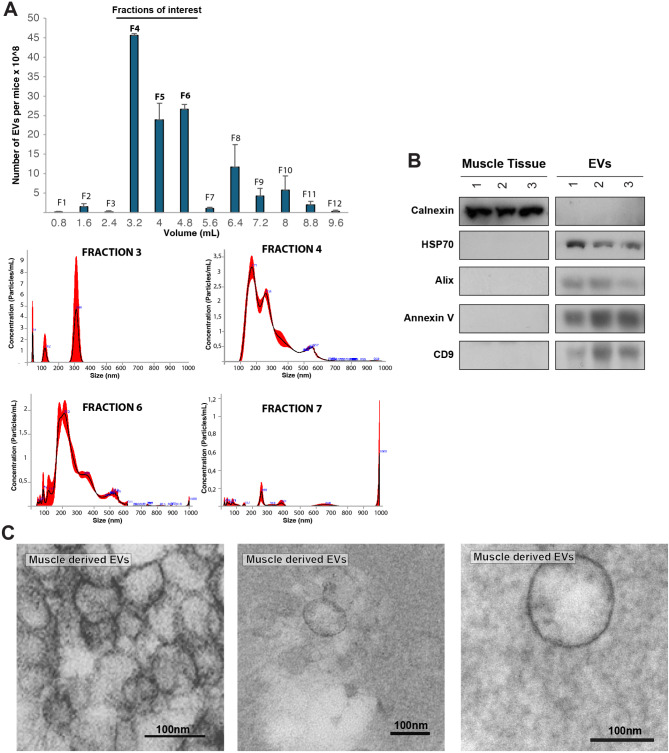
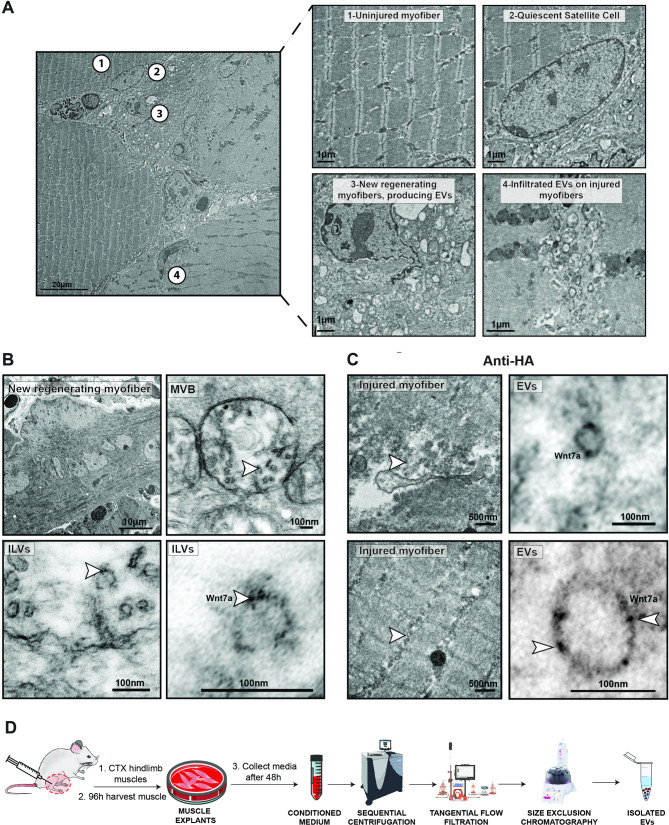
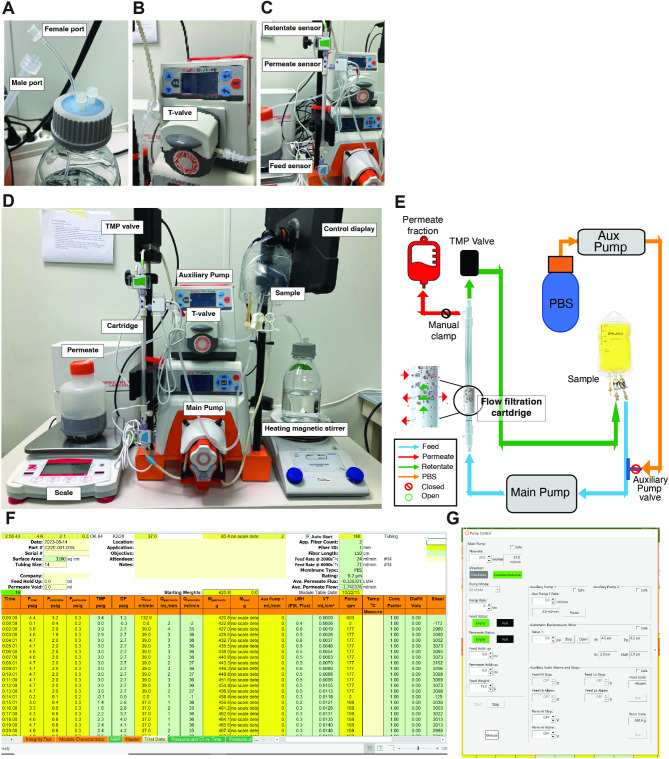
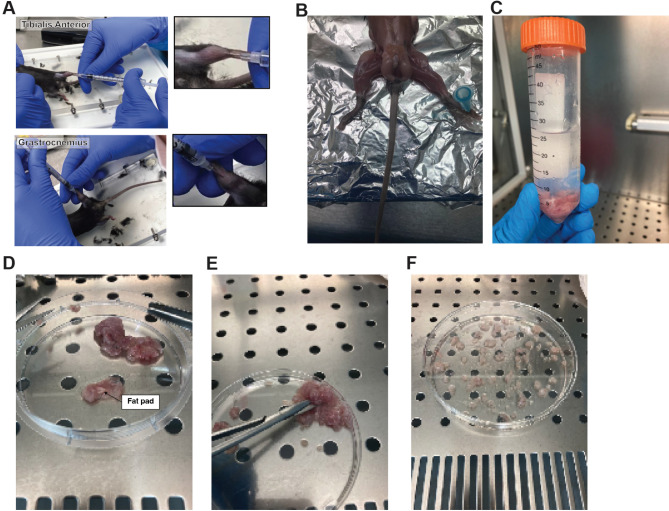
We have recently made the strikingly discovery that upon a muscle injury, Wnt7a is upregulated and secreted from new regenerating myofibers on the surface of exosomes to elicit its myogenerative response distally. Despite recent advances in extracellular vesicle (EVs) isolation from diverse tissues, there is still a lack of specific methodology to purify EVs from muscle tissue. To eliminate contamination with non-EV secreted proteins and cytoplasmic fragments, which are typically found when using classical methodology, such as ultracentrifugation, we adapted a protocol combining Tangential Flow Filtration (TFF) and Size Exclusion Chromatography (SEC). We found that this approach allows simultaneous purification of Wnt7a, bound to EVs (retentate fraction) and free non-EV Wnt7a (permeate fraction). Here we described this optimized protocol designed to specifically isolate EVs from hind limb muscle explants, without cross-contamination with other sources of non-EV bounded proteins. The first step of the protocol is to remove large EVs with sequential centrifugation. Extracellular vesicles are then concentrated and washed in exchange buffer by TFF. Lastly, SEC is performed to remove any soluble protein traces remaining after TFF. Overall, this procedure can be used to isolate EVs from conditioned media or biofluid that contains EVs derived from any cell type or tissue, improving reproducibility, efficiency, and purity of EVs preparations. Our purification protocol results in high purity EVs that maintain structural integrity and thus fully compatible with in vitro and in vivo bioactivity and analytic assays.
我们最近惊人地发现,在肌肉损伤后,Wnt7a 上调并从新生的肌纤维上的外泌体表面分泌出来,以引发其在远端的肌生成反应。尽管近年来在从各种组织中分离细胞外囊泡(EVs)方面取得了进展,但仍然缺乏从肌肉组织中纯化 EVs 的特定方法。为了消除使用经典方法(如超速离心)时通常会遇到的非 EV 分泌蛋白和细胞质片段的污染,我们采用了一种结合切向流过滤(TFF)和大小排阻色谱(SEC)的方法。我们发现,这种方法可以同时纯化与 EV 结合的 Wnt7a(保留分数)和游离的非 EV Wnt7a(渗透分数)。在这里,我们描述了一种优化的方案,旨在从后肢肌肉外植体中特异性分离 EV,而不会与其他非 EV 结合蛋白的来源交叉污染。该方案的第一步是通过连续离心去除大的 EV。然后通过 TFF 将细胞外囊泡浓缩并在交换缓冲液中洗涤。最后,通过 SEC 去除 TFF 后残留的任何可溶性蛋白痕迹。总的来说,该程序可用于从含有任何细胞类型或组织来源的 EV 的条件培养基或生物体液中分离 EV,可提高 EV 制剂的重现性、效率和纯度。我们的纯化方案得到的 EV 纯度高,保持结构完整性,因此完全兼容体外和体内的生物活性和分析测定。