Montenegro Lucia, Castelli Francesco, Sarpietro Maria Grazia
Department of Drug Sciences, University of Catania, V.le A. Doria 6, 95125 Catania, Italy.
Pharmaceuticals (Basel). 2018 Dec 16;11(4):138. doi: 10.3390/ph11040138.
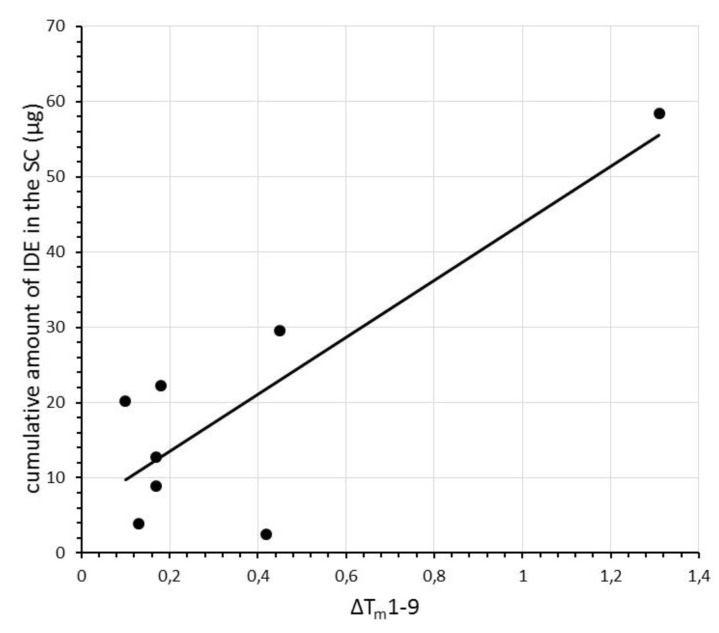
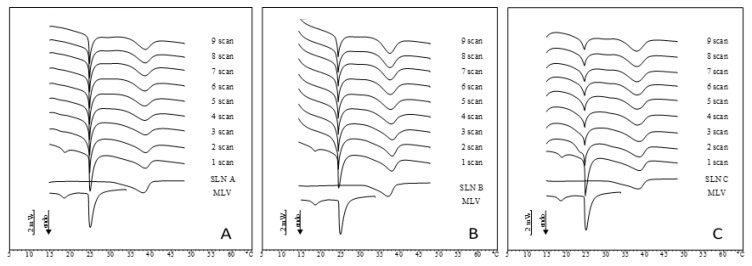
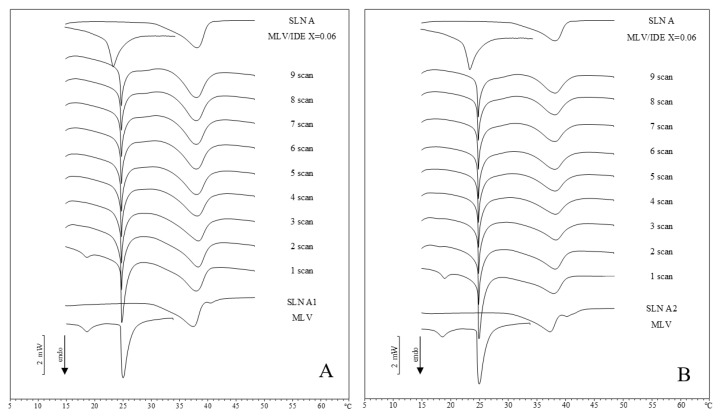
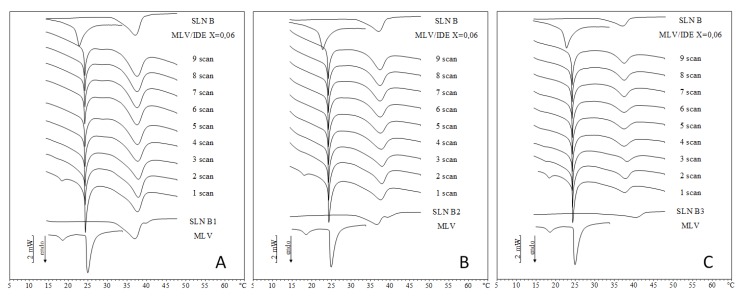
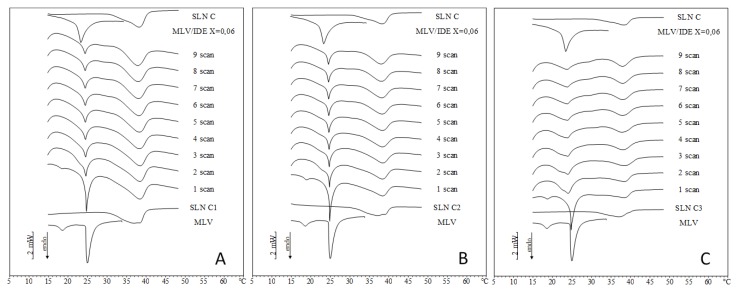
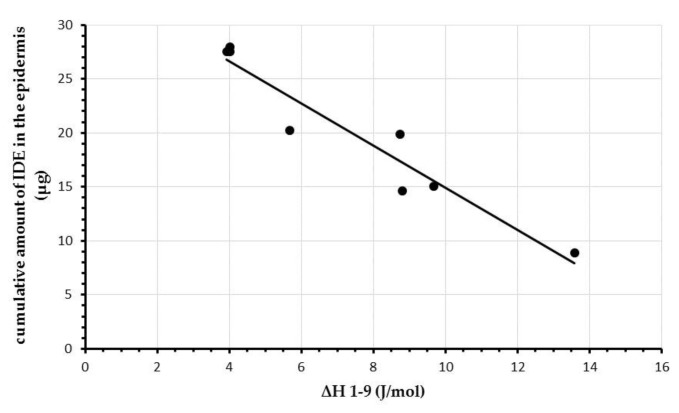
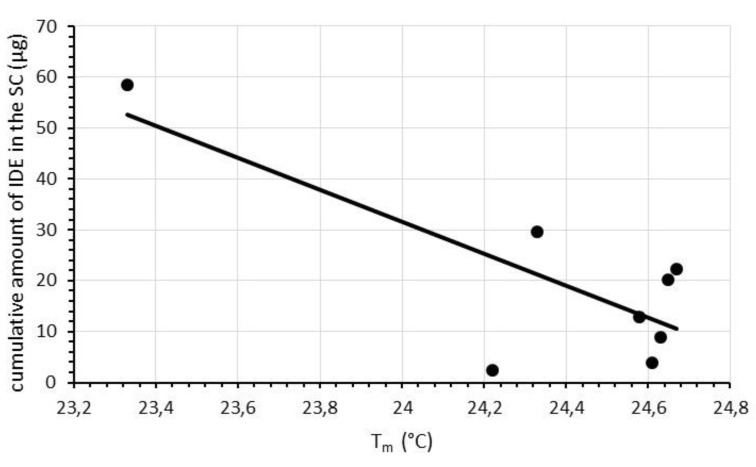
Differential scanning calorimetry (DSC) has emerged as a helpful technique both to characterize drug delivery systems and to study their interactions with bio-membranes. In this work, we compared idebenone (IDE)-loaded solid lipid nanoparticle (SLN) interactions with bio-membranes assessed by DSC with previous in vitro skin penetration data to evaluate the feasibility of predicting IDE skin penetration using DSC analyses. In vitro interactions experiments were performed using multi-lamellar liposomes as a model of bio-membrane. Enthalpy changes (ΔH) and transition temperature (Tm) were assessed during nine repeated DSC scans to evaluate IDE-loaded SLN⁻bio-membrane interactions over time. Analyzing ΔH and Tm values for each scan, we observed that the difference of ΔH and Tm values between the first and the last scan seemed to be related to SLN ability to locate IDE in the epidermis and in the stratum corneum, respectively. Therefore, the results of this study suggest the possibility of qualitatively predicting in vitro IDE skin penetration from IDE-loaded SLN utilizing the calorimetric parameters obtained from interaction experiments between the carriers under investigation and a model of bio-membrane.
差示扫描量热法(DSC)已成为一种有用的技术,可用于表征药物递送系统并研究其与生物膜的相互作用。在这项工作中,我们将通过DSC评估的艾地苯醌(IDE)负载的固体脂质纳米粒(SLN)与生物膜的相互作用与先前的体外皮肤渗透数据进行比较,以评估使用DSC分析预测IDE皮肤渗透的可行性。使用多层脂质体作为生物膜模型进行体外相互作用实验。在九次重复的DSC扫描过程中评估焓变(ΔH)和转变温度(Tm),以评估随时间变化的IDE负载的SLN与生物膜的相互作用。分析每次扫描的ΔH和Tm值,我们观察到第一次和最后一次扫描之间的ΔH和Tm值差异似乎分别与SLN将IDE定位在表皮和角质层中的能力有关。因此,本研究结果表明,利用从所研究的载体与生物膜模型之间的相互作用实验获得的量热参数,有可能从IDE负载的SLN定性预测体外IDE皮肤渗透。