Department of Gastroenterology, The Shanghai Tenth People's Hospital of Tongji University, No. 301 Yanchang Road, Shanghai, 200072, China.
Department of Gastroenterology, Luoyang Central Hospital Affiliated to Zhengzhou University, No. 288 Middle Zhongzhou Road, Luoyang, 471009, Henan Province, China.
J Transl Med. 2018 Dec 17;16(1):359. doi: 10.1186/s12967-018-1723-0.
Immunoglobulin A (IgA) and IgG are major components in human intestinal mucosal surface and sera, and IgA- or IgG-coated bacteria play a vital role in the intestinal homeostasis. However, the correlation of IgA, IgG and their coated bacteria with the clinical characteristics of inflammatory bowel disease (IBD) has not been fully clarified.
The levels of soluble IgA and IgG in sera and feces were detected by ELISA, and the percentage of IgA- and IgG-coated bacteria in feces was analyzed by flow cytometry. Crohn's disease activity index (CDAI) and Simple Endoscopic Score for Crohn's disease (SES-CD) for Crohn's disease (CD) or Mayo score and ulcerative colitis endoscopic index of severity (UCEIS) for ulcerative colitis (UC), erythrocyte sedimentation rate (ESR) and C-reactive protein (CRP) were used to evaluate the disease activity.
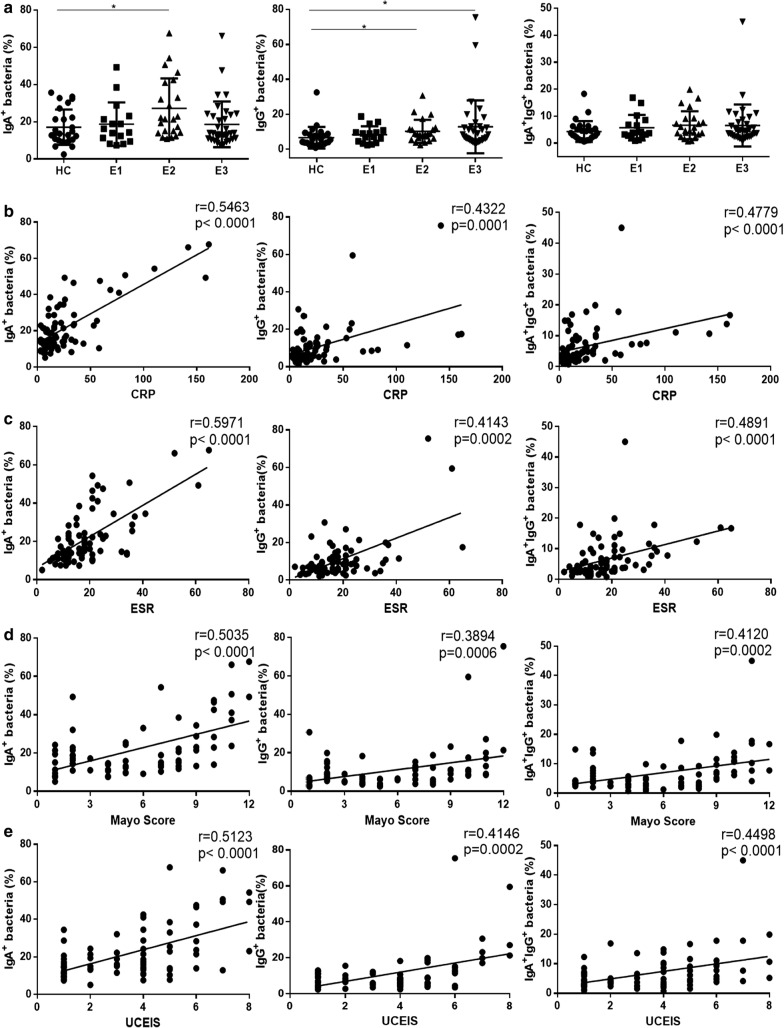
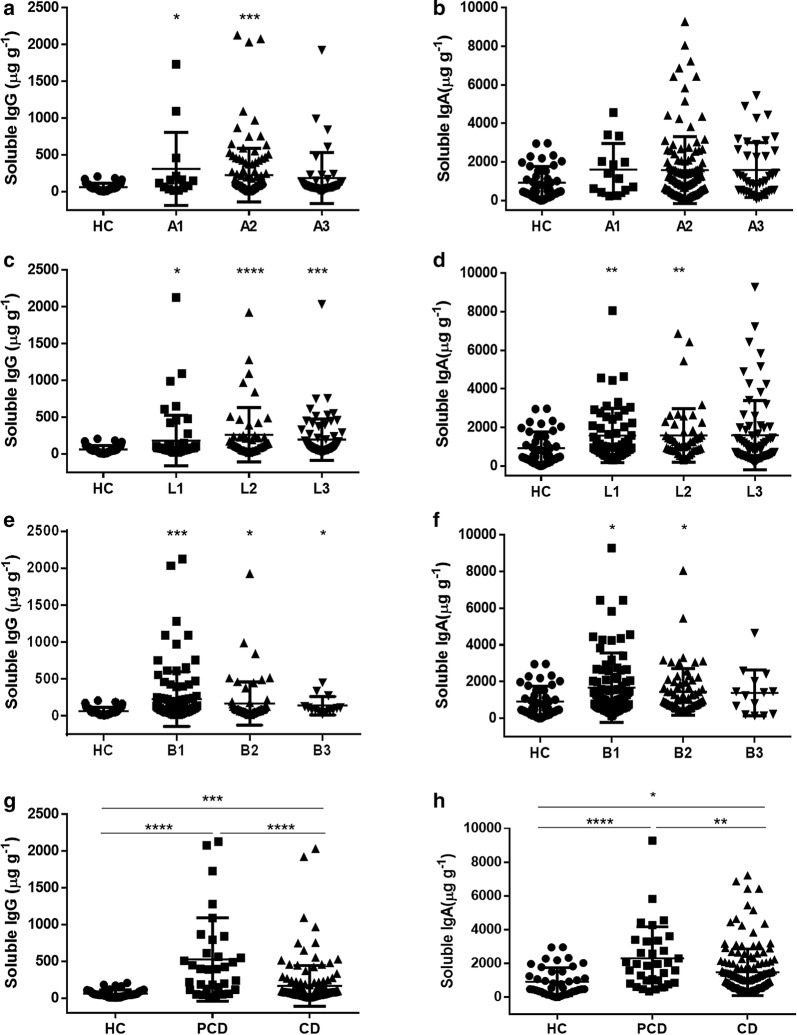
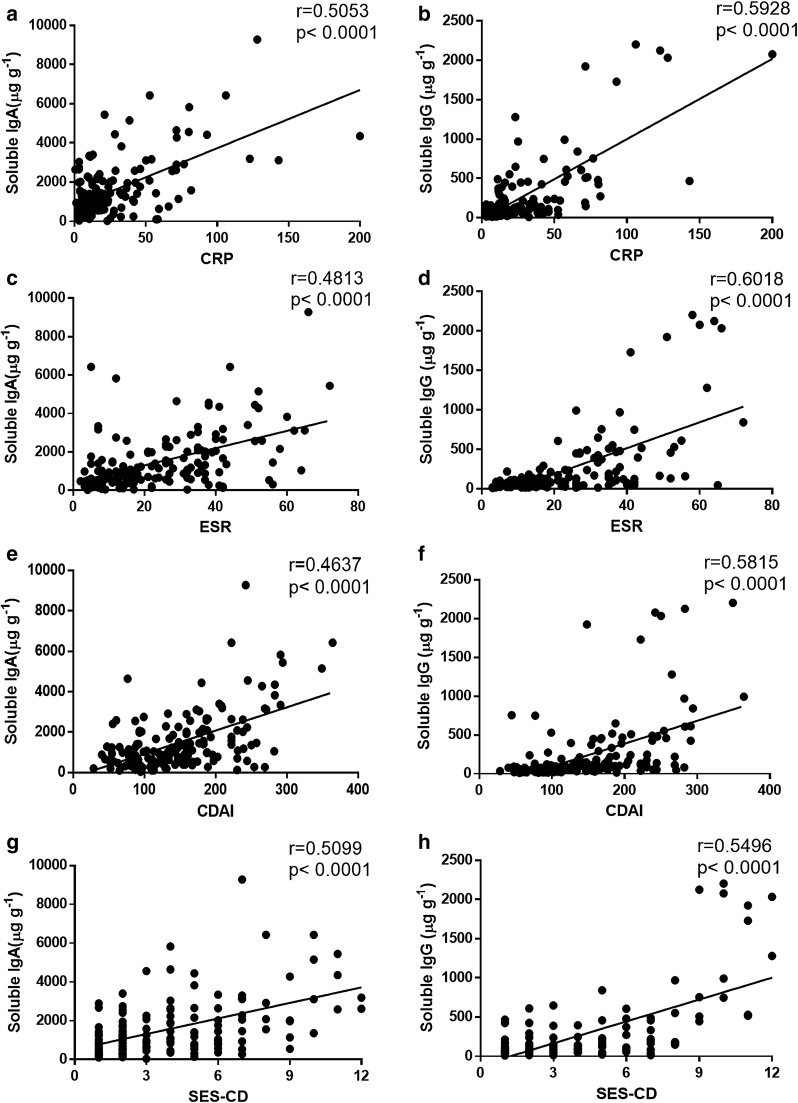
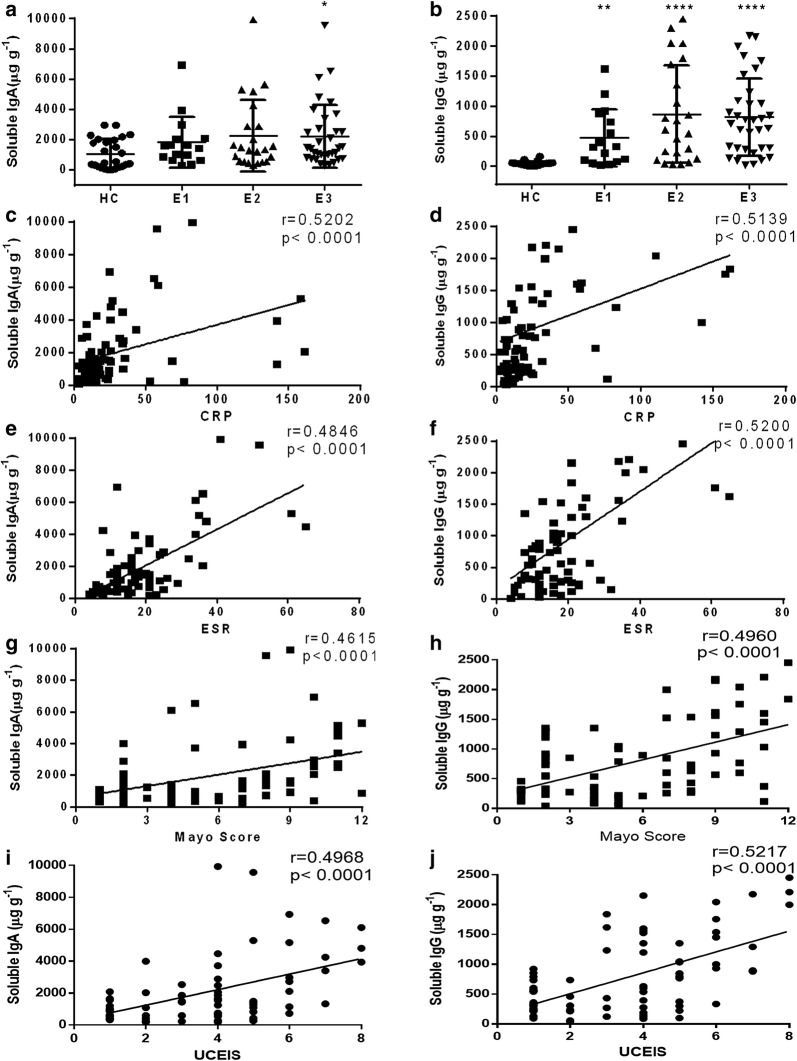
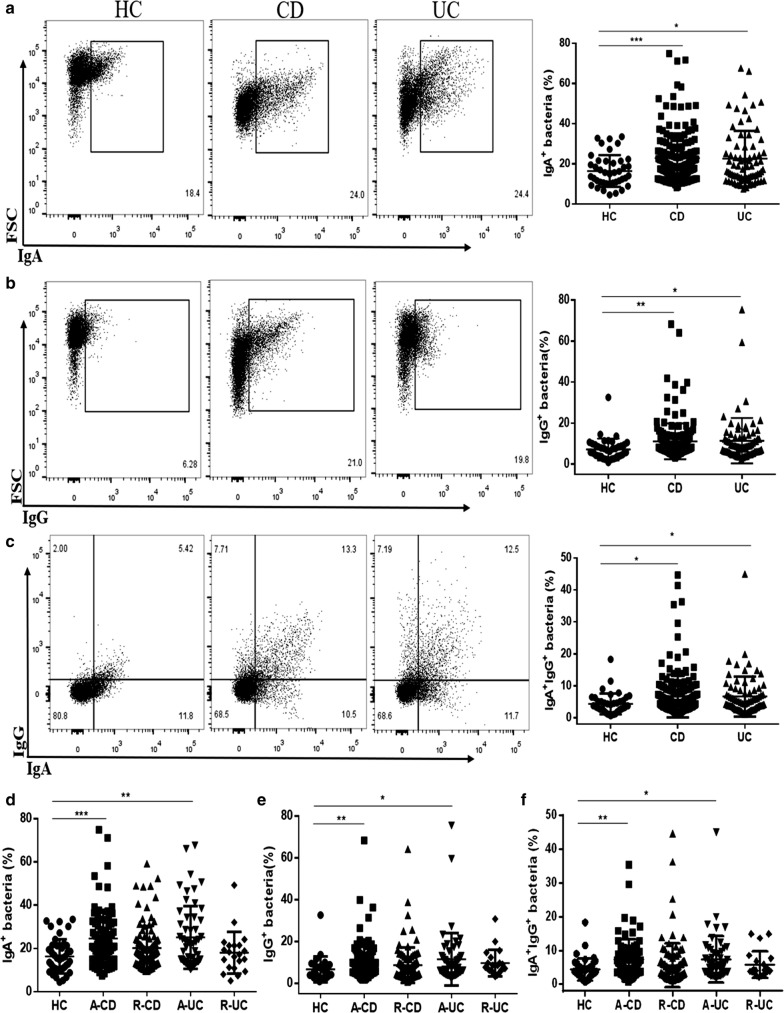
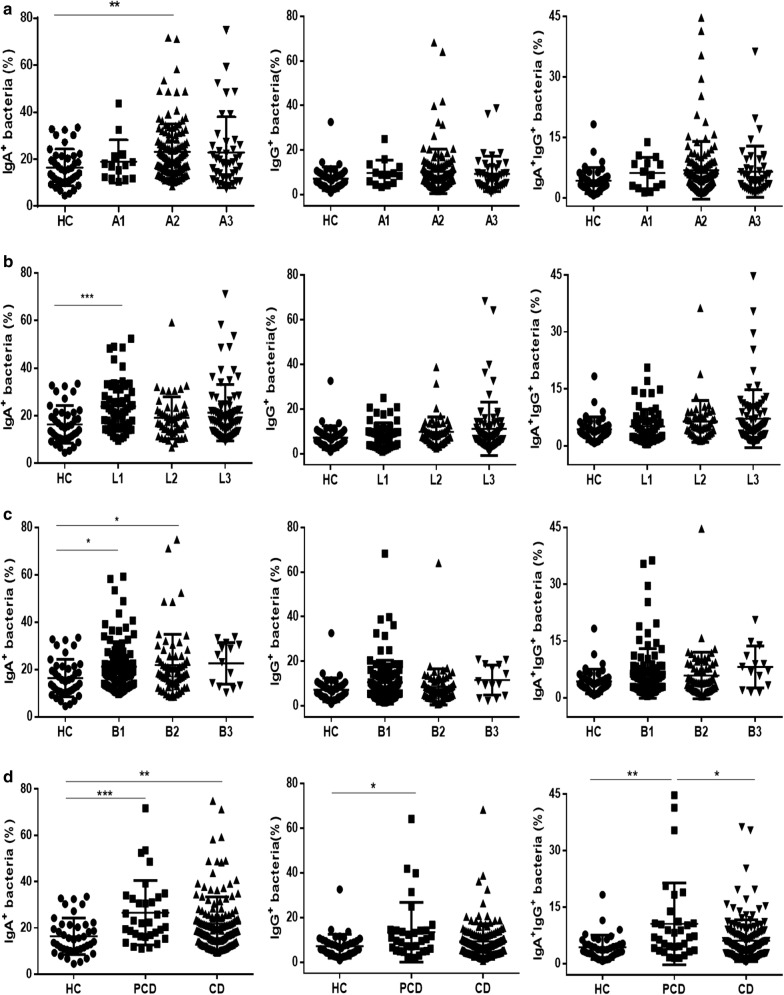
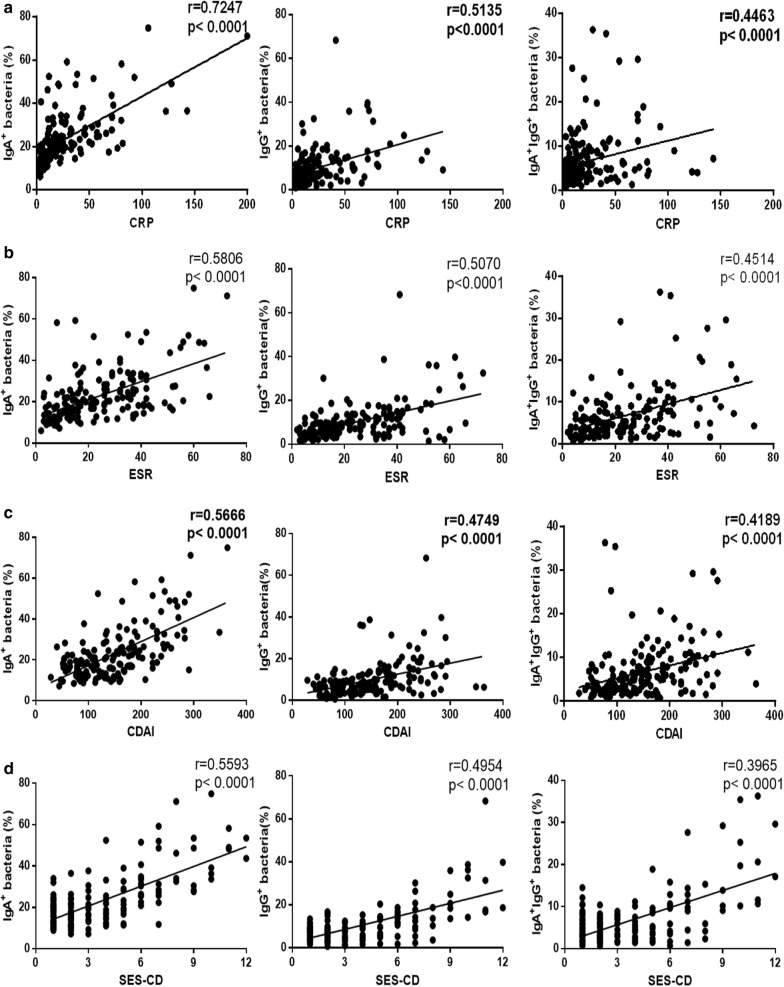
178 patients with CD, 75 patients with UC and 41 healthy donors were recruited in this study. We found that the concentrations of soluble IgA and IgG in feces of active IBD patients were significantly higher than those in healthy controls and that the levels of soluble IgA and IgG in feces from IBD patients were positively correlated with CRP, ESR, Mayo score, UCEIS, SES-CD, and CDAI, respectively. Moreover, we also observed that the percentage of IgA- and IgG-coated bacteria markedly increased in feces of IBD patients, especially in CD patients at the age of 17 to 40 years old, with terminal ileal lesions and perianal lesions, as well as from E2 UC patients, and was closely associated with disease activities.
The levels of soluble IgA and IgG and the percentage of IgA- and IgG-coated bacteria strikingly increase in feces of IBD patients and correlate with disease activity.
免疫球蛋白 A(IgA)和 IgG 是人体肠黏膜表面和血清中的主要成分,而 IgA 或 IgG 包被的细菌在肠道稳态中起着至关重要的作用。然而,IgA、IgG 及其包被细菌与炎症性肠病(IBD)的临床特征之间的相关性尚未完全阐明。
通过 ELISA 检测血清和粪便中可溶性 IgA 和 IgG 的水平,并通过流式细胞术分析粪便中 IgA 和 IgG 包被细菌的百分比。采用克罗恩病活动指数(CDAI)和简单克罗恩病内镜评分(SES-CD)评估克罗恩病(CD),或 Mayo 评分和溃疡性结肠炎内镜严重程度指数(UCEIS)评估溃疡性结肠炎(UC),红细胞沉降率(ESR)和 C 反应蛋白(CRP)用于评估疾病活动度。
本研究共纳入 178 例 CD 患者、75 例 UC 患者和 41 名健康对照者。我们发现,活动期 IBD 患者粪便中可溶性 IgA 和 IgG 的浓度明显高于健康对照者,且 IBD 患者粪便中可溶性 IgA 和 IgG 的水平分别与 CRP、ESR、Mayo 评分、UCEIS、SES-CD 和 CDAI 呈正相关。此外,我们还观察到,IBD 患者粪便中 IgA 和 IgG 包被细菌的百分比明显增加,尤其是年龄在 17 至 40 岁、末端回肠病变和肛周病变的 CD 患者,以及 E2UC 患者,且与疾病活动度密切相关。
IBD 患者粪便中可溶性 IgA 和 IgG 的水平以及 IgA 和 IgG 包被细菌的百分比显著增加,并与疾病活动度相关。