Department of Pancreatic Surgery, West China Hospital of Sichuan University, Chengdu, 610041, China.
Molecular Oncology Laboratory, Department of Orthopaedic Surgery and Rehabilitation Medicine, The University of Chicago Medical Center, Chicago, IL, 60637, USA.
Sci Rep. 2018 Dec 17;8(1):17914. doi: 10.1038/s41598-018-36214-5.
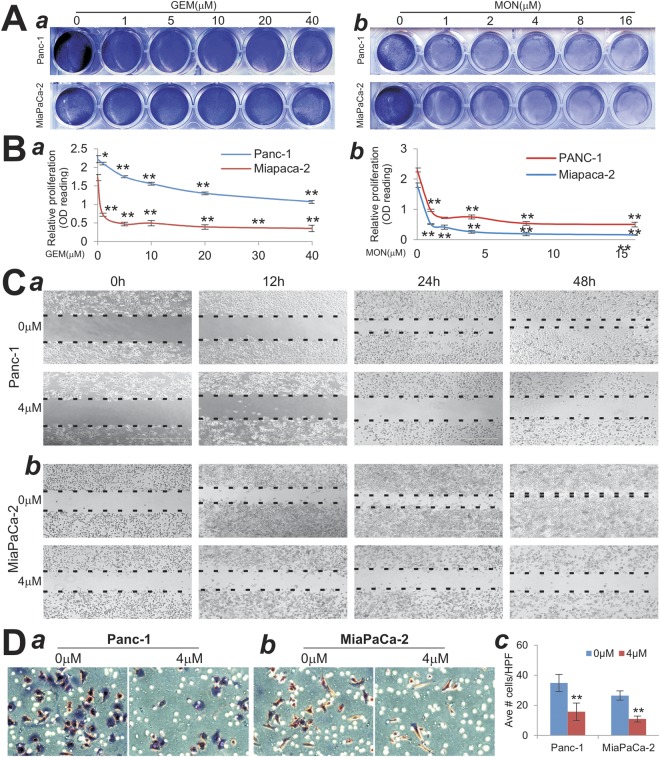
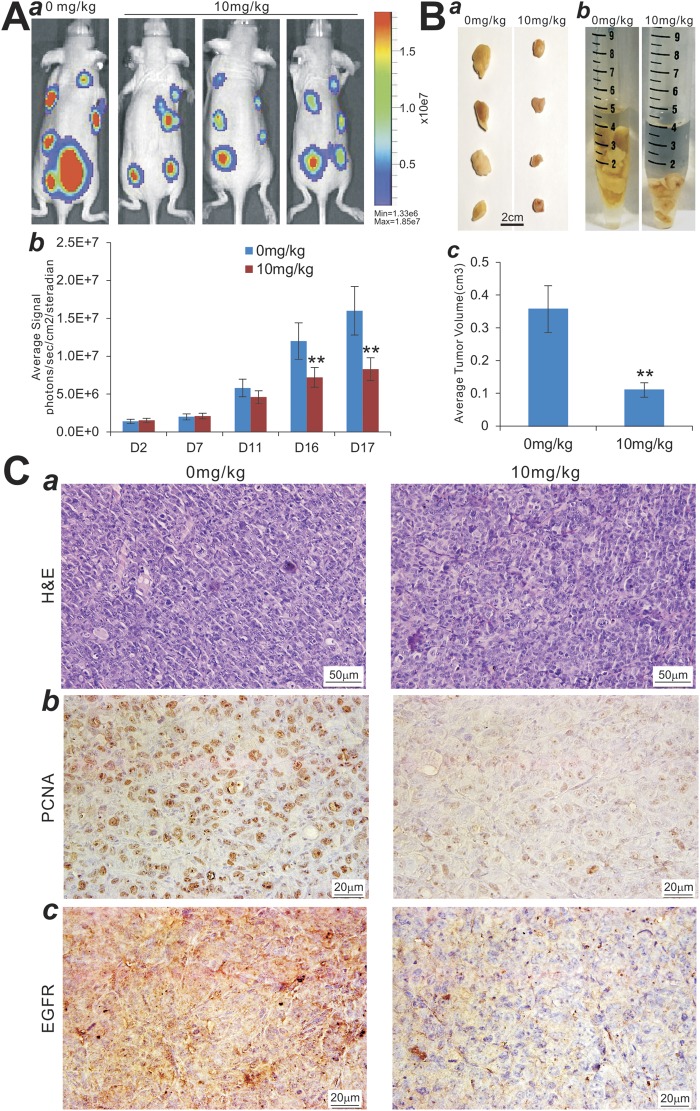
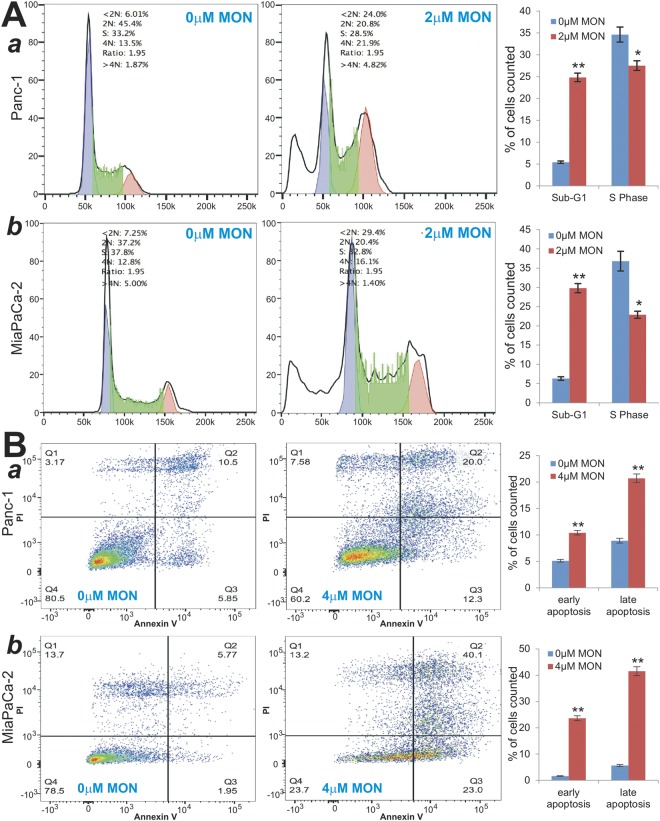
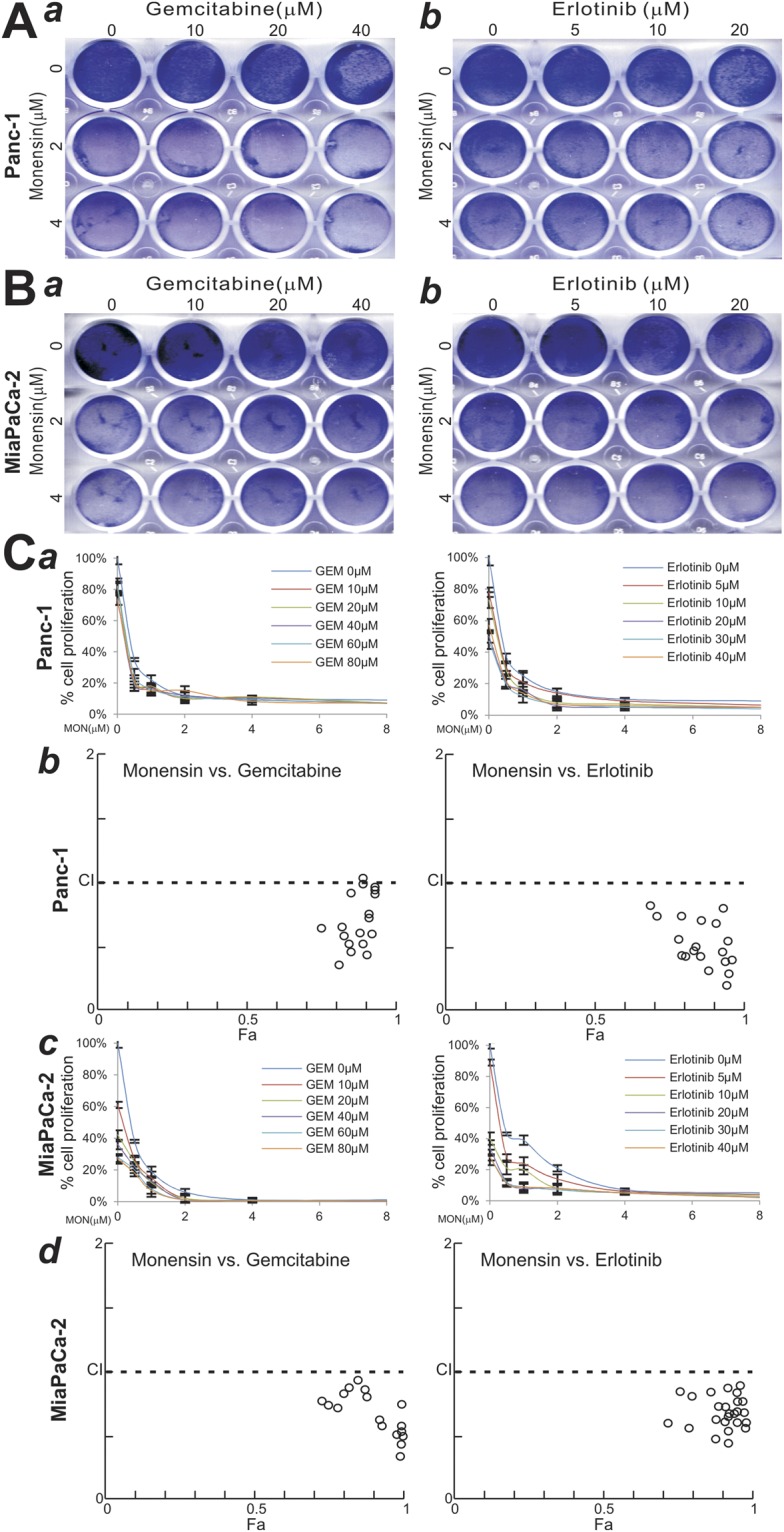
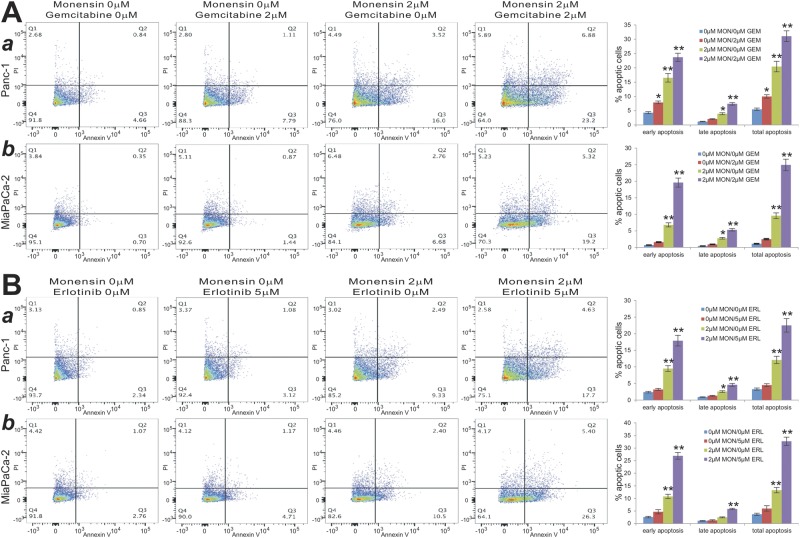
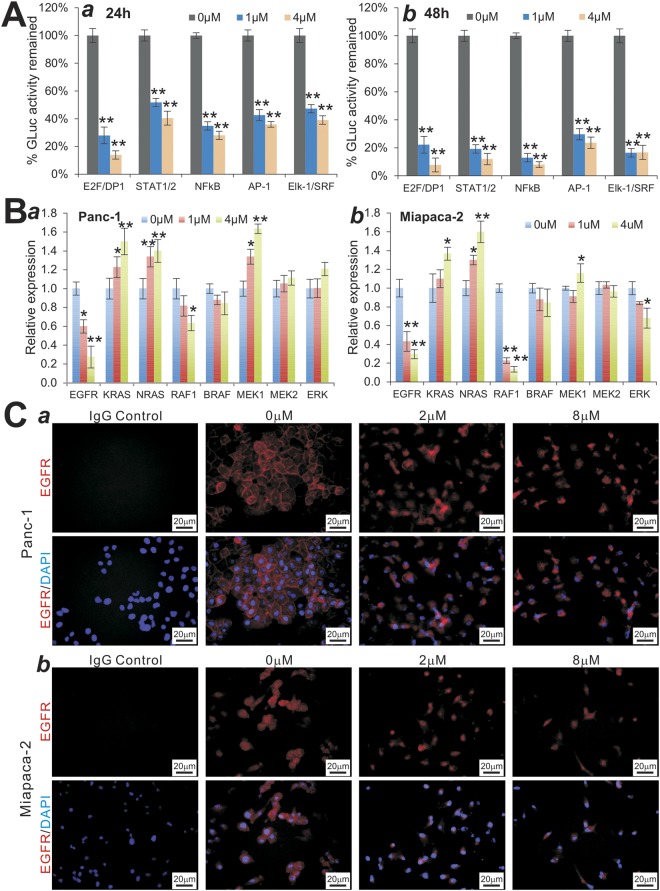
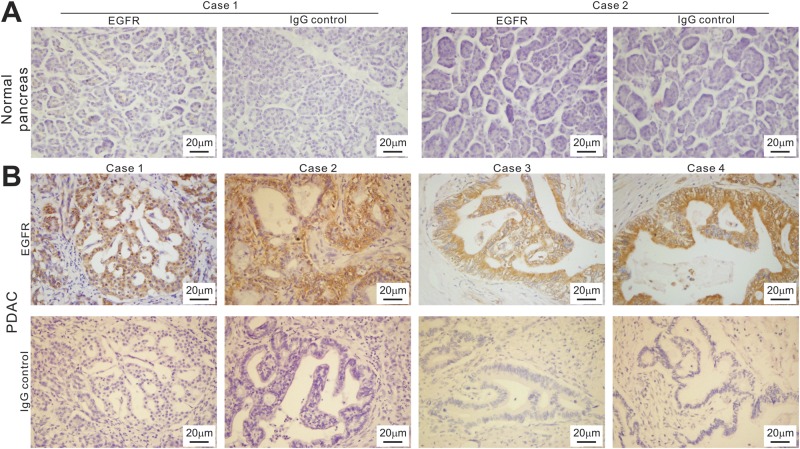
Pancreatic ductal adenocarcinoma (PDAC) is one of the most deadly malignancies with <5% five-year survival rate due to late diagnosis, limited treatment options and chemoresistance. There is thus an urgent unmet clinical need to develop effective anticancer drugs to treat pancreatic cancer. Here, we study the potential of repurposing monensin as an anticancer drug for chemo-resistant pancreatic cancer. Using the two commonly-used chemo-resistant pancreatic cancer cell lines PANC-1 and MiaPaCa-2, we show that monensin suppresses cell proliferation and migration, and cell cycle progression, while solicits apoptosis in pancreatic cancer lines at a low micromole range. Moreover, monensin functions synergistically with gemcitabine or EGFR inhibitor erlotinib in suppressing cell growth and inducing cell death of pancreatic cancer cells. Mechanistically, monensin suppresses numerous cancer-associated pathways, such as E2F/DP1, STAT1/2, NFkB, AP-1, Elk-1/SRF, and represses EGFR expression in pancreatic cancer lines. Furthermore, the in vivo study shows that monensin blunts PDAC xenograft tumor growth by suppressing cell proliferation via targeting EGFR pathway. Therefore, our findings demonstrate that monensin can be repurposed as an effective anti-pancreatic cancer drug even though more investigations are needed to validate its safety and anticancer efficacy in pre-clinical and clinical models.
胰腺导管腺癌(PDAC)是最致命的恶性肿瘤之一,由于诊断较晚、治疗选择有限和化疗耐药,其五年生存率<5%。因此,迫切需要开发有效的抗癌药物来治疗胰腺癌。在这里,我们研究了重新利用莫能菌素作为治疗化疗耐药胰腺癌的抗癌药物的潜力。使用两种常用的化疗耐药胰腺癌细胞系 PANC-1 和 MiaPaCa-2,我们表明莫能菌素在低微摩尔范围内抑制胰腺癌细胞系的增殖和迁移以及细胞周期进程,同时诱导细胞凋亡。此外,莫能菌素与吉西他滨或 EGFR 抑制剂厄洛替尼协同作用,抑制胰腺癌细胞的生长并诱导细胞死亡。在机制上,莫能菌素通过靶向 EGFR 通路抑制胰腺癌细胞系中的许多癌症相关途径,如 E2F/DP1、STAT1/2、NFkB、AP-1、Elk-1/SRF 等,并抑制 EGFR 的表达。此外,体内研究表明,莫能菌素通过靶向 EGFR 通路抑制细胞增殖,从而抑制 PDAC 异种移植肿瘤的生长。因此,我们的研究结果表明,即使需要更多的研究来验证其在临床前和临床模型中的安全性和抗癌疗效,莫能菌素也可以被重新用作有效的抗胰腺癌药物。