Niu Xiangfeng, Chen Ying-Jr, Crawford Peter A, Patti Gary J
1Department of Chemistry, Washington University, St. Louis, USA.
2Division of Molecular Medicine, Department of Medicine, University of Minnesota, Minneapolis, USA.
Cancer Metab. 2018 Dec 12;6:19. doi: 10.1186/s40170-018-0192-5. eCollection 2018.
Recent and work has shown that lactate provides an important source of carbon for metabolic reactions in cancer cell mitochondria. An interesting question is whether lactate is oxidized by lactate dehydrogenase (LDH) in the cytosol and/or in mitochondria. Since metabolic processes in the cytosol and mitochondria are affected by redox balance, the location of LDH may have important regulatory implications in cancer metabolism.
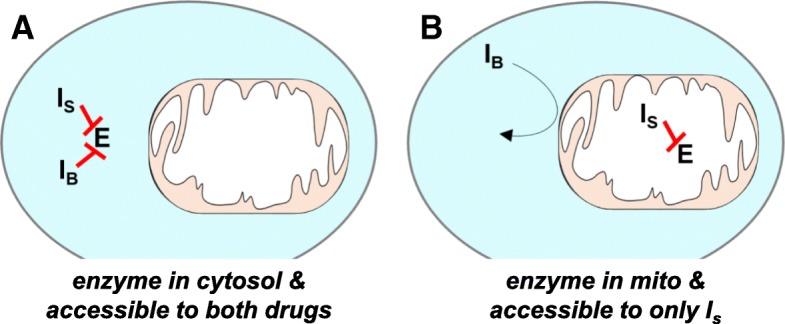
Within most mammalian cells, metabolic processes are physically separated by membrane-bound compartments. Our general understanding of this spatial organization and its role in cellular function, however, suffers from the limited number of techniques to localize enzymatic activities within a cell. Here, we describe an approach to assess metabolic compartmentalization by monitoring the activity of pharmacological inhibitors that cannot be transported into specific cellular compartments.
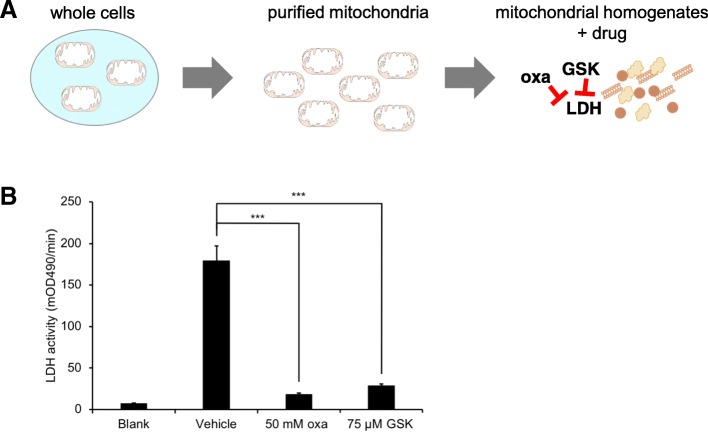
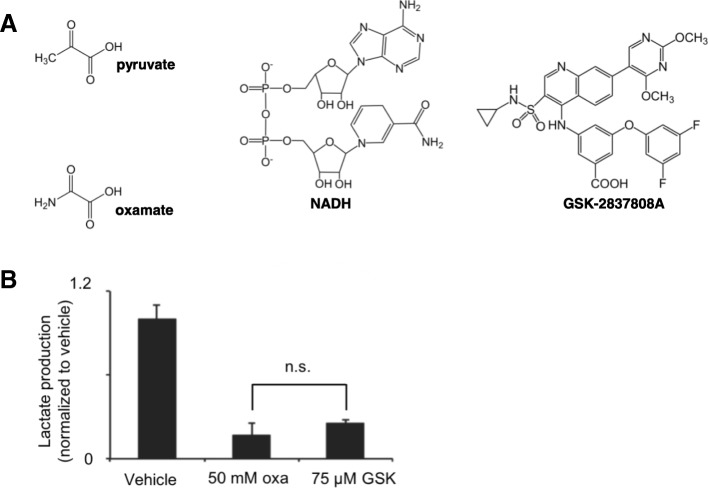
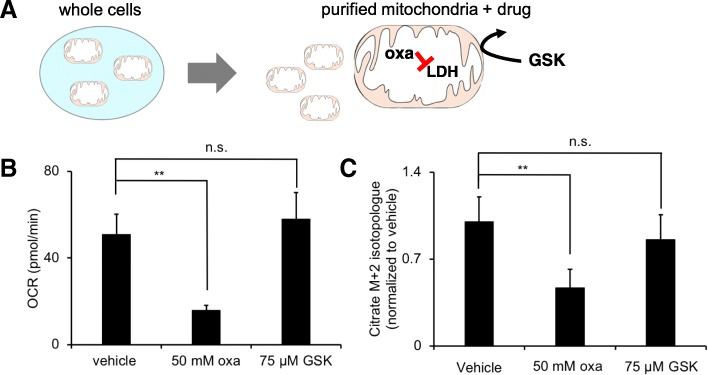
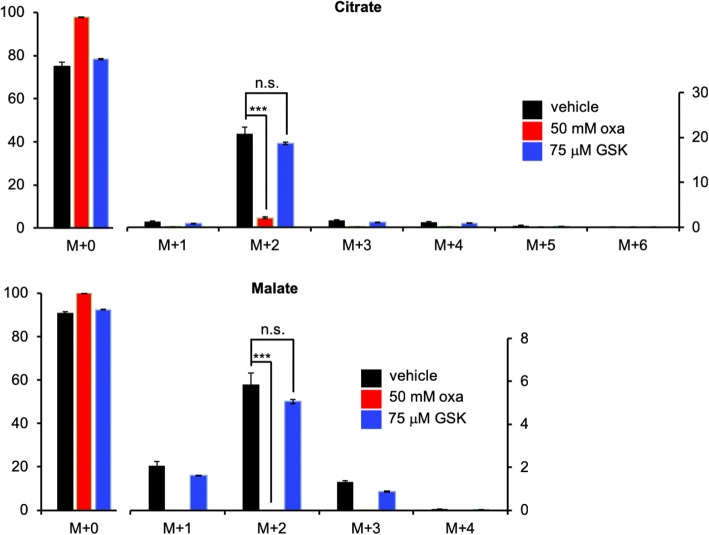
Oxamate, which chemically resembles pyruvate, is transported into mitochondria and inhibits LDH activity in purified mitochondria. GSK-2837808A, in contrast, is a competitive inhibitor of NAD, which cannot cross the inner mitochondrial membrane. GSK-2837808A did not inhibit the LDH activity of intact mitochondria, but GSK-2837808A did inhibit LDH activity after the inner mitochondrial membrane was disrupted.
Our results are consistent with some mitochondrial LDH that is accessible to oxamate, but inaccessible to GSK-2837808A until mitochondria are homogenized. This strategy of using inhibitors with selective access to subcellular compartments, which we refer to as transport-exclusion pharmacology, is broadly applicable to localize other metabolic reactions within cells.
近期研究表明,乳酸为癌细胞线粒体中的代谢反应提供了重要的碳源。一个有趣的问题是,乳酸是否会被胞质溶胶和/或线粒体中的乳酸脱氢酶(LDH)氧化。由于胞质溶胶和线粒体中的代谢过程受氧化还原平衡的影响,LDH的定位可能对癌症代谢具有重要的调节意义。
在大多数哺乳动物细胞中,代谢过程通过膜结合区室在物理上分隔开来。然而,我们对这种空间组织及其在细胞功能中的作用的总体理解,因用于在细胞内定位酶活性的技术数量有限而受到影响。在此,我们描述了一种通过监测无法转运到特定细胞区室的药理抑制剂的活性来评估代谢区室化的方法。
草氨酸在化学结构上类似于丙酮酸,可转运到线粒体中并抑制纯化线粒体中的LDH活性。相比之下,GSK - 2837808A是NAD的竞争性抑制剂,无法穿过线粒体内膜。GSK - 2837808A不会抑制完整线粒体的LDH活性,但在线粒体内膜被破坏后,GSK - 2837808A确实会抑制LDH活性。
我们的结果表明,存在一些线粒体LDH,草氨酸可以作用于这些酶,但在未匀浆线粒体时,GSK - 2837808A无法作用于这些酶。这种使用对亚细胞区室具有选择性作用的抑制剂的策略,我们称之为转运排除药理学,广泛适用于定位细胞内的其他代谢反应。