School of Pharmacy and Pharmaceutical Sciences, Ulster University, Cromore Road, Coleraine, Co. Londonderry, BT52 1SA, UK.
School of Medicine, Dentistry and Biomedical Sciences, Queen's University Belfast, Health Sciences Building, 97 Lisburn Road, Belfast, BT9 7BL, UK.
Pharm Res. 2018 Dec 17;36(2):26. doi: 10.1007/s11095-018-2555-6.
Overexpression of the RAN GTP (RAN) gene has been shown to be linked to metastatic activity of MDA-MB231 human breast cancer cells by increasing Ras/MEK/ERK and PI3K/Akt/mTORC1 signalling. The aim of this study was to investigate the potential of polymeric nanoparticles to deliver two novel shRNA sequences, targeted against the RAN gene, to MDA-MB231 cells grown in culture and to assess their effects in a range of biological assays.
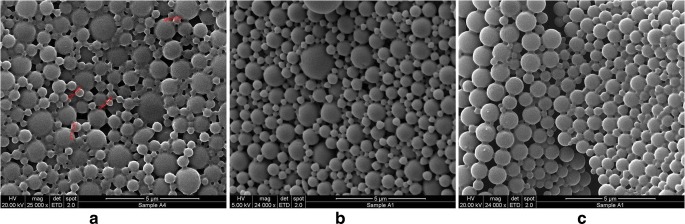
Biodegradable PLGA nanoparticles, loaded with shRNA-1 and shRNA-4, were fabricated using a double emulsion solvent evaporation technique and characterised for size, zeta potential and polydispersity index before testing on the MDA-MB231 cell line in a range of assays including cell viability, migration, invasion and gene knock down.
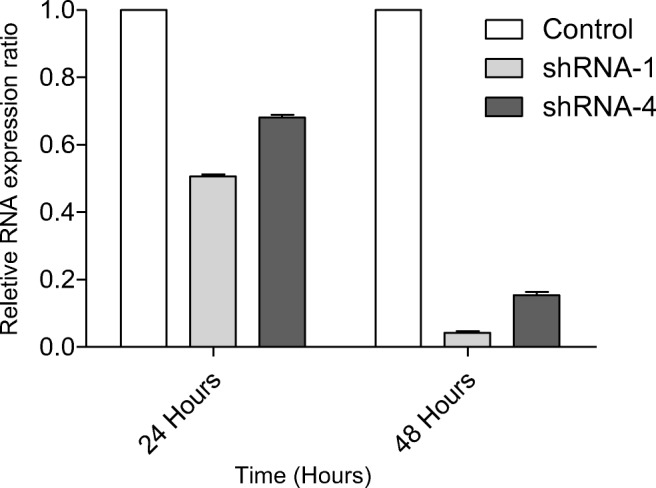
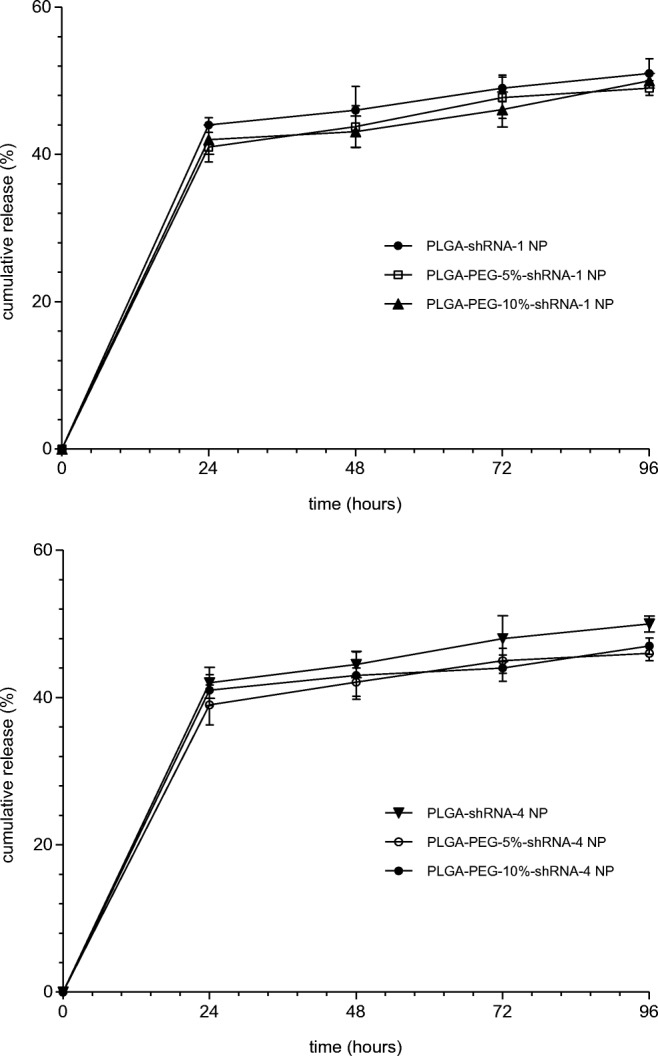
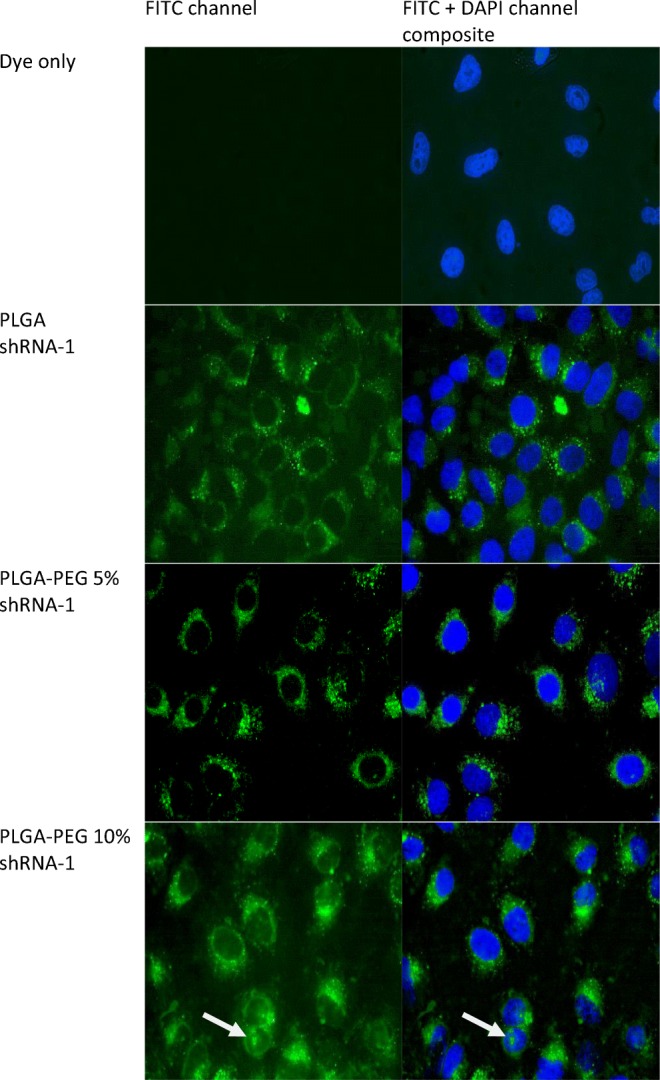
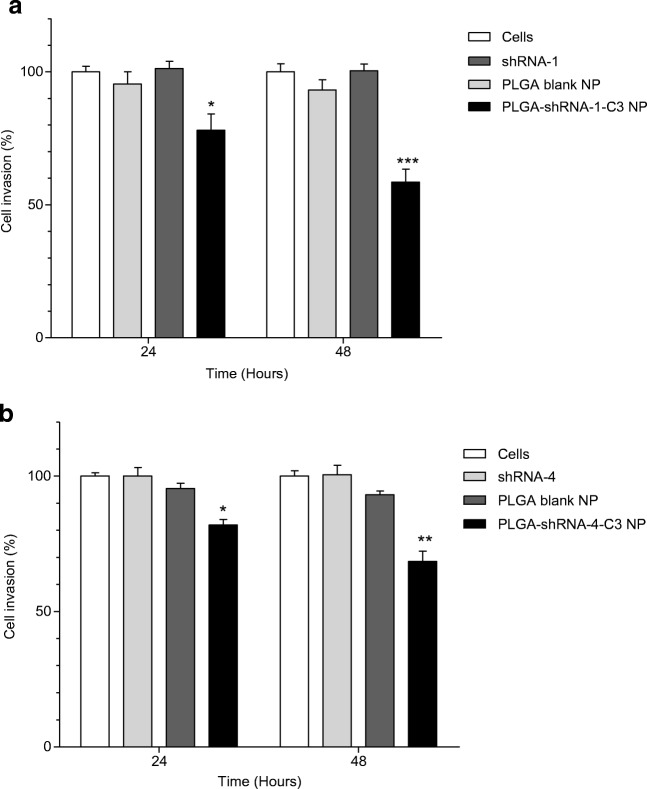
shRNA-loaded nanoparticles were successfully fabricated and delivered to MDA-MB231 cells in culture, where they effectively released their payload, causing a decrease in both cell invasion and cell migration by knocking down RAN gene expression.
Results indicate the anti-RAN shRNA-loaded nanoparticles deliver and release biological payload to MDA-MB231 cells in culture. This works paves the way for further investigations into the possible use of anti-RAN shRNA-loaded NP formulations for the treatment of breast cancer in vivo.
过表达 RAN GTP(RAN)基因已被证明与 MDA-MB231 人乳腺癌细胞的转移活性有关,通过增加 Ras/MEK/ERK 和 PI3K/Akt/mTORC1 信号通路。本研究的目的是研究聚合物纳米粒子将两种针对 RAN 基因的新型 shRNA 序列递送至培养的 MDA-MB231 细胞的潜力,并在一系列生物学测定中评估它们的效果。
使用双乳液溶剂蒸发技术制备负载 shRNA-1 和 shRNA-4 的可生物降解的 PLGA 纳米粒子,并在一系列测定中对 MDA-MB231 细胞系进行测试之前,对其大小、zeta 电位和多分散指数进行特征化,包括细胞活力、迁移、侵袭和基因敲低。
成功制备了负载 shRNA 的纳米粒子并递送至培养的 MDA-MB231 细胞,其中它们有效地释放了其有效载荷,通过敲低 RAN 基因表达,导致细胞侵袭和迁移均减少。
结果表明,载有抗 RAN shRNA 的纳米粒子将生物有效载荷递送至培养的 MDA-MB231 细胞并释放。这项工作为进一步研究抗 RAN shRNA 载药纳米粒子在体内治疗乳腺癌的可能用途铺平了道路。