Instituto de Bioingeniería, Universidad Miguel Hernández, 03202 Elche, Spain.
OQOTECH Process Validation System, 03801 Alcoy, Spain.
Int J Mol Sci. 2018 Dec 5;19(12):3888. doi: 10.3390/ijms19123888.
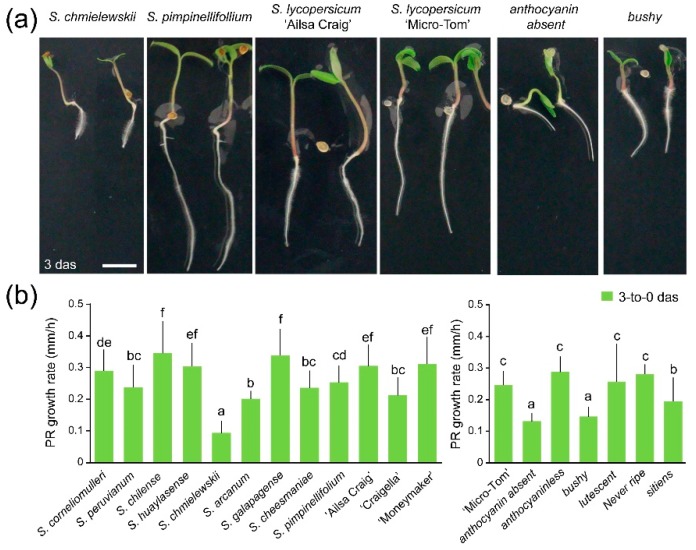
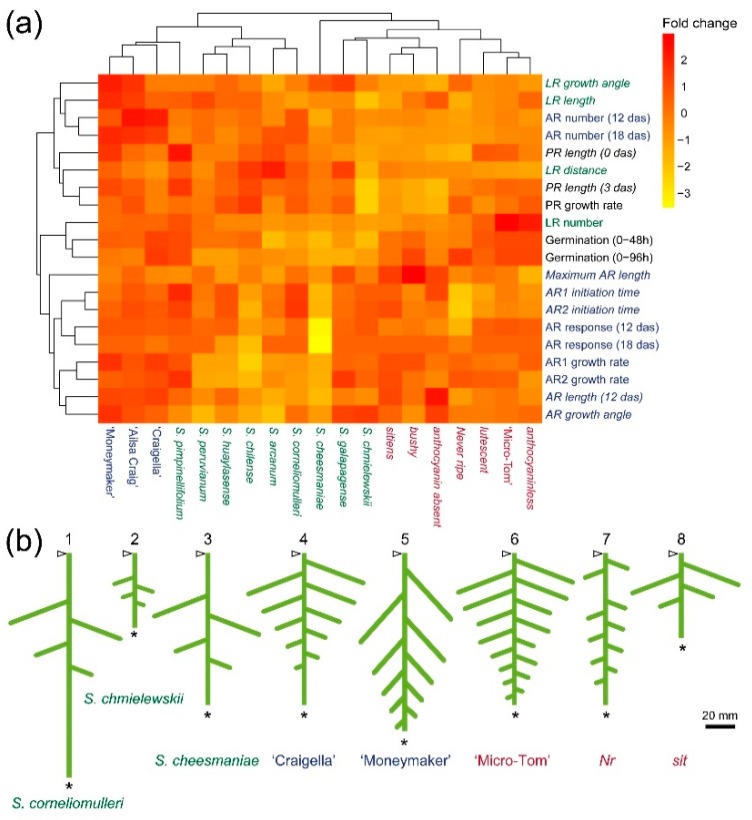
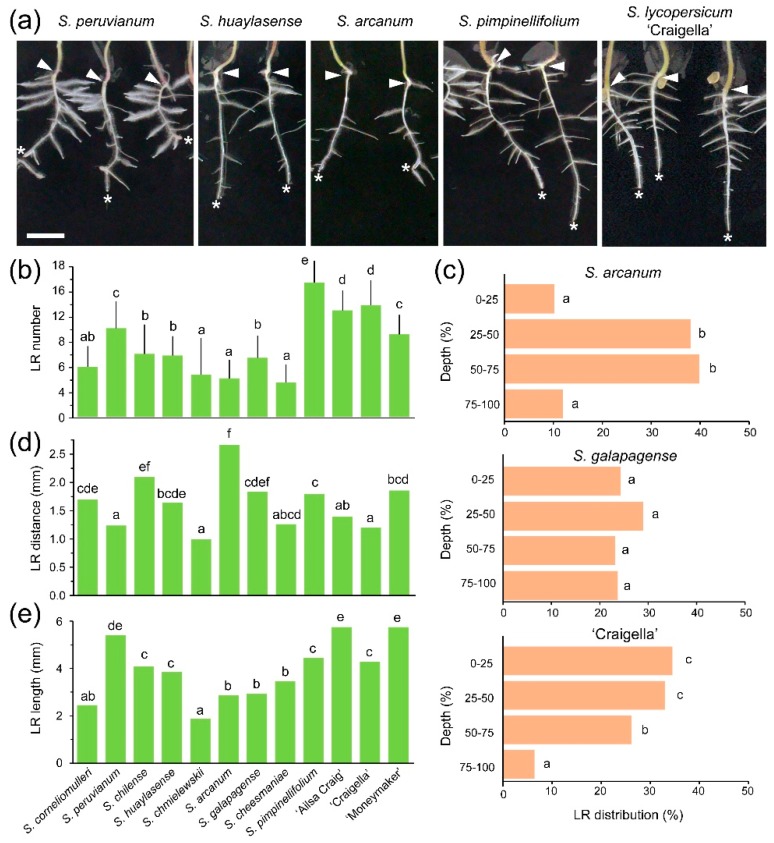
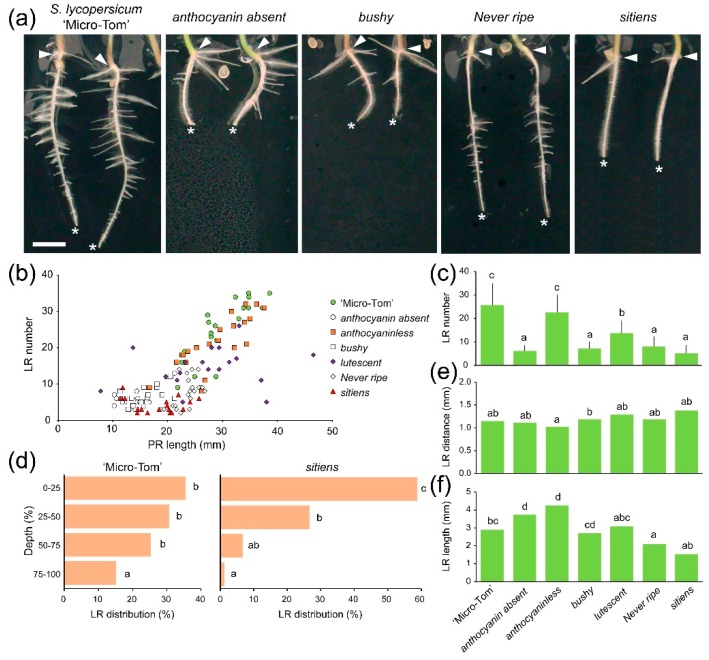
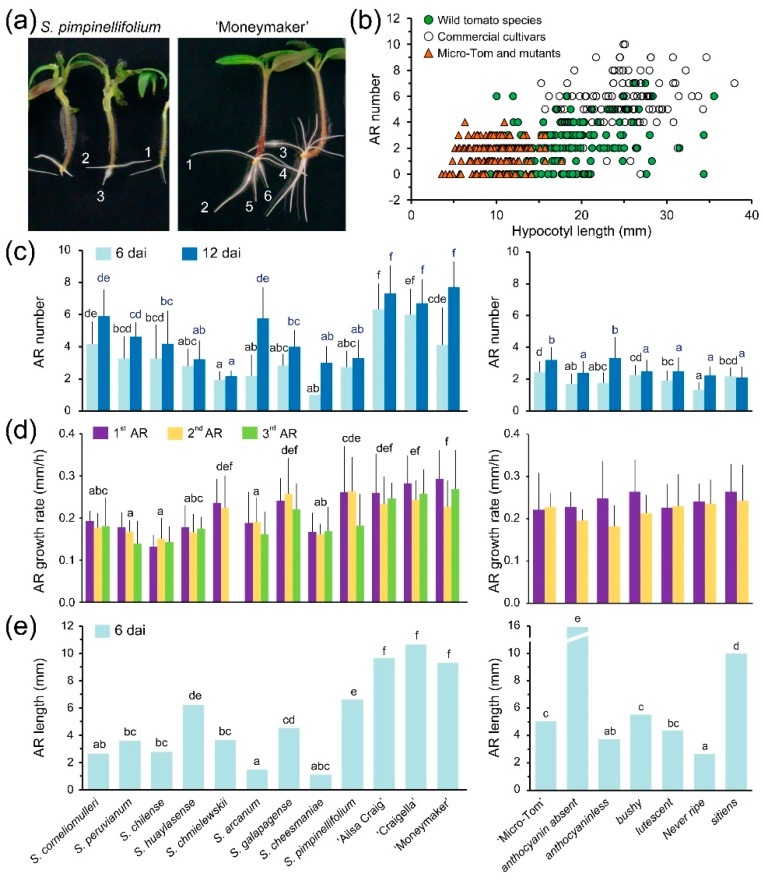
Plant roots exploit morphological plasticity to adapt and respond to different soil environments. We characterized the root system architecture of nine wild tomato species and four cultivated tomato ( L.) varieties during early growth in a controlled environment. Additionally, the root system architecture of six near-isogenic lines from the tomato 'Micro-Tom' mutant collection was also studied. These lines were affected in key genes of ethylene, abscisic acid, and anthocyanin pathways. We found extensive differences between the studied lines for a number of meaningful morphological traits, such as lateral root distribution, lateral root length or adventitious root development, which might represent adaptations to local soil conditions during speciation and subsequent domestication. Taken together, our results provide a general quantitative framework for comparing root system architecture in tomato seedlings and other related species.
植物根系利用形态可塑性来适应和响应不同的土壤环境。我们在受控环境中研究了 9 种野生番茄和 4 种栽培番茄(L.)品种在早期生长过程中的根系结构。此外,还研究了来自番茄“微型番茄”突变体库的 6 个近等基因系的根系结构。这些系在乙烯、脱落酸和花青素途径的关键基因中受到影响。我们发现,在所研究的系中,许多有意义的形态特征存在广泛差异,例如侧根分布、侧根长度或不定根发育,这可能代表了在物种形成和随后的驯化过程中对当地土壤条件的适应。总之,我们的研究结果为比较番茄幼苗和其他相关物种的根系结构提供了一个通用的定量框架。